Table of Contents
- What Fish Actually See Underwater: The Science
- High-Vis vs. Low-Vis: A Quick Reality Check
- The Core Issue: The "Hidden Cost" of Neon
- The Three Hidden Costs of High-Vis Braid
- The Color That Actually Matters Most
- Practical Advice: Finding Your Perfect Color Match
- The Bottom Line
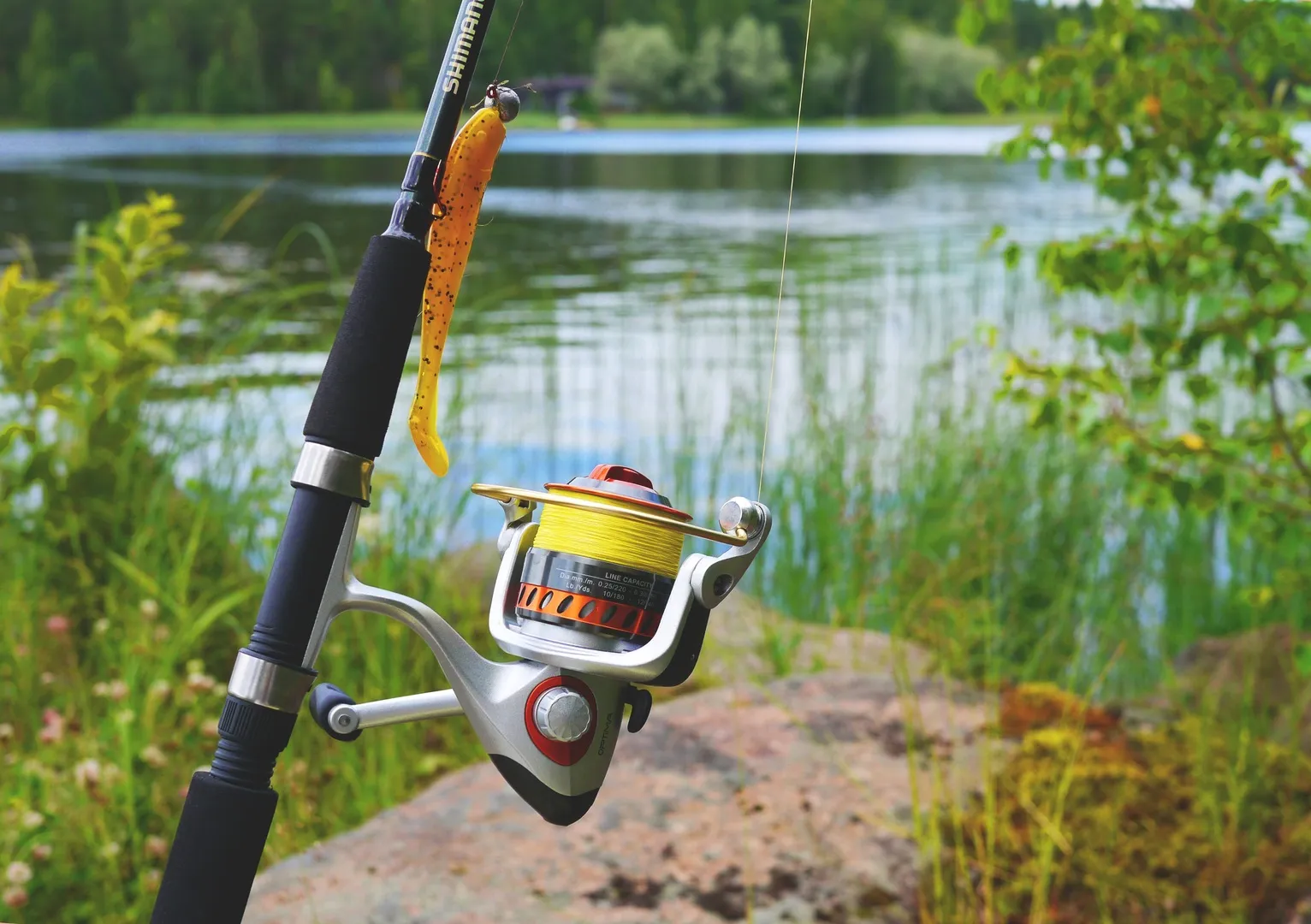
Picture this: You're standing in the aisle of your local tackle shop, staring at a literal rainbow of braided fishing lines. You've got your stealthy moss greens, your dark grays, and those blinding neon yellows and hot pinks.
It's enough to give any angler decision paralysis, and it leads to the ultimate question: does line color matter fishing?
It's understandable why many of us are drawn to high vis fishing line. The idea of tracking your cast perfectly sounds like an incredible advantage. But here's the reality check: every advantage comes at a price.
What Fish Actually See Underwater: The Science
Before we talk colors, you need to understand one thing: water eats light. And it doesn't eat all colors equally.
Water absorbs light wavelengths at different rates. Red disappears first , it's essentially gone by about 15 feet in clear water. Orange follows.
Yellow hangs around a bit longer, fading to gray or black by 30-40 feet. Green and blue penetrate deepest, with blue reaching down past 60 feet in clear conditions.
This is basic oceanography , the University of Hawai'i's ocean science program documents that over 50% of visible light is absorbed within the first 10 meters (33 feet), and by 20 meters (65 feet), red objects look nearly black.
In murky water, all colors fade to gray or black by around 15 feet. In clear water, natural colors disappear by 35-40 feet, while fluorescent colors hold slightly longer.
After about 65 feet in clear water, most colors appear black or blue-tinted to a fish.
What this means for your line: That bright yellow braid you can see so well above water? Below about 30-40 feet, the fish sees a gray or black line.
The high-vis color you bought for bite detection becomes effectively invisible at depth. The color is for you, not the fish.
High-Vis vs. Low-Vis: A Quick Reality Check
Before we dive into colors, we need to talk about what braided line (PE line) actually is.
Unlike fluorocarbon, which bends light to become practically invisible underwater, braid is completely opaque. It doesn't matter if it's dyed neon orange or dirt brown, light does not pass through it. Underwater, it's essentially a tiny, solid rope.
The Allure of High-Vis Braid
Why do manufacturers make neon lines? Simple: they're made for us, not the fish. High-vis line helps you:
- Track your bait: You always know exactly where your lure is drifting.
- Detect visual bites: When the wind is howling, a sudden jump in that bright yellow line is your only clue.
- Avoid tangles: On a crowded boat, bright lines help everyone avoid crossing lines.
On the product side, PowerPro Super Slick V2 in Hi-Vis Yellow runs about $20-30 for 150 yards. Sufix 832 in Neon Lime is similarly priced and holds color longer.
Berkley X9 in Crystal costs a few dollars more but its nine-carrier weave is noticeably smoother through guides.
The Stealth of Low-Vis Braid
Low-vis colors like moss green or dark gray are designed with the fish in mind. Most lakes and rivers have a natural green or brownish tint.
While dark green braid is still opaque, its contrast against the background is incredibly low, making it much harder to detect.
The Core Issue: The "Hidden Cost" of Neon
If you're flipping a frog into thick lily pads or fishing in chocolate milk water, line color doesn't matter. The fish hunt purely on vibration and instinct.
But in still, clear water, the game changes entirely. Fish have plenty of time to inspect your bait. Heavily pressured fish possess razor-sharp vision and are highly cautious of unnatural elements.
A neon yellow rope cutting through crystal-clear water is basically a giant flashing warning sign.
⚠️ The Hidden Cost Revealed
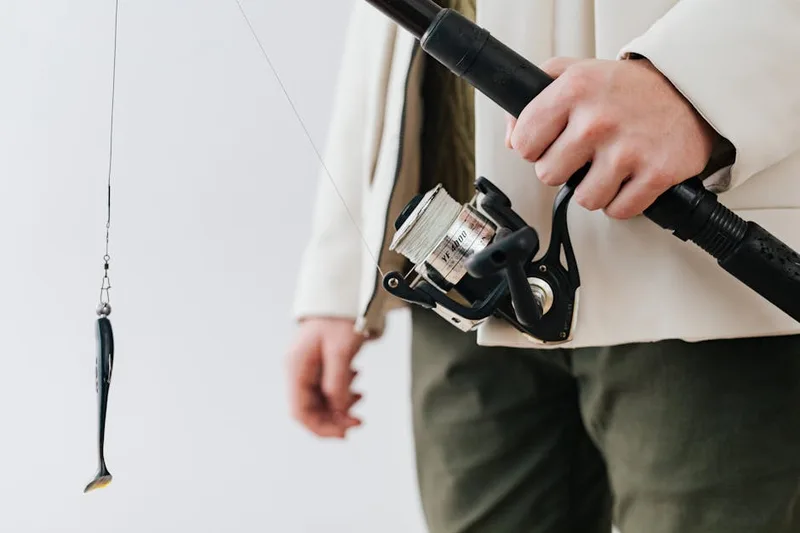
To prevent bright main line from spooking fish, anglers using high-vis braid are forced to tie on a fluorocarbon leader.
With stealthy dark green braid, you might only need a 2-3 foot leader. But with neon yellow, you must push that glowing line completely out of the fish's vision, forcing a 6, 8, or even 10-foot leader.
This forced, extra-long leader is the hidden cost, triggering a domino effect of problems.
The Three Hidden Costs of High-Vis Braid
Cost #1: The Casting Nightmare
Braid is thin and supple, allowing for bomber casts. But with a 10-foot leader, your connection knot (FG, Albright, or Double Uni) gets reeled up inside your rod guides.
When you cast, that knot clatters through every micro-guide, killing your casting distance and neutralizing braid's primary benefit.
Cost #2: Wear, Tear, and Wind Knots
Constant banging against ceramic guides weakens your knot.
Worse, when stiff fluorocarbon and soft braid fly out at different speeds, it creates the perfect storm for "wind knots." Anyone who's spent 20 minutes picking a bird's nest from 10lb braid knows this ruins the fun.
Cost #3: The Sensitivity Thief
We use braid for its "zero stretch", it transmits every nibble to your fingertips. But fluorocarbon stretches. An 8-foot fluorocarbon leader adds a giant bungee cord to your rig, absorbing bite shock, dampening sensitivity, and robbing hook-setting power.
The Color That Actually Matters Most
Between all the options, yellow, green, blue, pink, white, orange, camo, there's one color that outperforms the rest: blue.
Not because fish can't see it. Because you can. Blue braid, specifically darker navy or cobalt shades, maintains visibility for the angler across more light conditions than any other color.
Yellow washes out in bright midday sun. Green disappears against vegetation in your peripheral vision. Pink looks great on the spool but fades faster than anything else after a few trips.
Beyond Braid notes that blue braid maintains consistent visibility across the widest range of water and sky conditions.
Sufix 832 in Coastal Camo, which uses a blue-toned camouflage pattern, is probably the best all-around braid color we've fished, it blends in coastal and clear water while staying trackable above the surface.

Practical Advice: Finding Your Perfect Color Match
🎯 Scenario A: Clear/Still Water & Finesse Fishing
Throwing drop-shots or light Texas rigs in clear water? Stick to low-vis (moss green or dark gray). You only need a 2-foot leader, keeping your knot outside the rod tip.
You get maximum casting distance, zero guide friction, and 100% braid sensitivity.
🎯 Scenario B: Heavy Cover & Murky Water
Punching mats, throwing frogs, or fishing muddy rivers? Use whatever color makes you happy. Tie straight to the lure with high-vis braid, fish can't see it or don't have time to care before striking.
🎯 Scenario C: Windy Days & Micro-Bites (The Sharpie Trick)
Fishing in heavy winds or throwing tiny finesse baits where you must line-watch? High-vis is necessary.
But here's the trick: Tie a short 2-foot fluorocarbon leader, then use a black permanent Sharpie to color the bottom 3-4 feet of your high-vis braid black.
You keep the bright, trackable line above water while camouflaging the section closest to fish.
🎯 Scenario D: Topwater in Clear Water
If a bass is coming up from 10 feet to crush a frog, it's looking up at the sky. Your line is silhouetted against the surface. Bright yellow braid absolutely shows up in that scenario.
Solution: the Sharpie trick on the last 3-4 feet, or use a low-vis green braid with a short mono leader. Ten seconds of marker work saves you spooked fish.
🎯 Scenario E: Sight Fishing Ultra-Clear Flats
Redfish and bonefish in two feet of gin-clear water see everything, line, leader, the look on your face when you blow the cast. Skip the color debate entirely and fish straight fluorocarbon. No braid.
No leader knot. Just 15-20 pound fluoro from reel to lure. This is one of the few scenarios where braid color genuinely costs you fish.
🎯 Scenario F: Ice Fishing in Clear Water
When you're fishing through a hole with 20 feet of visibility straight down, line color matters more than almost any other situation.
The line is vertical, fully illuminated, and the fish has nothing else to look at.
Low-vis green or clear mono/fluoro dramatically outperforms braid here, ice anglers who run braid in clear water consistently catch fewer fish.
💡 Pro Tip: The Sharpie trick is a game-changer for anglers who need high-vis visibility but fish in clear water. It's cheap, effective, and lets you use a much shorter leader. Learn more in our beginner's guide.
Frequently Asked Questions
The Bottom Line
So, does braid color really matter? Absolutely.
But the secret is that its importance isn't just about the color, it's about how your color choice forces you to build the rest of your rig, and about understanding what fish actually see at the depths you're fishing.
Under 30 feet, high-vis yellow and pink are advertising your presence in clear water. Over 40 feet, even neon lines fade to gray. Knowing this, you can match your braid to your water instead of guessing.
High-visibility line gives you fantastic eyes on the water — but in clear, still environments, it charges you a hefty tax: extra-long leaders, reduced casting distance, and muffled sensitivity.
Blue braid splits the difference best, visible to you, subtle to fish, and with the Sharpie trick in your back pocket, you can have both worlds on one spool.
Next time you're spooling up, don't just pick the coolest color. Think about your water clarity, your typical fishing depth, how spooky your target fish are, and how cleanly you want your setup to cast.
Choosing a line that allows the shortest possible leader is the ultimate hack for a perfectly balanced, hyper-sensitive fishing rod. Also read our complete comparison of all line types.
Tight lines!
Sources & Industry References
- International Game Fish Association (IGFA) , Official world record authority and fishing line standards reference
- Wired2Fish , Independent fishing gear reviews and line testing data
- Tackle Warehouse , Comprehensive fishing line specs, diameter charts, and user reviews
Found This Guide Helpful?
Check out LineCalc Pro , our free fishing line calculator that recommends the perfect line for your exact setup. No guessing, no wasted money.
Try LineCalc Pro →