I still remember the first time I walked into a real tackle shop. Not a big-box store with three sad aisles of fishing gear.
A genuine tackle shop , the kind where the guy behind the counter has been fishing since before you were born and the walls are covered in faded photos of customers holding monster bass.
I stood in front of the fishing line wall for fifteen minutes. Trilene. Stren. PowerPro. Seaguar. SpiderWire. Mono. Fluoro. Braid. 4-pound. 8-pound. 20-pound. 50-pound. Clear. Green. High-vis yellow.
The choices stacked floor to ceiling, and every spool promised to be the one that would change my fishing life.
I walked out with a spool of 12-pound monofilament because it was the cheapest option and I didn't want to look like an idiot asking questions.
That 12-pound line cost me more fish than I can count in my first month. It was too heavy for the panfish I was chasing. Too visible in the clear water of my local pond.
It coiled off the reel like a slinky every time I opened the bail. I didn't land a single fish my first three trips , and I blamed everything except that spool of line.
Here's what I wish someone had handed me that day: a guide that cuts through the noise. No marketing copy. No jargon.
Just what actually matters for someone who wants to catch fish without spending $50 on line they don't need.
What's Inside
- The Three Types of Fishing Line (Explained by Someone Who's Used All Three)
- Pound Test: The Only Number That Actually Matters Right Now
- The 3 Mistakes That Cost Beginners Fish (I Made Every One)
- Start Here: The $12 Setup That Catches Everything
- When Mono Isn't Enough: The Braid Upgrade Timeline
- The Counterintuitive Truth: Expensive Line Won't Make You a Better Angler
- FAQ: Questions I Get from Beginners Every Season
The Three Types of Fishing Line (Explained by Someone Who's Used All Three)
If you walk into a tackle shop and ask "what line should I buy," you'll get three different answers from three different anglers.
That's because there are three fundamentally different types of line, and each one has a job it does best.
Here's the honest breakdown , no manufacturer talking points, just what I've learned from spooling and respooling dozens of reels.
| Feature | Monofilament | Fluorocarbon | Braided Line |
|---|---|---|---|
| Price (300yds) | $6-12 | $15-30 | $18-40 |
| Visibility underwater | Moderate | Nearly invisible | Highly visible |
| Stretch | 15-25% | 5-10% | Near zero |
| Knot friendliness | Excellent | Tricky , needs wet cinching | Needs special knots (Palomar) |
| Diameter (8lb) | 0.28mm | 0.23mm | 0.13mm |
| Abrasion resistance | Moderate | Very high | Poor , frays on rocks |
| Memory (coiling) | High , coils on the spool | Moderate | Zero , lays flat |
| Best for beginners? | Yes , start here | Only as a leader | After 2-3 months experience |
Monofilament is your starting point. It's cheap, it's forgiving, and it ties knots that hold. The stretch that experienced anglers complain about?
That stretch is actually your friend when you're learning , it absorbs the sudden jerks that happen when you set the hook too hard or a fish makes a surprise run.
At $6-8 for a 330-yard spool of Berkley Trilene XL, you can afford to respool whenever you need to.
Fluorocarbon is for clear water and leaders. It's nearly invisible underwater because it refracts light almost exactly like water does. But it's also stiff, expensive, and finicky with knots.
I don't recommend spooling an entire reel with fluorocarbon as a beginner.
Use it as a 3-4 foot leader tied to the end of your mono main line, and you'll get 90% of the invisibility benefit without the headaches.
Braided line is the performance option , later. It's absurdly strong for its diameter. 20-pound braid is thinner than 6-pound mono. Zero stretch means you feel every tap.
But braid is visible to fish, it requires different knots, and it costs $20-40 a spool.
If you're reading this as your first guide to fishing line, put braid on your list for month three, not day one.
Pound Test: The Only Number That Actually Matters Right Now
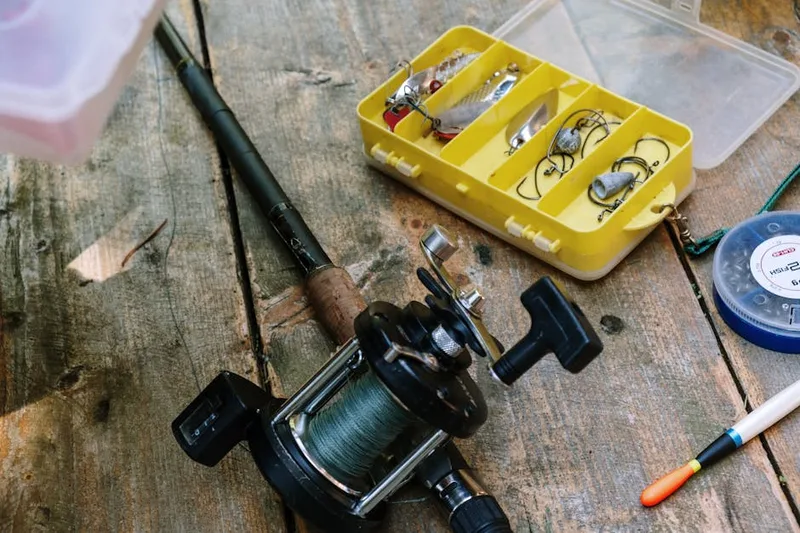
Pound test , the number on the spool like "8 lb" or "12 lb" , tells you roughly how much weight the line can hold before it breaks.
Notice I said "roughly." Most quality lines break higher than their rating. A good 8-pound mono might actually break at 10-11 pounds of steady pressure.
What matters for a beginner: match your line to the fish you're actually going to catch, not the trophy you hope to catch someday.
I've had beginners come back to me after switching from 12-pound to 6-pound line, amazed that they suddenly started catching fish. The lighter line was less visible and let their lures move more naturally.
They weren't losing fish to break-offs , they were never getting bites in the first place.
| Target Species | Recommended Line | Why This Range |
|---|---|---|
| Panfish (bluegill, crappie, perch) | 4-6 lb mono | These fish have small mouths and good eyesight. Light line gets more bites. |
| Trout (streams and small rivers) | 6-8 lb mono | Trout are line-shy. 8lb is the maximum , drop to 4-6lb in clear water. |
| Bass (largemouth and smallmouth) | 8-12 lb mono | Versatile range. 8lb for open water, 12lb around docks and light cover. |
| Walleye | 8-10 lb mono | Similar to bass. Walleye have excellent low-light vision , clear line helps. |
| Catfish (channel cats) | 15-20 lb mono | Catfish don't care about line visibility. They pull hard and roll in the line. |
| Pike and musky | 20-30 lb braid + wire leader | Teeth. You need wire or heavy fluoro leaders. Not a beginner target. |
If you fish for multiple species , and most beginners do , start with 8-pound monofilament. It's the Goldilocks choice: light enough for panfish and trout, strong enough for bass up to 3-4 pounds.
I've landed 5-pound largemouth on 8-pound mono more times than I can count. It handles 90% of freshwater situations a new angler will encounter.
The 3 Mistakes That Cost Beginners Fish (I Made Every One)
I'm not listing these to lecture anyone. I'm listing them because I have personally done all three and lost fish because of each one. Twice, in some cases.
Mistake 1: Buying Line That's Too Heavy
This is the #1 beginner mistake, and it makes perfect sense why it happens. Heavier line feels safer. It looks like insurance against break-offs. But the cost is stealth , and in clear water, stealth beats strength every time.
I had a guy at my local pond last summer who hadn't caught anything in three hours. He was using 20-pound braid on a medium spinning rod, chucking a small crankbait for bass.
I handed him my spare rod with 8-pound mono and the same lure. He caught two bass in the next forty minutes. Same lure. Same pond. Different line.
The 20-pound braid looked like rope to fish in 8-foot visibility.
Rule of thumb: use the lightest line you can get away with for the species you're targeting. If in doubt, go lighter, not heavier.
Mistake 2: Never Checking Your Line for Damage
Line degrades. It picks up nicks from rocks, docks, and even the line roller on your reel. Run your fingertips along the last 3-4 feet of line before every trip.
If you feel any roughness, bumps, or flat spots, cut that section off and retie.
I've never had a fish break me off at the knot , every unexplained break-off I've experienced traced back to a nick I missed somewhere in the line.
This is one reason I like cheap mono for beginners. You can cut off 10 feet of damaged line without feeling like you're throwing away money.
Try doing that with $30 fluorocarbon and you'll hesitate , and hesitation costs fish.
For more on how long line lasts before you need to replace it entirely, check our guide on monofilament shelf life.
Mistake 3: Cinching Knots Dry
This one is brutally simple and painfully common. When you pull a knot tight without wetting it first, friction generates heat.
That heat weakens the line at the exact point that takes all the stress during a fight. A dry-cinched improved clinch knot on 8-pound mono might break at 5 pounds.
The same knot, wetted with saliva before cinching, holds to 7-8 pounds.
Wet every knot. Every single one. Make it a habit so automatic you do it without thinking. It takes half a second and it's the cheapest insurance in fishing.
Start Here: The $12 Setup That Catches Everything
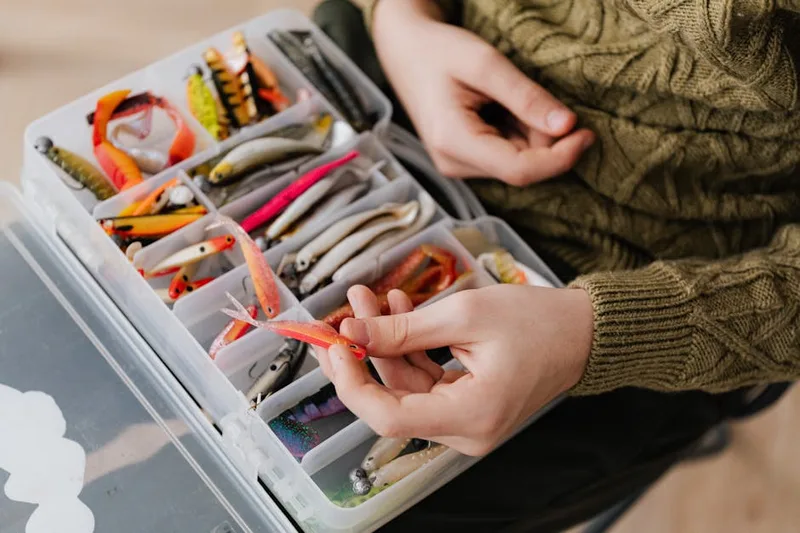
If you walked up to me at a boat ramp tomorrow and said "I've never fished before — what line do I buy," here's exactly what I'd tell you. No upsells. No "it depends." Just what works.
Berkley Trilene XL , 8lb, Clear , ~$6.50 for 330 yards
This is the line I put on every beginner's reel.
It's been around for decades for a reason: it casts smoothly, ties knots that hold, and has enough stretch to forgive the mistakes every new angler makes.
The "XL" stands for extra limp , less memory means fewer coils jumping off your spool. At $6.50 for a 330-yard spool, you can fill two reels and still have line left for respooling mid-season.
I've caught bass, trout, walleye, and panfish on this exact line. It is not fancy. It does not have nanotechnology in the name. It just works.
Check Price on AmazonStren Original , 8lb, Clear/Blue Fluorescent , ~$7 for 330 yards
If your shop doesn't carry Trilene, Stren Original is the backup plan. Slightly stiffer than Trilene XL but with better abrasion resistance , useful if you're fishing around rocks or wood.
The blue fluorescent version is easier to see above water while staying reasonably stealthy below the surface. Same price range, same reliability.
I've used both interchangeably for years and can't point to a meaningful difference in fish caught.
Check Price on AmazonPair either of these with size 6 or 8 baitholder hooks, some split shot weights, and a bobber, and you have a setup that will catch bluegill, crappie, trout, and bass.
Total investment: under $20 including line, hooks, weights, and bobbers.
When Mono Isn't Enough: The Braid Upgrade Timeline
Monofilament is not a forever solution. After a couple months on the water, you'll start noticing its limitations: the stretch that once helped you now feels mushy. You'll want more sensitivity for bottom fishing.
You'll start fishing around heavier cover where mono's thickness becomes a liability.
Here's the upgrade path I recommend, based on watching dozens of beginners progress:
- Month 1-2: Straight 8lb mono. Learn to cast, tie knots, set drag, and land fish. Nothing else matters yet.
- Month 3-4: If you're fishing clear water, add a 4-foot fluorocarbon leader (8lb) tied to your mono main line with a double uni knot. You get invisibility without respooling your whole reel. Check out our full comparison of braid vs mono vs fluorocarbon to understand when each material earns its place.
- Month 5-6: Buy a second spool for your reel and load it with 20lb braid. Use this setup for fishing around heavy cover, docks, and lily pads. Keep your mono spool for open water.
- Month 7+: You now understand line well enough to make your own decisions. You'll probably have strong opinions by now. That's the point.
The key insight: you never need to abandon mono completely. I still keep a reel spooled with 8lb Trilene XL for panfish and casual pond fishing, even though I own reels with $40 braid.
Different tools for different jobs. For more on what happens to old mono sitting on your shelf, read how long monofilament actually lasts.
The Counterintuitive Truth: Expensive Line Won't Make You a Better Angler
Here's the thing nobody in the tackle industry wants you to hear: the gap between a $7 spool of mono and a $35 spool of premium fluorocarbon is smaller than the gap between good technique and bad technique.
I've watched beginners blow $40 on "tournament-grade" line and still not catch fish because their knots were badly tied, their drag was locked down, and they were retrieving lures at speeds that would spook any bass in the lake.
I've also watched broke college kids with $6 Walmart line outfish everyone on the bank because they paid attention to presentation, depth, and retrieve speed.
The line is a tool. A $200 hammer doesn't drive nails better than a $20 hammer if you don't know how to swing it.
Master the fundamentals first: knot tying with consistent strength, drag setting (roughly 25-30% of your line's rated strength), and reading water.
Then, when you've caught 50 fish on cheap mono and you know exactly what limitation you're trying to solve , maybe you want more sensitivity, maybe you need less visibility , that's when spending more on line makes sense.
Until then, save your money. Buy the $7 spool. Spend the difference on gas to drive to a better fishing spot.
FAQ: Questions I Get from Beginners Every Season
How often should I change my fishing line?
For monofilament, every 2-3 months of regular use , or sooner if you notice the line feeling rough or looking cloudy. Mono absorbs water over time, which weakens it.
If you fish once a week, change your line at least twice a season. If you fish every weekend, change it monthly. A $7 refill spool is cheaper than losing the fish of a lifetime.
For the full breakdown on how mono degrades over time, check our guide on monofilament shelf life.
What color line should a beginner use?
Clear. For your first spool, don't overthink this. Clear monofilament is the most versatile choice , it works in clear water, stained water, sunny days, and cloudy days.
Green-tinted line can help in heavily vegetated water.
High-vis yellow or orange line is for situations where you need to watch your line for subtle bites (like crappie fishing with a slip bobber), but you'll want a clear leader in front of it.
Start with clear. Branch out later.
Should I use a leader as a beginner?
Not yet. A leader adds a connection knot , another potential failure point , and complicates your setup. For your first two months, run straight monofilament from reel to hook.
Once you can tie an improved clinch knot in under 30 seconds without looking at instructions, then try adding a fluorocarbon leader with a double uni knot.
Until then, the simplicity of straight mono outweighs any stealth advantage a leader might provide.
Can I use the same line for freshwater and saltwater?
Technically yes, practically no. If you're fishing saltwater as a beginner , which is rare , buy line specifically labeled for saltwater use.
Saltwater line has UV inhibitors and different coatings to handle the harsher environment. Your freshwater mono will degrade noticeably faster in salt.
More importantly, saltwater fish tend to run harder and larger, so your 8lb freshwater setup is probably underpowered for even modest inshore species.
Ready to Spool Up and Go Fishing?
Grab a spool of 8lb monofilament, tie on a hook, and get to the water. Everything else you can figure out along the way.
Get the Starter Line on AmazonSources & Industry References
- International Game Fish Association (IGFA) , Official world record authority and fishing line standards reference
- Wired2Fish , Independent fishing gear reviews and line testing data
- Tackle Warehouse , Comprehensive fishing line specs, diameter charts, and user reviews
Frequently Asked Questions
Who is this guide for?
Anglers looking to make informed decisions about fishing line selection , from beginners to experienced fishermen who want to understand the technical details behind line performance.
What's the most common mistake anglers make?
Choosing line based on price alone, or using the same line for every situation. Line diameter, material, and pound test should match your target species, water conditions, and fishing technique.
How often should I replace my fishing line?
Monofilament: every season or after 8-12 trips. Fluorocarbon: every 2 seasons. Braided line: can last 2-3 seasons if properly maintained. Replace immediately if you see fraying, discoloration, or memory coils.
Braid vs Mono vs Fluorocarbon , which should I pick?
Braid for sensitivity, casting distance, and heavy cover. Mono for topwater lures, stretch forgiveness, and budget. Fluorocarbon for clear water, leader material, and abrasion resistance. Most anglers use a combination.
What pound test line should I use?
Match to your target species: 4-8lb for panfish, 8-12lb for bass, 15-30lb for catfish/striper, 30-65lb for musky/saltwater. Check your rod's line rating , it's printed on the blank for a reason.
What should beginners check before buying line?
1) Match line weight to your rod rating. 2) For spinning reels, stick to 8-12lb to avoid wind knots. 3) Don't overspend on your first spool , $8-15 mono is perfectly fine to learn on.