Table of Contents
A solid 4-pound smallmouth lost at the boat ramp is the classic example:outh because his braid started free-spinning on the spool. Whole spool. Just rotating on the arbor like a fidget spinner.
He'd tied braid straight to bare metal.
I've been that guy. The classic launch mistake: spooling 150 yards of 20-pound braid straight onto the arbor.
First decent fish, the drag screamed and nothing happened , the entire mass of braid was just slipping. Zero grip.
That's why mono backing exists. Not to save money (though it does). Not to fill space (though it helps). It exists because braid cannot grip a smooth metal arbor. Mono can.
Why Mono Backing Isn't Optional
Braid is slick. It's designed to be slick , that's half the reason it casts farther than mono. But that slickness means it has almost zero friction against the polished aluminum or graphite of your reel's arbor.
(If you're still deciding between line types for your setup, our braid vs mono vs fluorocarbon guide breaks down when each one wins.)
Mono, on the other hand, has texture. It bites. Wrap 20 yards of cheap 12-pound mono around the arbor, cinch it tight with an arbor knot, and that base layer will never slip.
Then tie your braid to the mono, fill the rest of the spool, and you have a locked-in system.
The mono grips the metal. The braid grips the fish.
It is a hard-won lesson on a Shimano Stradic 3000 with straight braid. Marked the line at the spool lip with a Sharpie.
After one afternoon of smallmouth fishing, that Sharpie mark had rotated about 40 degrees. The entire spool of braid was slowly, imperceptibly slipping with every cast and retrieve.
That same reel with 25 yards of mono backing? Two seasons later, same Sharpie mark, hasn't moved a millimeter.
The Real Math: How Much Mono Backing You Actually Need
Here's where everyone gets confused. You'll hear "20 yards" from one guy, "half the spool" from another, and "just eyeball it" from a third.
The truth depends on exactly three things:
- Your reel's line capacity (printed on the spool or in the manual)
- The amount of braid you want on top (typically 100–150 yards for freshwater, 150–250 for saltwater)
- The diameter difference between your braid and your backing mono
Most anglers overthink this. Here's the dead-simple method:
The Reverse Spool Method (No Math Required)
This is the foolproof way. You need two reels or a spare line spool:
- Spool your braid onto the empty reel first. All of it , however much you want as your working line. 120 yards is my sweet spot for bass.
- Tie your mono backing to the end of the braid using a double uni knot.
- Now fill the rest of the spool with mono until it's about 1/8 inch from the spool lip. Leave that gap , overfilling causes wind knots.
- Here's the trick: strip all the line off. Then flip it. Re-spool it with the mono end going on first.
Now your mono backing is on the bottom, exactly the right amount, and your 120 yards of braid sits perfectly on top.
Takes 10 minutes. Zero guessing.
If You Want to Calculate It
Some people like numbers. Fine. Here's the formula:
The spool on a typical 3000-size spinning reel holds about 170 yards of 8-pound mono (0.25mm diameter) on the compact C3000 body, or roughly 110 yards on the standard 3000.
If your braid is 20-pound test , which has a diameter equivalent to 8-pound mono (roughly 0.23mm for most 8-strand braids like PowerPro) , then 120 yards of braid takes up about the same space as 120 yards of 8-pound mono.
So: 170 total capacity minus 120 used by braid = about 50 yards of mono backing on a C3000.
On a standard 3000 (110 yard capacity), you're looking at essentially zero backing room after 120 yards of braid , which is why most anglers use 80-100 yards of braid on standard 3000 reels and fill the rest with backing.
But honestly? The reverse spool method is faster and more accurate. Most anglers haven't calculated backing in years.
What Size Mono Should You Use for Backing?
Match the diameter. Not the pound test , the diameter.
If you're spooling 20-pound braid (typically 0.23mm diameter), use mono with a similar diameter , usually 8-pound test mono comes in around 0.25mm. Close enough.
| Braid (lb test) | Typical Diameter | Mono Backing (lb test) |
|---|---|---|
| 10 lb | ~0.15mm | 4–6 lb |
| 15–20 lb | ~0.20–0.23mm | 8 lb |
| 30 lb | ~0.28mm | 10–12 lb |
| 50 lb | ~0.35mm | 15–20 lb |
| 65–80 lb | ~0.40mm+ | 25–30 lb |
Why match diameter? Because when the diameters are close, the line lays evenly on the spool.
A big fat mono knot under thin braid creates a bump that every coil of line catches on during a cast.
That's how you get those random "ticks" mid-cast , it's not the wind, it's the line hitting a backing bump.
Berkley Trilene Big Game in 8 or 10-pound is my go-to backing mono. A bulk spool costs under $10 and will back dozens of reels. For saltwater, step up to 15 or 20-pound , same stuff, just thicker.
The Knot: Double Uni, Every Time
You're connecting mono to braid. Two completely different materials with different diameters, different stretch profiles, and different surface textures. This knot takes repeated shock loads from casting and hooksets, buried deep on your spool where you can't inspect it.
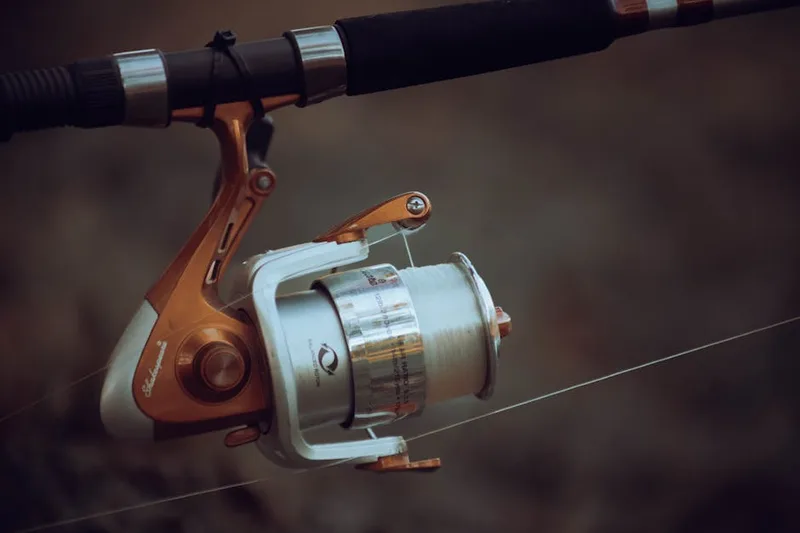
The double uni is the only knot I trust here. FG knot is stronger but bulky and unnecessary for a connection that'll never leave the spool. The double uni is slim, reliable, and I can tie it in the dark.
Make four wraps with the braid side, five with the mono side. Cinch slow. Wet it first , always wet the knot before cinching, especially with braid. Dry braid generates heat when tightened and can burn itself.
Common Common Mistakes to Avoid
Too little backing. The braid runs out mid-fight, the backing knot hits the guides, and now you're fighting a fish on 12-pound mono that hasn't seen daylight in two years. That old mono is brittle. It'll break.
Too much backing. You wanted to save money so you filled the spool 70% with mono. Now you have 50 yards of braid on top. One long cast and a running fish, you're into the backing knot. Same problem.
Wrong knot. A blood knot between braid and mono loses significant strength with dissimilar diameters , some tests show 50% or more loss. Don't do it. The double uni is far more reliable for this connection.
No electrical tape. On baitcasting reels especially, wrap one layer of electrical tape around the arbor before spooling the mono backing. Braid can still slip on mono if the mono-to-arbor knot loosens.
The tape gives the mono something to bite into. Costs 2 cents.
Not re-spooling annually. Mono backing degrades. UV exposure through the braid above it, temperature cycles in your garage, and simple aging make it brittle. Replace your backing once a year. It's $0.25 worth of line.
When You Actually Don't Need Mono Backing
There's exactly one scenario: your reel has a rubber-coated arbor or a braid-ready spool with a textured gripping surface. Some newer Shimano and Daiwa reels have this.
If the arbor surface feels tacky or has a crosshatch pattern, you can tie braid directly , but still wrap electrical tape first. Old habits.
For every other reel? Use backing.
Frequently Asked Questions
Can I use old mono as backing?
Yes. That half-spool of 8-pound Trilene XL sitting in your garage from 2023? Perfect. Just check it for brittleness first , pull a 6-inch section and yank hard. If it snaps instantly, toss it.
If it stretches, it's fine. Backing never sees UV on the water, so old mono is actually ideal for this job.
How do I know when I've put enough backing?
The gap between your line and the spool lip. You want 1/8 inch , about the thickness of two nickels stacked. Any more and you're losing casting distance.
Any less and you're asking for wind knots. When in doubt, slightly underfill. You can always add more later.
What's the difference between backing and a leader?
Backing stays on the spool permanently , you never cast it, you never see it on the water.
A leader is the last 3 to 8 feet of line tied to your lure or hook, deliberately chosen for invisibility or abrasion resistance. Backing is purely mechanical. Leader is tactical.
Want the exact numbers for your specific reel? Try our free fishing line calculator , plug in your reel specs and it'll tell you exactly how much backing and braid your spool can handle.
Found This Guide Helpful?
Check out LineCalc Pro , our free fishing line calculator that recommends the perfect line for your exact setup. No guessing, no wasted money.
Try LineCalc Pro →Sources & Industry References
- International Game Fish Association (IGFA) , Official world record authority and fishing line standards reference
- Wired2Fish , Independent fishing gear reviews and line testing data
- Tackle Warehouse , Comprehensive fishing line specs, diameter charts, and user reviews
Frequently Asked Questions
Who is this guide for?
Anglers looking to make informed decisions about fishing line selection , from beginners to experienced fishermen who want to understand the technical details behind line performance.
What's the most common mistake anglers make?
Choosing line based on price alone, or using the same line for every situation. Line diameter, material, and pound test should match your target species, water conditions, and fishing technique.
How often should I replace my fishing line?
Monofilament: every season or after 8-12 trips. Fluorocarbon: every 2 seasons. Braided line: can last 2-3 seasons if properly maintained. Replace immediately if you see fraying, discoloration, or memory coils.
Braid vs Mono vs Fluorocarbon , which should I pick?
Braid for sensitivity, casting distance, and heavy cover. Mono for topwater lures, stretch forgiveness, and budget. Fluorocarbon for clear water, leader material, and abrasion resistance. Most anglers use a combination.
What pound test line should I use?
Match to your target species: 4-8lb for panfish, 8-12lb for bass, 15-30lb for catfish/striper, 30-65lb for musky/saltwater. Check your rod's line rating , it's printed on the blank for a reason.
What should beginners check before buying line?
1) Match line weight to your rod rating. 2) For spinning reels, stick to 8-12lb to avoid wind knots. 3) Don't overspend on your first spool , $8-15 mono is perfectly fine to learn on.