Table of Contents
Why River Estuaries Fish So Well
An estuary is where a river meets the sea — and that mixing zone does three things at once. It delivers dissolved oxygen, nutrient-rich food, and shelter. That combination is why so many species stack up around river estuaries in autumn and winter.
When a strong flood tide pushes in, oxygen levels climb higher. Fish get more active, gather in schools, and feed harder. Meanwhile the river keeps carrying organic debris downstream, feeding a microorganism bloom that supports small fish, shrimp, and crabs. It becomes a natural buffet.
There’s also structure. Rock revetments placed along the banks create countless gaps and passages where fish hold safely. Floating debris, reeds, and bushes add more cover. Because the water is often noisy and exposed to wind and waves, fish feel less threatened close to shore — so they’re more willing to feed in reach.
And in spring, large offshore and migratory fish gather at river estuaries to spawn. The young grow through summer, and by late autumn they’re big and aggressively feeding before winter migration. That’s why autumn and winter are prime estuary seasons.
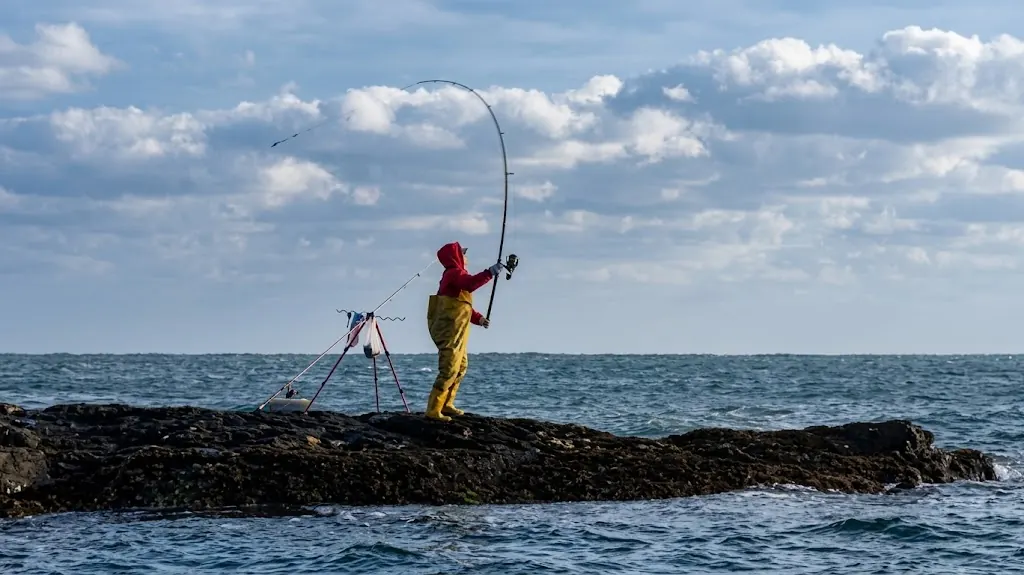
Under 3m: Multi-Hook Bottom Rig
For bottom-dwelling species like black sea bream, gobies, pomfret, flatfish, and mullet, a multi-hook bottom rig is the workhorse. It runs three hooks on a single rig, so you cover several species at once. Size 5 long-shank saltwater hooks are a good all-around pick.
Bait is flexible — fish pieces, shellfish, shrimp, crabs, poultry bits all work. But two baits outperform: fresh shrimp and live marine worms (lugworms, tube worms, ragworms). In shallow water, small prawns are especially deadly.
3-5m: Suspended-Bait Rig
This rig reaches both bottom fish and mid-water species like sea bass and mullet. Tie a size-8 swivel to your main line, slide on a 30-60g sinker, then run a 60cm leader to a large long-shank saltwater hook (size 10 or bigger).
Thread on one whole marine worm, leaving about 1-2cm sticking out each end so it keeps wriggling. As wind and waves move the water, the long leader rises and falls naturally — that action is what triggers feeding fish.
If the bite is slow and the bottom is snag-free, add a second 30cm leader to double your chances. Just watch for tangles.
Over 5m: Float Rig
When the target holds in the middle or upper water column, a float rig is the better call. Thread two stopper beads, add an Abo float, then two more stopper beads. The beads set your depth range and keep the float seated.
Attach split-shot weights lower down, tie on a size-8 swivel, and run a leader of at least 60cm. Use a fairly large hook — around size 15 — with a long shank (about 2cm) to protect the leader from the fish’s teeth.
The hook point must be razor sharp. If it’s dull, swap it immediately.
Fresh shrimp and live marine worms both work. When unsure of bait size, go bigger — a substantial bait draws the larger fish.
Recommended: Premium Long-Shank Saltwater Hooks
Sharp, corrosion-resistant long-shank hooks make the difference at an estuary, where fish hold structure and bite light. A hook that stays sharp through repeated rock-fishing keeps you connected to the fish you set into.
Check Price on AmazonFinding the Right Depth
The whole game with a float rig is dialing in the depth. If other anglers are already catching, copy the depth of their rig as your starting point. If you’re first on the water, begin around 3m and work deeper or shallower until you find the fish.
One catch: the float drifts toward shore in wind and waves. You have to stay alert, retrieve, and recast regularly. Watch the Abo float closely.
With a big hook and big bait, the fish takes a few seconds to get it in its mouth. Don’t strike on the first movement. Wait until the float vanishes completely — ideally hold a two-count — then set firmly. That patience is what turns bites into hook-ups.
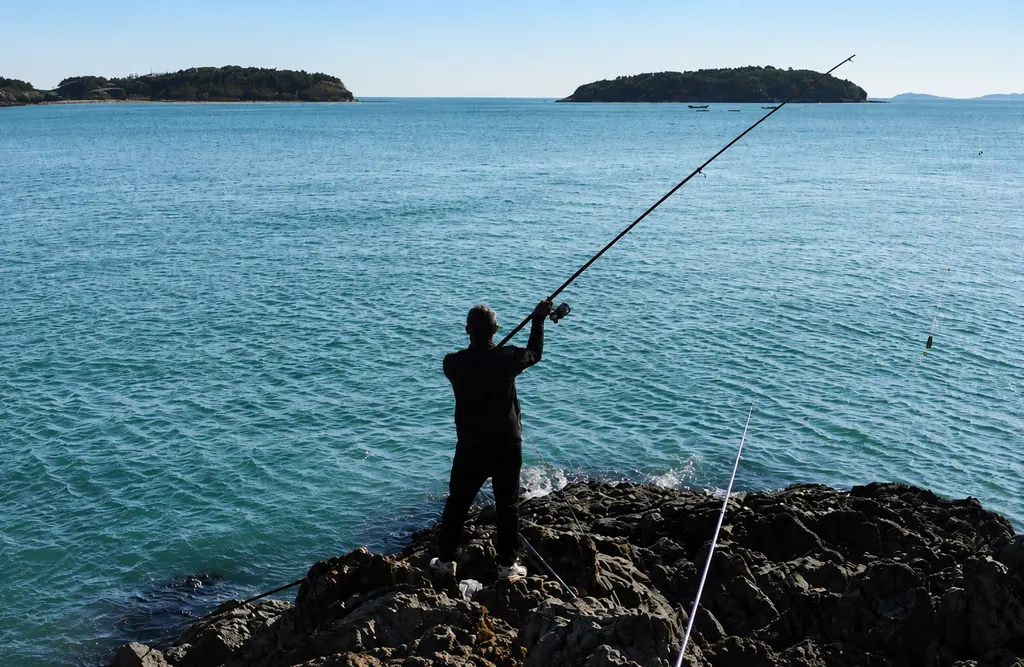
Recommended: 8-Strand PE Braided Line for Estuary Fishing
Estuary fishing demands line that casts far, stays sensitive to light bites, and handles structure. An 8-strand PE braid gives you the diameter-to-strength ratio that reaches the fish and holds when the fight turns brutal.
Check Price on AmazonPlaying a fish around a rocky estuary means controlled pressure, not brute force. Don’t horse it in — you’ll snap the line. But keep tension and steer it away from rocks and debris. Once a hooked fish reaches structure, your odds of landing it collapse.
Choosing the Right Time and Spot
No technique works everywhere. Even a productive estuary shifts with weather, geography, tides, and wind. Here’s what to look for:
- Early morning and late afternoon, when fish feed naturally.
- The sheltered tail of a strong headwind, especially north, northeast, or northwest.
- Structure and obstructions around the river.
- Transitions between deep and shallow water.
- Where rocky bottom meets flatter bottom.
- Freshwater-saltwater mixing zones.
- Water just below breaking waves and foam.
- Spots that have consistently produced before.
Then adjust as you go. Fish move with the tide, wind, current, and food. Successful anglers change rig, depth, casting position, and bait as conditions shift — that’s how you turn a river estuary into a productive spot.
For more coastal fishing know-how, see our spring sea fishing tips, the saltwater fishing line guide, and our surf fishing line setup.
Sources & Industry References
- International Game Fish Association (IGFA) — Official world record authority and fishing standards reference
- Wired2Fish — Independent fishing gear reviews and line testing data
- Tackle Warehouse — Comprehensive fishing tackle specs and user reviews
Found This Guide Helpful?
Check out LineCalc Pro — our free fishing line calculator that recommends the perfect line for your exact setup. No guessing, no wasted money.
Try LineCalc Pro →Frequently Asked Questions
What line should I use for river estuary fishing?
A braided main line in 15-30lb with a fluorocarbon leader works best. Estuary fish can be line-shy, so a light, clear fluoro leader for the last couple of meters gets more bites. For a full comparison, see our braid vs mono vs fluoro guide.
What’s the best bait for estuary fishing?
Fresh shrimp and live marine worms (lugworms, tube worms, ragworms) are the standouts. In shallow water, small prawns are especially effective. Fish pieces, shellfish, and crabs also work well.
What’s the best time of year to fish a river estuary?
Late autumn and early winter. Larger migratory and offshore fish gather at estuaries to spawn in spring, the young feed through summer, and by late autumn they’re large and feeding hard before winter migration.
Do I need a leader for estuary fishing?
Yes. A fluorocarbon leader of at least 60cm is standard — it resists abrasion from structure and is far less visible in clear coastal water, which means more bites from spooky fish.