Lake St. Clair. First week of June. The smallmouth were stacked on a 12-foot flat and I'd been marking them on the graph for twenty minutes. Third cast with a drop shot, the line sprang off the spool in a tangled fist. Wind knot. By the time I cut it out and retied, the school had moved on.
I sat there staring at a brand-new spool of 10-pound fluorocarbon on a size 2500 spinning reel. Forty dollars of line. Zero fish. One ruined morning.
I blamed the wind. I blamed the reel. It took me half a season and three different spools to admit the real problem: I'd put the wrong line on a spinning reel the wrong way. The line wasn't defective. It just wasn't right for a fixed spool.
Why a Spinning Reel Doesn't Care What Works on a Baitcaster
On a baitcaster, the spool spins. Line peels off in the direction of the cast. Simple.
A spinning reel doesn't spin. The spool stays fixed. Every coil of line has to slide over the spool lip as your lure pulls it off. If the line has stiffness or memory, it doesn't slide clean. It springs off in loops. That loop catches the next coil. Now you have a wind knot.
This is why the entire line conversation changes when you're talking about spinning gear. You're not picking a material. You're picking something that has to behave on a fixed spool. Limp wins. Stiff loses. Every single time.
When I finally understood this, going back through the tackle roomespooled every spinning reel I owned. the lesson:
Braid Belongs on a Spinning Reel
Braid has no memory. It's limp. On a fixed spool, limp is exactly what you want. It lies flat, comes off clean, and throws fewer wind knots than anything else when it's spooled right.
It's also absurdly thin. 20-pound braid has roughly the diameter of 6-pound mono. You pack more line on the spool, cast farther, and still have enough strength to horse a smallmouth out of a weed bed. Zero stretch means you feel every tick of the bottom and every tentative tap.
The objection everyone brings up is visibility. Braid is visible underwater. If you're fishing gin-clear Lake St. Clair for pressured smallmouth, they see it. The fix isn't complicated: tie on about 5 feet of fluorocarbon leader. You get braid's casting and sensitivity with near-invisibility where it matters — the last few feet the fish actually sees.
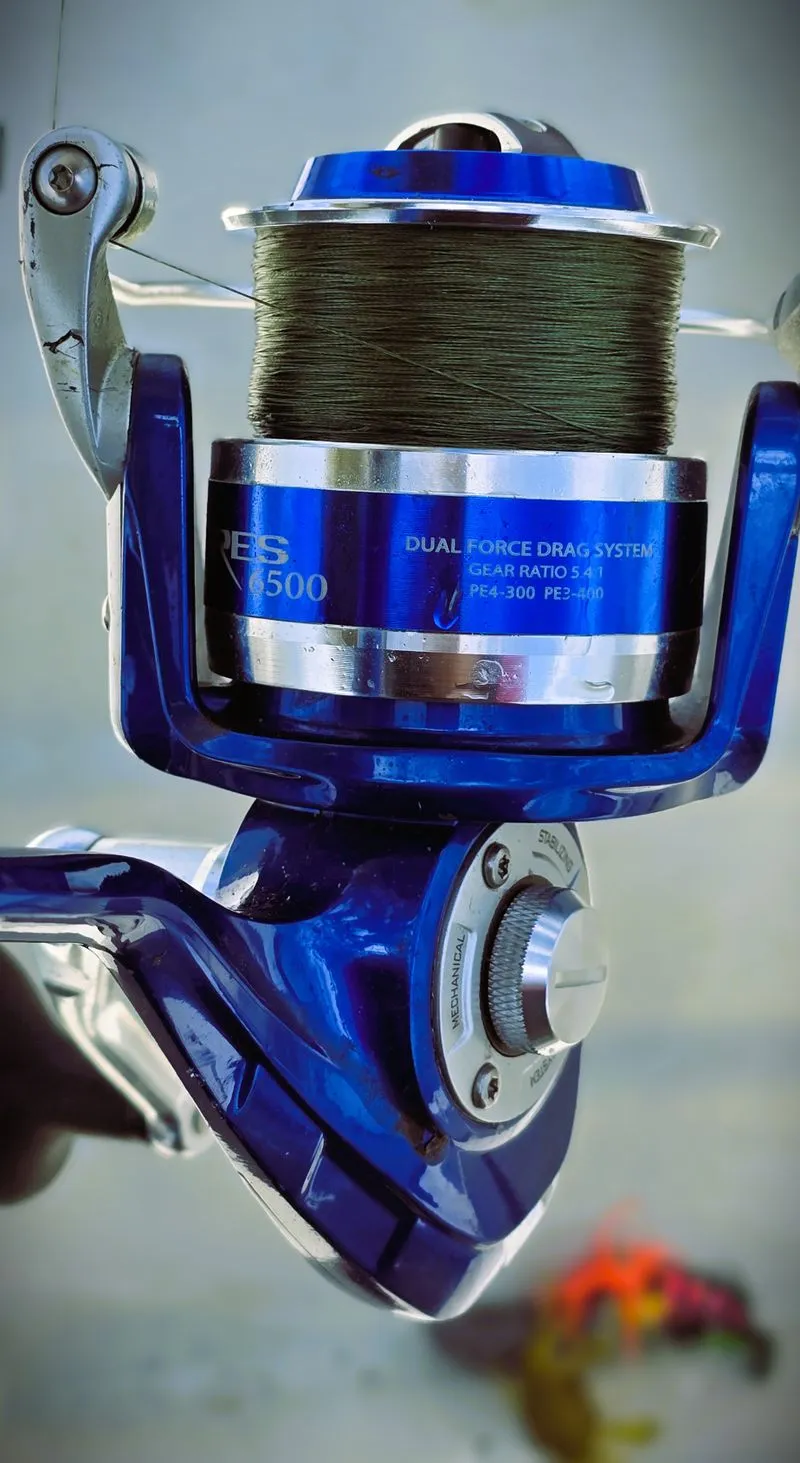
I run this on four rods now. My St. Clair smallmouth rod: 15-pound PowerPro to an 8-pound Seaguar leader. My river walleye rod: 10-pound Sufix 832 to a 6-pound leader. My guest rod: 20-pound braid straight to the lure because whoever's borrowing it is fishing stained water and I don't want to retie leaders all day.
When Straight Mono Still Wins
Mono gets written off as beginner line. That sells it short.
The stretch that everyone criticizes is a feature on a spinning setup. When you set the hook hard with braid, there's zero give. A big fish surges at the boat, and something has to absorb that shock. With braid, it's your knot or your rod tip. With mono, the line gives just enough to keep the hooks pinned.
I keep one reel spooled with straight 8-pound Trilene XL. It lives on a 6'6" medium rod in the rod locker. That's the combo I hand to my brother-in-law who fishes twice a year. It's the topwater rod when the smallmouth are chasing spooks on the surface. Mono floats. Braid sinks. For walking baits and poppers, mono's buoyancy keeps the lure working right.
A fresh spool of Trilene XL costs eight dollars. It'll last a season if you store it out of the sun. After that, the memory builds up and it starts coiling off the spool. Replace it. If you're trying to decide between mono and braid for your first spinning setup, I broke down the whole comparison in braided line vs mono — the short version is that both have a place, but on spinning gear, braid wins on casting and mono wins on forgiveness.
The Fluorocarbon Trap
Fluorocarbon is nearly invisible underwater. It sinks. It resists abrasion. On paper, it's the perfect spinning reel line for clear water.
On a spinning spool, it has one real problem: stiffness.
A 10-pound Vanish on a St. Clair rod? Too stiff for a 2500 reel. The line wanted to hold the shape of the filler spool, so every cast threw coils instead of a clean line. The coils tangled. Hence the wind knot. Hence zero fish.
The fix isn't to avoid fluorocarbon entirely. It's to respect its limits on spinning gear. In 4 to 6 pound test, the diameter is thin enough that even stiff fluoro behaves. This is the finesse zone — drop shots, shaky heads, clear-water smallmouth where invisibility buys you bites that braid never gets.
Seaguar InvizX Fluorocarbon, 6lb
The one fluorocarbon that actually earns a full spool on a spinning reel. Noticeably more supple than typical fluoro — in 6-pound, it lays flat on a 2500 spool without the memory coils that bird-nest other brands. A 200-yard spool runs about $20.
This is what I run on my dedicated finesse rod for clear-water smallmouth. Drop shot. Wacky rig. Shaky head. The near-invisibility gets me bites in water where braid gets ignored.
Check Price on AmazonThe Spooling Fix That Stopped My Wind Knots
You can buy the perfect line and still get wind knots if it goes on the spool wrong. Three things fixed it for me.
Back the braid so it can't slip. Braid is slippery. On a bare metal spool, the entire mass of line can spin freely under tension. Every hookset slips. Every cast loosens the line underneath. Wind knots multiply. Put 10 to 15 yards of cheap mono on the spool first. The mono grips the metal. The braid grips the mono. This single step fixes half the problems anglers blame on the reel.
Fill to an eighth of an inch from the lip. Overfilled spools are wind-knot factories. The line needs room to come off in coils without catching the lip. Underfilled spools kill casting distance. An eighth of an inch is the number. I check it with my thumbnail.
Keep tension while spooling. Run the line through a wet cloth as it goes on. Loose line on the spool digs into itself on the first cast. For mono, soak the filler spool in warm water for ten minutes before spooling — it relaxes the memory and helps the line lay flat from the start.
| Reel Size | Braid Main Line | Mono Main Line | Fluoro Leader |
|---|---|---|---|
| 1000 | 6-10 lb | 2-6 lb | 4-6 lb |
| 2500 | 10-15 lb | 6-8 lb | 6-10 lb |
| 3000 | 15-20 lb | 8-10 lb | 8-12 lb |
| 4000+ | 20-30 lb | 10-15 lb | 12-20 lb |
The 2500 size is the sweet spot for most freshwater fishing. Fifteen-pound braid with an 8-pound fluoro leader handles bass, walleye, and inshore saltwater without complaint.
Common Mistakes to Avoid
Buying three different spools for one reel. for years, the habit was A spool of mono, a spool of braid, a spool of fluoro, all sitting in the boat bag, and I'd tell myself I'd switch depending on where I was fishing. what happens: whatever's already on the reel gets fished. Braid with a fluoro leader covers 90% of situations. The other two spools gathered dust in the garage.
Filling a small spinning reel with stiff fluorocarbon. 10-pound Vanish on a size 1000 reeleel once. Made it four casts before I was sitting on the bank with clippers, same as that morning on St. Clair. Light fluoro only on spinning reels. Heavy fluoro stays on baitcasters or gets cut into leaders.
Cranking against a slipping drag. When the drag slips under load, the spool turns but the line doesn't go out. Every rotation twists the line. After a few good runs from a decent fish, the line is so twisted it springs off the spool on the very next cast. If the drag slips, back off and palm the spool instead of cranking through it.
Leaving line tensioned in storage. Open the bail when you're done for the day. Let the line relax. Light line develops memory fast under tension. a fresh spool of 4-pound InvizX ruined in two weeks by leaving it on a rod in the garage, bail closed, line tight against the keeper.
Three Setups That Actually Work
| Setup | Main Line | Leader | When I Use It |
|---|---|---|---|
| Braid + Fluoro Leader | 15 lb braid | 8 lb fluoro, 5 ft | 90% of my fishing. Bass, walleye, anything. |
| Straight Mono | 8 lb Trilene XL | None | Guest rod. Topwater. Teaching someone. |
| Straight Light Fluoro | 6 lb InvizX | None | Clear water finesse. Drop shot. Pressured fish. |
For the braid-to-leader connection, I tie an FG knot. It's thin enough to reel through the guides, so I can run a 5-foot leader without it catching on the cast. If I'm on the water with cold hands and need to retie, the double uni works fine — just keep the leader shorter so the knot stays outside the guides. Palomar on the business end. If you're new to all of this, our beginner's guide to fishing line walks through the basics without the marketing fluff.
After that morning on Lake St. Clair, I respooled that 2500 reel with 15-pound PowerPro, backed with cheap mono, tied on a 5-foot 8-pound fluoro leader, and filled the spool to an eighth inch from the lip. I've been back to that same flat four times since. The smallmouth are still there. The wind knots aren't.
FAQ
What's the best all-around line for a spinning reel?
10 to 15 pound braided main line with a 6 to 10 pound fluorocarbon leader. This is what I run on four of my five spinning setups. Braid gives you limp casts and zero-stretch sensitivity. The leader gives you invisibility where the fish can see the line. If you only own one spinning combo, spool it this way.
Why does my brand-new line get wind knots?
Nine times out of ten, it's a spooling problem — not a line problem. Check three things: the spool isn't overfilled (leave 1/8 inch of lip showing), braid has mono backing underneath so it can't slip, and the line went on under tension. If all three are right and you're still getting knots, the line is too stiff for that reel size.
Can I use straight fluorocarbon on a spinning reel?
Yes, but keep it light. In 4 to 6 pound test, the diameter is thin enough that fluoro lies flat on a spinning spool. This is a finesse fishing setup for clear water and pressured fish. Don't try 10 or 12 pound fluoro as a main line on a size 2500 or smaller reel — it's too stiff and will coil off the spool.
How often should I replace spinning reel line?
Mono: every season. Fluoro: every 1 to 2 seasons. Braid: can last 3 to 5 seasons — trim the first 20 feet near the lure every few trips. Replace any line immediately if it feels rough between your fingernails, shows fading, or holds persistent memory coils.
Sources & Industry References
- International Game Fish Association (IGFA) — Official world record authority and fishing line standards reference
- Wired2Fish — Independent fishing gear reviews and line testing data
- Tackle Warehouse — Comprehensive fishing line specs, diameter charts, and user reviews
Stop Guessing. Start Catching.
Try LineCalc Pro — our free line recommendation tool matches line type and strength to your exact reel, species, and conditions.
Try LineCalc Pro →