Table of Contents
Last June I was fishing a smallmouth spot on the Susquehanna. River was low, water clear as tap water.
I'd been casting a 4-inch tube on 8lb fluorocarbon for about two hours when I hooked into something heavy.
The fish bulldogged straight into a rock ledge, I thumbed the spool to turn it, and , ping. The line parted clean at the spool, not the knot.
I reeled up and looked at what was left: the fluoro had gone milky about 15 feet up from the lure. It had been on that reel since the previous October.
I'd been fishing it all spring without really looking at it.
That fish would have been my best smallmouth of the year. The line cost about $12. The lesson cost a lot more.
I've been that guy who leaves line on a reel for two seasons because it "looks fine." I've also been the guy who swaps line every three weeks out of paranoia. Neither approach is right. Here's what actually matters.
The Real Reason Line Dies
Fishing line isn't like brake pads where you hit a wear indicator and replace it. It degrades gradually, and the scary part is that the failure point isn't predictable.
A spool of 10lb mono that's been in a hot garage for 9 months might still pull 9.5lb on a steady pull, then snap at 4lb when a fish hits it with a sudden head shake.
Three things kill line:
UV light. This is enemy number one for monofilament. Nylon molecules break down under UV exposure.
A spool of mono left on a boat deck for one summer is a lot weaker than an identical spool kept in a dark drawer.
I've seen clear Trilene turn chalky white after a single season of bank fishing in open sun.
Heat. Garage storage, locking your rod locker in July, leaving tackle in the car. All of it accelerates degradation. Heat doesn't just weaken line, it increases memory. That coily mess you pull off a spinning reel in August? Heat damage.
Micro-abrasion. Every time your line rubs against a rock, a dock piling, a fish's teeth, or even your rod guides, it takes tiny nicks.
These are invisible unless you run the line between your fingers slowly. Even then you might miss them. One deep nick turns 12lb line into 4lb line at that exact spot.
5 Signs Your Line Needs to Go
1. The Fingernail Test
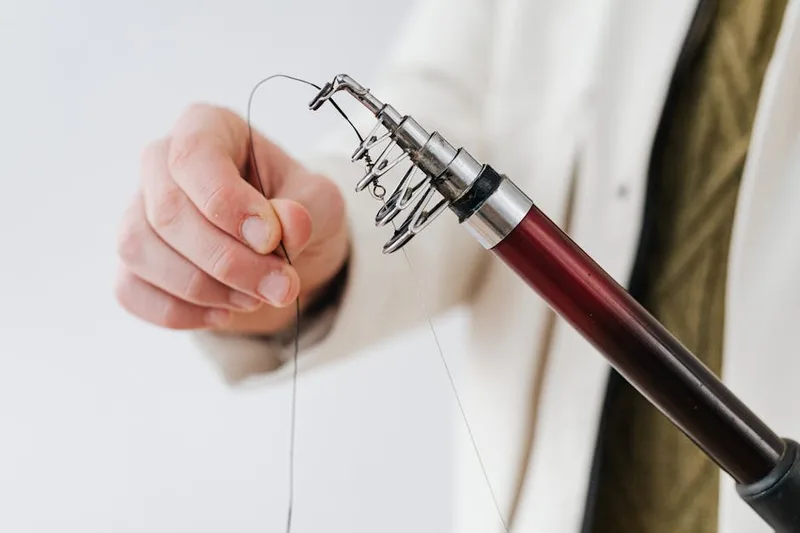
Run about three feet of line between your thumb and index finger, pinching lightly. If it feels anything other than perfectly smooth. Catches, rough spots, fuzz on braid , cut back past the damage.
If the damage goes deeper than a few yards, replace the whole spool.
For braid specifically: hold it up to light and look for individual fibers sticking out. Healthy braid is a uniform rope. Frayed braid looks like it's growing hair.
2. The Color Shift
- Monofilament: Clear mono should be clear. If it's turned milky, opaque, or yellowish, it's oxidized. Replace it.
- Fluorocarbon: Should stay transparent. Cloudiness means the surface has abraded. Yellowing happens from UV even though fluoro is more UV-resistant than mono, but it's still degrading.
- Braid: Color fading isn't a strength issue by itself (the dye fades before the Spectra/Dyneema fibers degrade), but it means the line has seen serious UV hours. If the color is gone and the line feels stiff, replace.
3. Memory That Won't Relax
All mono and fluoro develops some memory. It's the nature of the material. But there's a difference between "cast it twice and it straightens" and "looks like a Slinky even after half an hour of fishing."
If you stretch a length of mono between your hands and it doesn't return smooth, or if it holds tight coils after soaking in the water for 10 minutes, the plasticizers in the nylon have degraded.
The line will cast shorter, twist worse, and break easier. Time to strip it.
4. The Pull Test (But Smarter)
The standard advice is tie to a tree and pull. That tells you if the line is completely shot, but it doesn't catch the line that's about to go. Here's a better version:
Tie a simple overhand knot in a 12-inch section of line. Pull steadily until it breaks. Mono and fluoro should break above roughly 50-60% of rated strength on a knotted test.
If it snaps with almost no effort, the material is brittle throughout. Replace the whole spool.
5. Unexplained Break-Offs
One break-off at the knot? Probably your knot. Two break-offs mid-line on the same outing? Your line is done. I don't care if it "looks fine." When line starts failing in the field, trust the failures, not your eyes.
This is especially common with fluorocarbon that's been on a reel for 8+ months. Fluoro doesn't show wear as visibly as mono. It just snaps one day.
Line-Type Replacement Timelines
These aren't rules carved in stone. They're what I've settled on after losing enough fish to learn the hard way.
| Line Type | Weekend Angler | Moderate Use (2-3x/week) | Heavy Use (4x+/week, tournaments) |
|---|---|---|---|
| Mono | Once per season | 2-3 times per season | Every 4-6 weeks |
| Fluoro | Once per season | 1-2 times per season | Every 6-8 weeks |
| Braid | Every 2-3 seasons | Once per season | Every 2-3 months |
Monofilament wears fastest. A $8 spool of Berkley Trilene XL on a spinning reel for panfish might last all summer if you fish twice a month.
The same line on a baitcaster throwing crankbaits around rocks three times a week? You'll feel it go rough in a month.
Fluorocarbon lasts longer in terms of pure material integrity, but it's the line type most likely to fail without warning. Fluoro doesn't get fuzzy or stretchy like mono; it fractures.
If you fish fluoro around zebra mussels or barnacles, replace it before the timeline says to. Those shells are fluoro's kryptonite.
Braid is the outlier. Spectra and Dyneema fibers don't degrade from UV the way nylon does. A spool of PowerPro that's been on a reel for three seasons might still test at 90% of rated strength.
But the outer layers that see the most casting, retrieving, and abrasion will fray.
Here's a trick I learned from a guy who guides on Lake Erie: when your braid starts looking fuzzy on the top 50 yards, don't replace the whole spool.
Unspool it onto an empty spool or line winder, effectively flipping it so the fresh line from the bottom of the spool becomes the working end.
You get another full season out of a single fill, and it takes 10 minutes.
(If you're putting fresh braid on and want to avoid twist problems from the start, I wrote a separate guide on how to spool braid on a spinning reel without creating line twist.)
One Factor Nobody Talks About
How you store the rod matters more than how you fish it.
I keep my rods in an uninsulated shed. In August, that shed hits 100°F easily. The mono on those reels degrades roughly twice as fast as the mono on reels I store in my basement.
Same brand, same pound test, same amount of use. Heat is cumulative damage.
If you store your rods in a hot garage, a truck bed, or a boat locker in summer, cut every replacement timeline in this article by 30-40%.
The line on those reels is cooking all week whether you're fishing or not.
And one more thing: don't store rods with line strung tight under tension. That constant pull accelerates stress cracking in mono and fluoro. Back your drag all the way off when the rod goes in the rack.
What Happens If You Don't Replace It
I'm not going to tell you the world ends. But here's the math that changed my behavior:
A spool of decent mono costs about $8-12. A spool of good fluoro is $15-20. A lost day of fishing because your line kept breaking? Priceless in the angry sense. A snapped-off crankbait is $6-9.
A lost fish at a weekend tournament you drove four hours to fish is every cost you've sunk into that trip.
I replace my line before it forces me to. A $12 insurance policy against a ruined day on the water is the cheapest gear decision you'll ever make.
The Real Math
I'm not going to tell you the world ends if you don't replace your line. But here's the math that changed my behavior:
Frequently Asked Questions
Q: Can I just cut off the top 30 yards instead of replacing the whole spool?
For braid on a spinning reel where only the casting portion wears? Yes, especially if you do the flip trick I mentioned above.
For mono or fluoro, cutting the top section helps temporarily, but if the line is old enough to show wear on the outer layers, the deeper layers have been aging too, just less abraded.
Replace it.
Q: Does leaving line on a reel over winter ruin it?
Not if it's stored properly. Cool, dark, dry. Mono and fluoro will be fine from November to March in a basement. The damage happens during the fishing season when UV and heat are in play.
If anything, cold storage preserves line.
Q: I fish once a month. Do I really need to replace line every season?
If you're fishing once a month, once per season is reasonable if you store your gear properly between trips.
But do the fingernail test and the knotted pull test at the start of each season regardless. Don't assume the line is good just because it has low hours.
UV and heat don't punch a time clock.
Q: Does braid color fading mean it's gone bad?
Not by itself. The dye in braided line fades long before the fibers lose strength. I've caught fish on braid that was so faded I couldn't tell you what color it started as.
The real test is the feel. If the faded braid is still smooth and doesn't fray when you run it through your fingers, it's fine.
Q: Is expensive line more durable?
Sometimes yes, sometimes no. Expensive fluorocarbon like Seaguar Tatsu has better abrasion resistance and knot strength than budget fluoro.
For mono, the difference between a $8 spool of Trilene XL and a $4 generic spool is real. Cheaper mono uses less refined nylon that degrades faster.
For braid, PowerPro at $18 is hard to beat; going up to $40 for premium Japanese PE braid gets you slightly better roundness and casting distance, not more durability.
Spend the money on fluoro, be smart about mono, don't overpay for braid. (If you're trying to decide between budget and premium line, I wrote a full breakdown at cheap vs expensive fishing line.)
Sources & Industry References
- International Game Fish Association (IGFA) , Official world record authority and fishing line standards reference
- Wired2Fish , Independent fishing gear reviews and line testing data
- Tackle Warehouse , Comprehensive fishing line specs, diameter charts, and user reviews
Found This Guide Helpful?
Check out LineCalc Pro , our free fishing line calculator that recommends the perfect line for your exact setup. No guessing, no wasted money.
Try LineCalc Pro →Frequently Asked Questions
Who is this guide for?
Anglers looking to make informed decisions about fishing line selection , from beginners to experienced fishermen who want to understand the technical details behind line performance.
What's the most common mistake anglers make?
Choosing line based on price alone, or using the same line for every situation. Line diameter, material, and pound test should match your target species, water conditions, and fishing technique.
How often should I replace my fishing line?
Monofilament: every season or after 8-12 trips. Fluorocarbon: every 2 seasons. Braided line: can last 2-3 seasons if properly maintained. Replace immediately if you see fraying, discoloration, or memory coils.
Braid vs Mono vs Fluorocarbon , which should I pick?
Braid for sensitivity, casting distance, and heavy cover. Mono for topwater lures, stretch forgiveness, and budget. Fluorocarbon for clear water, leader material, and abrasion resistance. Most anglers use a combination.
What pound test line should I use?
Match to your target species: 4-8lb for panfish, 8-12lb for bass, 15-30lb for catfish/striper, 30-65lb for musky/saltwater. Check your rod's line rating , it's printed on the blank for a reason.
What should beginners check before buying line?
1) Match line weight to your rod rating. 2) For spinning reels, stick to 8-12lb to avoid wind knots. 3) Don't overspend on your first spool , $8-15 mono is perfectly fine to learn on.