Table of Contents
- Why a Fish Is Lost at the Net
- Why Is Old Line the #1 Silent Killer?
- Why Do Knots Fail More Often Than the Line Itself?
- Why Does Abrasion Destroy New Line in One Afternoon?
- Why Is Your Drag Setting More Important Than Your Line Strength?
- Why Does Line Memory Cause Break-Offs You Never See Coming?
- Why Does Improper Storage Kill Line Before You Even Cast?
- Why Does Mismatched Gear Snap Line on the Hookset?
- What's Causing YOUR Line to Fail: The Diagnostic Table
- FAQ
The typical failure looks like this: a 20-pound carp is lost at the net, three feet above the rig. The hook did not pull. The drag was not too tight. The 12lb monofilament simply gave up.
That spool had been on the reel for fourteen months. It looked fine. It felt fine on the cast.
But somewhere between last season's UV exposure and this spring's first hookset, the polymer chains inside that nylon can degrade enough that a fish fought for eight minutes breaks free in the final ten seconds.
Test every section of that line on a digital scale and the spread is ugly. The section near the lure can come in at 6.8lb breaking strength instead of 12.
The middle of the spool held at 9.2lb. Only the line buried deepest, the line that had never seen sunlight, tested anywhere near its rating.
Line failure follows patterns. Once you know them, you stop losing fish to preventable causes. Here are the seven real reasons your line fails, and exactly what to do about each one.
Why Is Old Line the #1 Silent Killer?
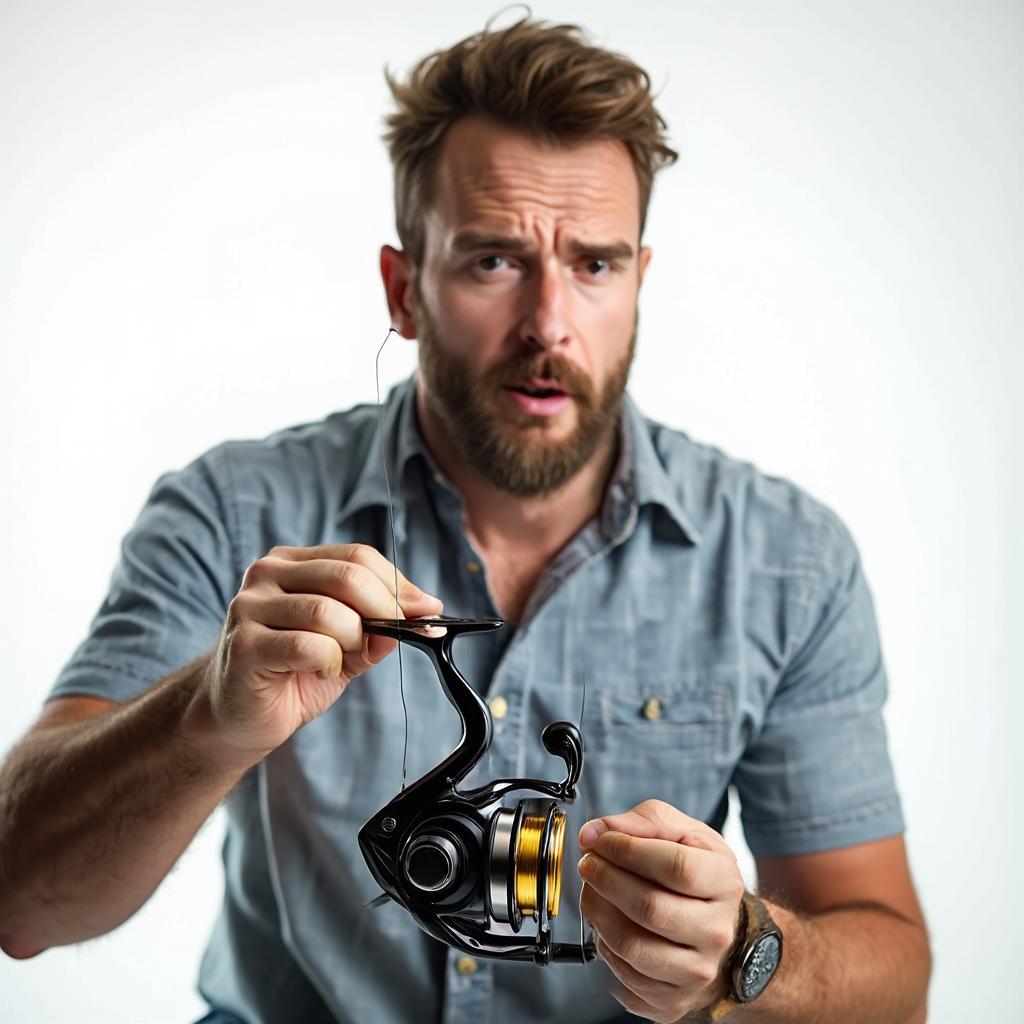
Your fishing line is plastic, and plastic degrades. UV radiation from sunlight breaks down the polymer chains in nylon monofilament through a process called photo-oxidation.
After roughly 100 hours of direct sun exposure, monofilament can lose 15 to 20 percent of its rated breaking strength. The line looks identical. Then it snaps.
Fluorocarbon is essentially unaffected by UV: manufacturer data reports no strength loss from UV exposure, and lab work on PVDF agrees. Braided PE holds up through the fibers even as the coating wears.
Temperature swings accelerate this. A spool that's spent two summers in your truck bed or garage has been through dozens of 30-degree daily temperature cycles. Each cycle stresses the polymer.
A three-year-old spool of 8lb mono stored in a garage might test closer to 5lb.
When to Replace: A Schedule That Actually Works
- Monofilament: Every 40-50 hours on the water, or every 6 months during fishing season. If it sat on the reel all winter, replace it in spring regardless of hours.
- Fluorocarbon: Every 12 months. More UV-resistant, not immortal.
- Braided line: Flip end-to-end once a year. Full replacement every 2-3 years, or when the coating looks worn.
- Unused spools in storage: Mono , 18 months max. Fluoro , 3 years. Braid , 5+ years if kept cool and dark.
Write the purchase date on every spool with a Sharpie. For a complete guide on replacement timing, read our breakdown of when to replace fishing line.
Why Do Knots Fail More Often Than the Line Itself?
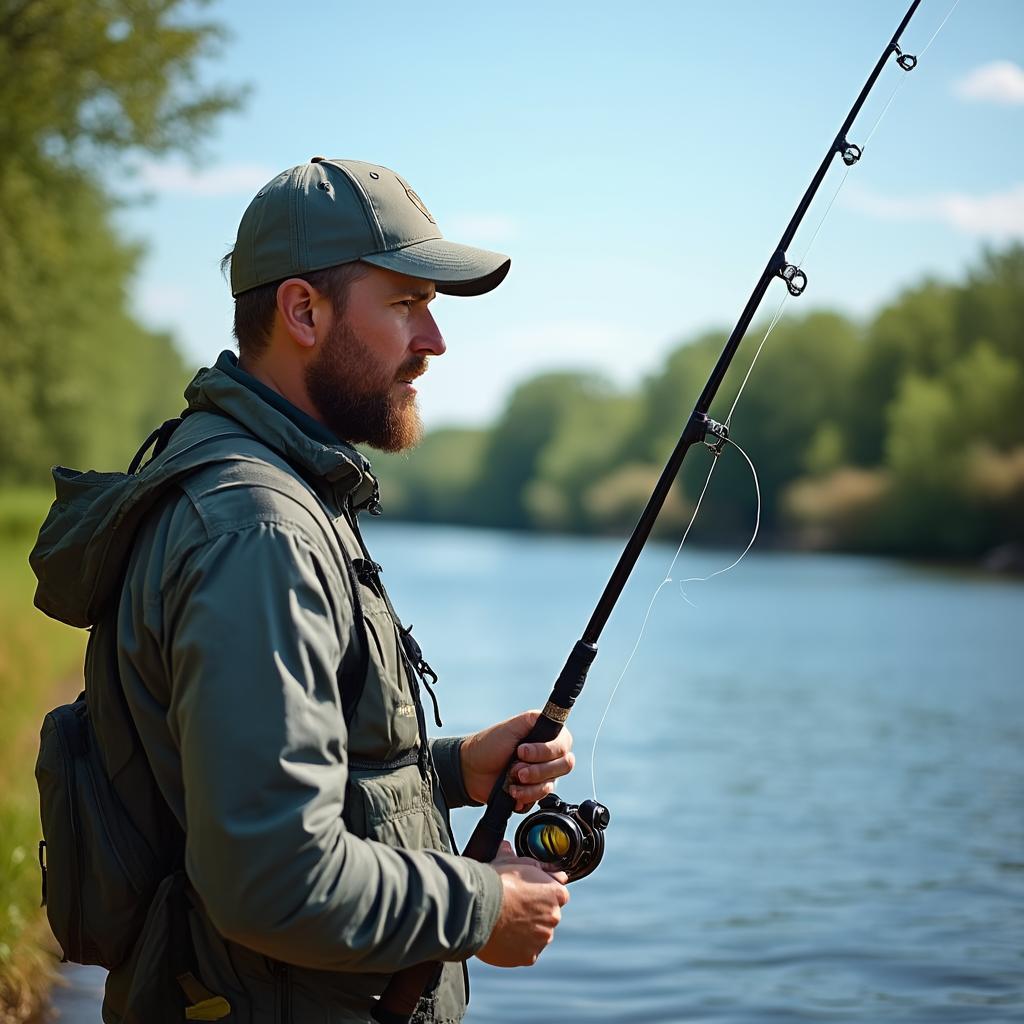
At least half of what gets reported as a "line break" is actually a knot failure. The line didn't snap in the middle. The connection point gave out.
Here's the key point: introducing any knot costs you strength, and fluorocarbon gives up more of it than nylon does. The same clinch knot that holds well in mono is the one anglers lose fish to in fluoro.
On braided line it's worse because the slick fibers slide through the wraps under load. When you tie 10lb fluoro with an improved clinch, you're effectively fishing with an 8lb connection.
The Palomar knot retains 90-95% of rated strength on both braid and fluorocarbon. It ties in under 10 seconds. For monofilament over 15lb, the San Diego Jam knot performs comparably. For joining lines, use the double Uni knot.
Dry cinching is the mistake that gets even experienced anglers. Fluorocarbon and monofilament generate friction heat when you pull the tag end tight.
If the knot is dry, that heat weakens the line fibers at the exact point that takes all the load. According to Wired2Fish's knot testing, a dry-cinched Palomar on 8lb fluoro can break at 5.8lb.
The same knot, wetted with spit or lake water, holds to 7.6lb. That's a 31% difference from wetting the knot.
For more on matching knots to line types, our beginner's fishing line guide covers knot selection in detail.
Why Does Abrasion Destroy New Line in One Afternoon?
Every rock, dock piling, submerged branch, and zebra mussel your line touches creates microscopic nicks in the surface. No single nick matters by itself. After two hours of fishing rocky structure, those nicks have accumulated into a failure point.
Take 10lb fluorocarbon over riprap for 90 minutes and then test the sections with a digital scale. The line near the lure can come in at 6.2lb.
In USAngler's 2024 abrasion test, a 20 lb braid that had been lightly abraded broke at 1.05 lb, 5% of its rated strength, while the mono sample held 86%. Abrasion, not knots, did that.
The fix costs nothing and takes 10 seconds. After every fish you land and every snag you pull free, run the last 10-15 feet of line between your thumb and forefinger.
If it feels anything but perfectly smooth, cut back to clean line. The habit costs a few yards of line per season and removes the nick before it costs a fish.
Cracked rod guides are another quiet killer. A damaged guide insert frays line with every cast and every retrieve. Run a cotton swab through each guide. If it snags, replace the guide.
A replacement guide tip costs about $3 at any tackle shop. Cheaper than the fish you'll lose.
Why Is Your Drag Setting More Important Than Your Line Strength?
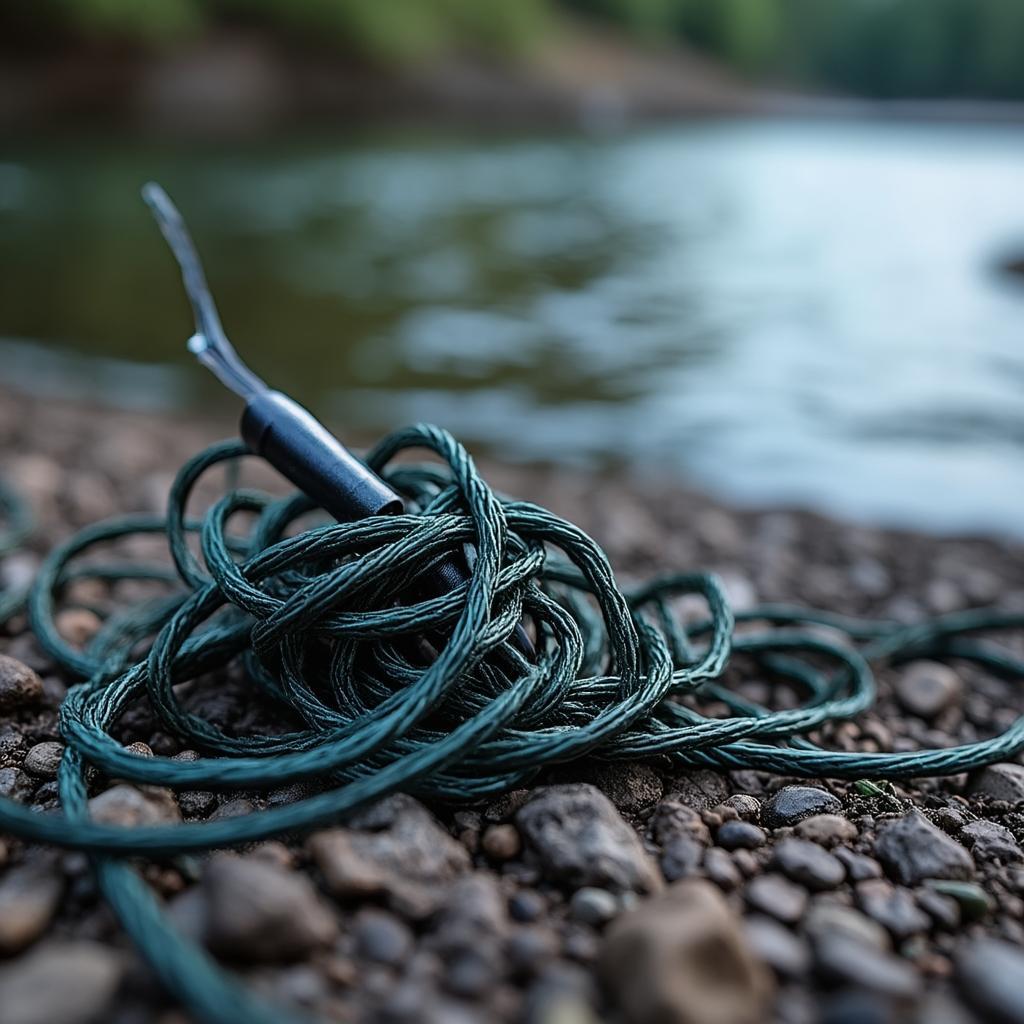
Set your drag at roughly 25-30% of your line's rated breaking strength. For 10lb line, that's about 2.5-3lb of pull before the drag starts slipping.
You should be able to pull line off the reel with steady thumb pressure, not a hard yank.
This number comes from the International Game Fish Association's (IGFA) line class standards, which recommend drag settings at one-third of line strength for sustained fighting.
The reasoning: a fish's sudden run can generate momentary forces 2-3 times the steady drag setting. If your drag is set at 50% of line strength, that surge hits 100% and the line breaks.
Tight drag also kills you on the hookset. A heavy-action rod with tight drag and 10lb line is a disaster waiting to happen.
The rod doesn't flex in time, the drag doesn't slip, and all that force goes straight into the line at the knot.
A 6-pound smallmouth eating a jerkbait 15 feet from the boat makes the point. The hookset is pure instinct, the drag was still cranked down from pulling through weeds, and something has to give.
The line popped at the knot before the fish even turned its head.
Why Does Line Memory Cause Break-Offs You Never See Coming?
You open the bail, make a cast, and the line spirals off the spool in coils that look like a Slinky. Every coil steals casting distance.
Every coil is a tangle waiting to turn into a wind knot. Each time you straighten a coiled section during retrieval, you're micro-stressing the polymer , creating weak points that accumulate.
Monofilament is the worst. Nylon has structural memory that holds the spool shape. Fluorocarbon starts stiffer and develops it even more stubbornly.
Braid has essentially zero memory, which is why so many anglers have switched to braid main line with a fluoro leader.
Three things actually fix memory:
Memory Fixes That Work
- Soak the spool. If the line has been sitting for weeks, submerge the reel spool in room-temperature water for 10 minutes before fishing. The line relaxes into its current shape.
- Use line conditioner. KVD Line & Lure or Reel Magic sprayed on the night before a trip. The line absorbs the treatment while it sits.
- Spool with tension. Loose spooling creates uneven layers that dig into each other during the cast and magnify memory problems. Keep steady tension when loading new line.
For step-by-step instructions on fixing existing memory problems, see our guide on how to fix monofilament line memory.
Why Does Improper Storage Kill Line Before You Even Cast?
The classic example is a brand-new $28 spool of fluorocarbon ruined by six weeks in a boat's deck storage. The sun cooked it through the rod locker gap every afternoon.
The line looked perfect. Break-tested, that same 4lb fluoro gave way at 2.6lb.
Three storage rules that prevent 90% of degradation: Keep line out of direct sunlight. A closet beats a garage, a garage beats a truck bed.
Don't store rods with tension on the line , open the bail when you're done. Heat is the enemy. If your garage hits 100°F in summer, your line is degrading even in the dark.
One piece of advice that sounds ridiculous but works: if you fish from a boat, use rod sleeves. A $15 neoprene rod sleeve blocks UV and prevents guide damage. It pays for itself in line you won't have to replace.
Why Does Mismatched Gear Snap Line on the Hookset?
Every rod has a line weight rating printed on it. Most anglers ignore it.
If your rod says "Line Weight: 6-12lb" and you're running 4lb line, the rod can't absorb the shock of a hookset fast enough. The line takes all the force before the rod loads up.
The opposite is also true. A medium-heavy rod rated for 12-25lb line paired with 8lb test gives you no shock absorption. The rod barely bends on a hookset, and the line snaps.
Wired2Fish recommends matching your line to the lower half of your rod's rating for best protection.
Reel size matters too. A size 4000 spinning reel with 6lb mono creates unnecessary friction during the cast.
The line has to pull across a wider spool lip, which generates heat and micro-abrasion on every cast.
Match reel size to line weight: size 1000-2000 for 2-8lb, 2500-3000 for 8-14lb, 4000+ for 15lb and above.
For spooling braid correctly on a spinning reel, read our step-by-step guide on how to spool braid on a spinning reel.
What's Causing YOUR Line to Fail: The Diagnostic Table
| How It Breaks | Most Likely Cause | Fix |
|---|---|---|
| Snaps at the knot on hookset | Knot failure — wrong knot or dry cinch | Switch to Palomar knot, always lubricate before tightening |
| Breaks 1-3 feet above lure | Abrasion from structure or cracked guide | Cut back last 10ft after every fish; check guides with cotton swab |
| Line parts mid-cast | Old line degraded by UV or heat | Replace line; write date on spool |
| Frays and separates (braid only) | Guide damage or abrasion from rocks | Cut frayed section; replace cracked guide |
| Breaks on a steady pull (not a surge) | Drag set too tight for line rating | Set drag to 25-30% of line's rated strength |
| Line tangles into knots mid-air, then snaps | Line memory + overfilled spool | Leave 1/8" of spool lip showing; use line conditioner |
| Breaks at random mid-line point with no visible damage | UV degradation or heat cycles weakening polymer | Replace line; store rods indoors away from sunlight |
FAQ
How do I check if my fishing line is still good before a trip?
Run the last 10-15 feet of line between your thumb and forefinger. If it feels rough, bumpy, or you can feel any nicks, cut back to clean line.
For checking the full spool, pull off 3 feet and give it a steady hard pull. If it snaps with less force than you'd expect for the rated strength, respool the whole reel.
Also check for color fading , monofilament that's turned chalky or white has significant UV damage.
What's the single biggest reason fishing line breaks?
Knot failure. Multiple tournament surveys and Wired2Fish testing data consistently show that 50-65% of line breaks happen at or near the knot, not in the middle of the line.
A poorly tied improved clinch knot can reduce line strength by 20% on monofilament and up to 50% on braided line.
The Palomar knot preserves 90-95% of rated strength across all line types and takes 10 seconds to tie once you've practiced it a few times.
Does braided line break differently than monofilament?
Yes. Braid almost never breaks from UV degradation or age , polyethylene is highly resistant to sunlight.
Braid fails from fraying (visible fuzz on the line), abrasion cutting individual fibers one at a time, or guide damage chewing through the coating.
When braid breaks, you can usually see the damage before it fails. Mono and fluoro often break with zero visible warning because the damage is molecular-level polymer degradation.
Can I use the same line from last season?
Monofilament: probably not. If it spent the off-season on the reel, in a garage or shed with temperature swings, it's degraded even if it looks fine. Replace it.
Fluorocarbon: maybe, if stored indoors in a climate-controlled space. Braid: yes, as long as you flip it end-to-end annually and check for coating wear. When in doubt, spend the $12-18 on a new filler spool.
It costs less than the lures and fish you'll lose on compromised line.
Sources & Industry References
- Wired2Fish , Independent knot strength testing and line failure analysis
- International Game Fish Association (IGFA) , Line class standards and drag setting recommendations
- Scientific Anglers , Tippet and line material UV degradation research
Tired of Guessing Which Line to Use?
Check out LineCalc Pro, our free fishing line calculator that recommends a suitable line for your exact setup. No guessing, no wasted money.
Try LineCalc Pro →