Table of Contents
I was on a dock last August with two rods rigged identically , same reel, same lure, same 15-pound test. One had high-vis yellow braid. The other had moss green.
A guy walking by stopped and pointed at the yellow. "Fish can see that from a mile away. You're not catching anything on that."
I caught four bass on the yellow rod that afternoon. He didn't catch any.
That interaction is why I wrote this. Every angler has an opinion on braid color. Most of them are half-right at best.
What fish actually see underwater
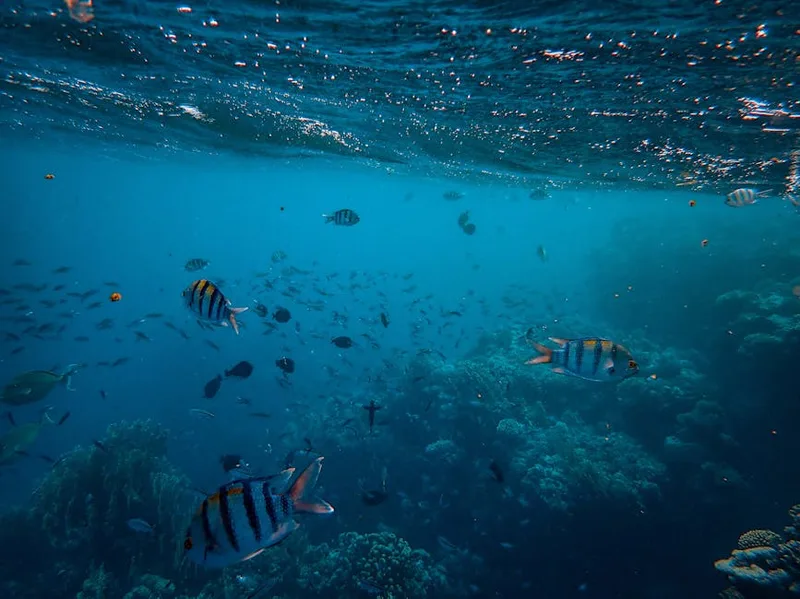
Fish eyes work differently than ours. They don't have the same color receptors, and water filters light in ways that change everything.
Here's the science in plain terms: water absorbs light wavelengths at different rates. Red disappears first , it's essentially gone by about 15 feet in clear water. Orange follows. Yellow hangs around a bit longer.
Green and blue penetrate deepest, with blue reaching down past 60 feet in clear conditions.
What this means for your line is simple. That bright yellow braid you can see so well above water? Below about 20 feet, it looks gray or black to a fish.
The high-vis color you bought for bite detection becomes effectively invisible at depth.
In murky water, all colors fade to gray or black by around 15 feet. In clear water, natural colors disappear by 35-40 feet, fluorescent colors hold slightly longer.
After about 65 feet in clear water, everything looks dark to a fish regardless of what color it started as.
The part everyone gets wrong
Most anglers worry about whether fish can see their braid.
The better question is: are you using a leader?
If you tie a fluorocarbon leader , even a short one, 18 to 24 inches , the braid color becomes irrelevant to the fish. It never gets close enough for the fish to see it.
The leader is what's in front of the lure, and if you've picked the right pound test and line type for your water clarity, the fish is looking at the lure, not the line.
The issue isn't whether braid color matters to fish. It's whether you're running straight braid to the lure without a leader.
In that case, yes , color might make a difference, especially in clear, shallow water where a fish can see the full line profile.
But if you're doing that with braid, line color is the least of your problems. The lack of abrasion resistance and zero shock absorption are bigger concerns.
High-vis vs low-vis: when each one wins
High-vis braid (yellow, chartreuse, pink, orange)
This is for the angler, not the fish. The whole point is that you can see it.
You watch the line for that subtle tick — that sideways movement, that pause in the drift that means a fish picked up your bait.
With low-vis green or gray braid, you miss those signs , especially in low light or when you're fishing a slack line presentation.
High-vis braid shines when:
- You're using a fluorocarbon or mono leader (which you should be)
- You're fishing moving baits where line-watching matters
- You're in low light , dawn, dusk, overcast
- You're teaching someone to fish and need them to see the line
PowerPro Super Slick V2 in Hi-Vis Yellow runs about $15-18 for 150 yards. Sufix 832 in Neon Lime is similarly priced and holds color longer than PowerPro in my experience.
Berkley X9 in Crystal is a newer option that costs a few dollars more but has a nine-carrier weave that's noticeably smoother through guides.
Low-vis braid (green, dark green, gray, brown)
This is for fishing clear water without a leader , or for situations where you just want the line to disappear.
If you're pitching baits into crystal-clear mountain streams for spooky trout, or sight-fishing redfish in two feet of glass-calm water, low-vis braid or straight fluorocarbon makes sense.
But most of the time, a fluorocarbon leader solves the problem better than low-vis braid does. The leader gives you invisibility plus abrasion resistance. Low-vis braid gives you invisibility without the abrasion resistance.
If you're still deciding between line types for your setup, our braid vs mono vs fluorocarbon guide breaks down the pros and cons.
The color that actually matters most
Between all the options , yellow, green, blue, pink, white, orange, camo , there's one color that outperforms the rest in the way most anglers actually use braid.
Blue.
Not because fish can't see it. Because you can. Blue braid, specifically the darker navy or cobalt shades, maintains visibility for the angler across more light conditions than any other color.
Yellow washes out in bright midday sun. Green disappears against vegetation in your peripheral vision. Pink looks great on the spool but fades faster than anything else after a few trips.
Blue holds up. Beyond Braid tested this and found blue braid maintains consistent visibility across the widest range of water and sky conditions.
Sufix 832 in Coastal Camo, which is mostly blue-toned, is probably the best all-around braid color I've fished.
When color actually does matter (the edge cases)
There are a few situations where braid color genuinely affects your fishing:
Topwater fishing in clear water. If a bass is coming up from 10 feet to crush a frog, it's looking up at the sky. Your line is silhouetted against the surface.
Bright yellow braid absolutely shows up in that scenario. Solution: color the last 3-4 feet of braid with a black Sharpie before tying your leader. Takes ten seconds. Costs nothing.
Sight fishing in ultra-clear flats. Redfish and bonefish in two feet of gin-clear water are spooky. They see everything , line, leader, the look on your face when you blow the cast.
For this scenario, skip the color debate entirely and fish straight fluorocarbon. No braid. No leader knot. Just 15-20 pound fluoro from reel to lure.
Ice fishing in clear water. When you're fishing through a hole with 20 feet of visibility straight down, line color matters more than almost any other situation.
The line is vertical, fully illuminated, and the fish has nothing else to look at.
Low-vis green or clear mono/fluoro dramatically outperforms braid here , ice anglers who run braid in clear water catch fewer fish.
Frequently asked questions
Does red braid disappear faster underwater?
Yes. Red is the first color to drop out of the visible spectrum underwater. By about 15 feet in clear water, red line looks gray or black.
This is why red hooks exist , the theory is they look like blood or disappear entirely. For braid, red doesn't hurt, but it also doesn't help much compared to just using a leader.
Can I just color the last few feet of my braid with a marker?
Yes, and lots of experienced anglers do exactly this.
A black permanent marker on the last 3-5 feet of high-vis braid gives you the best of both worlds: visible line above water, invisible line near the lure.
It wears off after a few dozen casts, but it takes five seconds to reapply. This is one of those old-timer tricks that sounds dumb but works perfectly.
Should I use different braid colors for different water clarities?
Not really. Pick one high-vis color you can see well in most conditions , blue or yellow , and use a fluorocarbon leader matched to your water clarity. Short leader, 12-18 inches, for stained water.
Longer leader, 24-36 inches, for clear water. The leader does the work of hiding your line from the fish. The braid does the work of helping you detect the bite.
*At LineCalc Pro, we help anglers figure out exactly how much line they need for any reel setup. Check our fishing line calculator to dial in your spool before you hit the water.*
Calculate Your Exact Line Requirements
Our free LineCalc Pro tool tells you exactly how much line your reel needs. No more guessing.
Try LineCalc Pro →Sources & Industry References
- International Game Fish Association (IGFA) , Official world record authority and fishing line standards reference
- Wired2Fish , Independent fishing gear reviews and line testing data
- Tackle Warehouse , Comprehensive fishing line specs, diameter charts, and user reviews
Found This Guide Helpful?
Check out LineCalc Pro , our free fishing line calculator that recommends the perfect line for your exact setup. No guessing, no wasted money.
Try LineCalc Pro →Frequently Asked Questions
Who is this guide for?
Anglers looking to make informed decisions about fishing line selection , from beginners to experienced fishermen who want to understand the technical details behind line performance.
What's the most common mistake anglers make?
Choosing line based on price alone, or using the same line for every situation. Line diameter, material, and pound test should match your target species, water conditions, and fishing technique.
How often should I replace my fishing line?
Monofilament: every season or after 8-12 trips. Fluorocarbon: every 2 seasons. Braided line: can last 2-3 seasons if properly maintained. Replace immediately if you see fraying, discoloration, or memory coils.
Braid vs Mono vs Fluorocarbon , which should I pick?
Braid for sensitivity, casting distance, and heavy cover. Mono for topwater lures, stretch forgiveness, and budget. Fluorocarbon for clear water, leader material, and abrasion resistance. Most anglers use a combination.
What pound test line should I use?
Match to your target species: 4-8lb for panfish, 8-12lb for bass, 15-30lb for catfish/striper, 30-65lb for musky/saltwater. Check your rod's line rating , it's printed on the blank for a reason.
What should beginners check before buying line?
1) Match line weight to your rod rating. 2) For spinning reels, stick to 8-12lb to avoid wind knots. 3) Don't overspend on your first spool , $8-15 mono is perfectly fine to learn on.