Table of Contents
- Foreword
- 1. Is European-style reservoir fishing a fusion of Chinese and Western fishing cultures?
- 2. Is European-style reservoir fishing a product of China's reform and opening-up?
- 3. When did European-style reservoir fishing arrive in China?
- 4. What are the conceptual differences between traditional Chinese fishing and European-style reservoir fishing?
- 5. What are the main pieces of equipment for European-style reservoir fishing?
- 6. Why do the rods use a spliced-joint design? Are all structures the same?
- 7. Which is better: telescopic rods or spliced-joint rods?
- 8. What do the "ft" and "LB" markings on European fishing rods indicate?
- 9. Why do most European-style reservoir anglers now prefer 3.6-meter spliced-joint rods?
- 10. The rearmost guide ring on spliced-joint rods is very large , it takes up space and is easily damaged. Are there alternative designs?
- 11. Why won't standard long rod bags fit a 3.6m three-section spliced-joint rod?
- 12. Are there more portable combination sets available?
- 13. What is the purpose of the European-style reservoir fishing rod pod?
- 14. What are the main types of rod pod structures?
- 15. What are the thread specifications for connecting the rod pod to the alarm?
- 16. How many types of combination rod pods are there? How are they set up on the bank?
- 17. The dual-speed dual-drag reel is specifically designed for European-style reservoir fishing.
- 18. What should be noted when switching the dual-speed ratio mechanism?
- 19. What is the optimal tightness setting for the light drag?
- 20. Due to the significant functional differences between heavy and light drag, they cannot be used simultaneously. Forced operation will cause the light-drag function to fail and result in internal structural damage.
- 21. Why is carbon fiber material used for the heavy-drag brake washers?
- 22. How should a reel be maintained? Which key areas require attention?
- 23. What is the line capacity of the TS12-60 dual-speed dual-drag reel?
- 24. Why is the line roller on the long-cast guide side a key maintenance area?
- 25. How does the electronic alarm system used in European-style reservoir fishing work?
- 26. Why do bite alarm rollers have varying numbers of magnetic points?
- 27. The alarm has two indicator lights on top , what are their functions?
- 28. What is the function of the V button on the alarm?
- 29. What is the function of the T button on the alarm?
- 30. What is the function of the S button on the alarm?
- 31. What is the L button used for?
- 32. Is the toggle switch on the bottom of the alarm the power switch?
- 33. What is the socket on the bottom of the alarm used for?
- 34. What is the function of the rubber ring on the alarm's fixing screw?
- 35. At what wind force should windbreak poles be installed?
- 36. The receiver panel has only five colored lights , how does it achieve a one-transmitter-to-eighteen-receiver effect?
- 37. What are the functions of the four buttons on the receiver panel?
- 38. How is the receiver paired?
- 39. Why do transmission distances between alarm and receiver vary?
- 40. When the alarm and receiver batteries are replaced at the same time, why does the alarm last longer while the receiver runs out sooner?
- 41. Which is better: the receiver's vibration function or the sound function?
- 42. How waterproof is the receiver? Will it be damaged if it falls into the water?
- 43. What types of rigs are commonly used in European-style reservoir fishing?
- 44. How do European-style rigs differ from those used by domestic Chinese anglers?
- 45. In what situations is the long mainline rig primarily used?
- 46. Why do many people use short-leader running-rig setups?
- 47. What is the purpose of the small center-hole lead bead on the hook link?
- 48. Why do straight-shank eyed hooks require a forced-deflection component?
- 49. Why is the wrapping direction counter-clockwise when tying a hook?
- 50. Why does the hook link need to be threaded front-to-back when tying a curved-shank eyed hook?
Foreword
Originating in the United Kingdom, European-style reservoir fishing is a specialized angling method developed by European anglers targeting bottom-dwelling fish species, particularly carp.
This method has gained widespread popularity across Europe, forming a complete angling system and establishing a distinctive presence in international fishing competitions.
This article opens the door to European-style reservoir fishing, presenting its subtleties from multiple perspectives including historical development, specialized terminology, equipment analysis, and evolution over time.
1. Is European-style reservoir fishing a fusion of Chinese and Western fishing cultures?
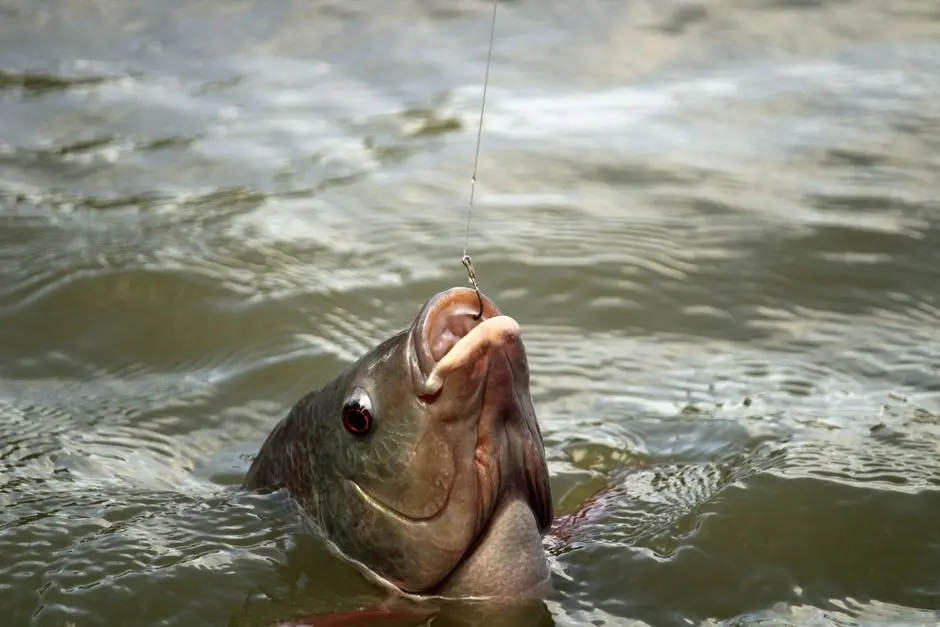
European-style reservoir fishing originated in Britain during the 1950s. It was developed by European angling enthusiasts as a specialized method tailored to the habits of bottom-dwelling fish, especially carp.
Its core technical equipment , including leader lines, alarm systems, and dual-drag reels , was entirely their own innovation, forming a complete system of tackle, bait, and practical fishing activities.
It spread widely across European countries and became an official competition category in international fishing tournaments such as the CIPS World Championship.
Europeans rarely consume freshwater fish. Given the carp's strong adaptability and rapid reproduction, resources are abundant, so large carp naturally became the primary target.
European anglers emphasize a "catch and release" environmental conservation philosophy, which aligns with the Western fishing culture's emphasis on resource protection.
"Precision baiting" and technological equipment became the core of European-style reservoir fishing, focusing on efficiency and baiting strategy, and it has become a fashionable pursuit.
Chinese fishing culture emphasizes the concept of "harmony between man and nature" and the flexibility of fishing techniques. The two differ significantly, so their fusion is mainly reflected on the technical level.
After European-style reservoir fishing was introduced to China, it was primarily a process of Chinese anglers learning Western techniques and making localized adaptations (such as adjusting bait formulas and characteristics to suit native fish species), rather than a two-way cultural exchange.
2. Is European-style reservoir fishing a product of China's reform and opening-up?
The rise in socio-economic standards has enabled more people to participate in recreational fishing, driving diversified demand for fishing methods (such as float fishing, lure fishing, fly fishing, and European-style reservoir fishing).
In recent years, with deepening international exchange and the maturation of domestic fishing culture, European-style reservoir fishing has gradually gained attention.
In 2025, the Tianjin Bihai Fishing Tackle Expo established a dedicated European Carp Fishing zone and held a forum on European-style reservoir fishing , marking the imminent entry of this method into its promotion phase in China.
This shift reflects not only the support of anglers and the promotion efforts of fishing tackle enterprises, but also the capacity of Chinese anglers to embrace and innovate upon international angling techniques in the post-reform era.
3. When did European-style reservoir fishing arrive in China?
There is currently no clear official record of when this method was introduced to China. However, through analysis of industry trends and angler practices, several time periods can be roughly identified:
- Late 20th century to 2010: Early exploration phase.
- 2010 to 2020: Localization and experimentation phase.
- 2020 to present: Accelerated popularization phase.
In summary, European-style reservoir fishing reflects the broader direction of Chinese angling's transformation from "recreational entertainment" toward "specialization and competition."
4. What are the conceptual differences between traditional Chinese fishing and European-style reservoir fishing?
At the conceptual level, the differences are substantial. Traditional Chinese fishing is primarily based on simplicity and flexibility.
There is almost no selectivity regarding target species , anglers take fish of all sizes, content as long as something bites and brings enjoyment.
Rigs are simple and diverse, adaptable to different waters and changing fish conditions.
Bait varieties are numerous: all kinds of commercial baits, earthworms, bloodworms, snails, as well as plant-based options such as corn kernels, wheat grains, mulberries, and various fruits.
On large waters, anglers deploy arrays of surf rods, enduring wind, sun, and rain , watching rod tips by sight, listening for bells by sound, engaging in prolonged physical exertion that is extremely taxing.
Many anglers practice indiscriminate harvesting with little awareness of resource conservation, especially in waters with relatively abundant fish stocks.
European-style reservoir fishing targets large bottom-dwelling freshwater fish. All tackle, bait, and equipment are designed and developed for this specific purpose.
The method emphasizes separation of hook and bait , the bait can either lie on the bottom awaiting a take or be suspended above, a presentation that more readily attracts the fish's attention and allows smoother bait-taking, greatly improving hook-up rates.
The primary baits used are spherical boilies, with emphasis on flavor profile and durability , they maintain good condition in the water for extended periods.
Once precise spot-baiting is done and the fishing stations are properly arranged, the alarm system and dual-speed dual-drag reel save physical exertion, allowing the angler to lie comfortably in a tent while awaiting the excitement of a take.
European-style reservoir fishing places greater emphasis on the thrill and sense of achievement from landing large fish, while simultaneously stressing harmonious coexistence with nature and minimizing damage to the environment and resources during the fishing process.
The differences objectively exist, but they also provide motivation for improvements in our fishing methods.
5. What are the main pieces of equipment for European-style reservoir fishing?
The main equipment includes: spliced-joint rods, rod pods, dual-speed dual-drag reels, intelligent alarm systems, swingers, rigs, raised bedchairs and bivvies, triangular landing nets, rod bags, tackle bags, bait boats, unhooking mats, weighing tripods, and retention slings.
6. Why do the rods use a spliced-joint design? Are all structures the same?
There are two types of splice-joint connections for these rods: internal-sleeve type and external-sleeve type.
Both aim to achieve a highly precise fit at the joint section, allowing force to be transmitted rapidly and smoothly through the sensitivity transition zone and stiffness zone, maximizing the rod's elastic performance.
Spliced-joint rods offer explosive power, uniform elasticity distribution, and easy control , greatly assisting the formation of tight baiting spots.
7. Which is better: telescopic rods or spliced-joint rods?
Different fishing environments, different fish resources, and different fishing methods place different demands on rod performance.
Telescopic rods are convenient to carry, light and nimble, and highly adaptable , they hold a significant share in recreational fishing venues.
However, in scenarios involving long-duration fishing for large specimens on big waters, they reveal shortcomings in power delivery during hard-fighting fish control, sometimes even resulting in rod damage.
Spliced-joint rods offer uniform elasticity, high strength, excellent explosive power, and superb controllability , their high performance has drawn considerable attention.
This is especially true as European-style reservoir fishing enters its popularization phase, increasingly winning acceptance and preference among large-water specimen anglers.
In summary, regardless of whether a rod uses telescopic or spliced-joint construction, as long as it suits the fishing venue, there is no inherent "better" or "worse" , only fitness for purpose.
8. What do the "ft" and "LB" markings on European fishing rods indicate?
European-style reservoir rods are marked on the blank with 12ft, 13ft, and 14ft designations , these represent imperial length measurements. Multiplying the figure by 3 yields the metric equivalent: 3.6m, 3.9m, and 4.2m respectively.
LB denotes the imperial "pound" and indicates rod stiffness. Common markings are 2.5, 2.75, 3.0, 3.25, 3.5, and 4.0 , the smaller the number, the softer the rod; the larger the number, the stiffer.
9. Why do most European-style reservoir anglers now prefer 3.6-meter spliced-joint rods?
Changes in transportation methods and fishing environments have led anglers to favor 3.6m rods in 3-section or 4-section configurations. The reasons are as follows:
① A 3.6m three-section spliced-joint rod has a collapsed length of 1.28m and fits into a rod bag of just 1.3m , convenient for carrying on foot or storing in a vehicle.
② A large proportion of anglers now deploy lines using bait boats; apart from reservoir fishing competitions, casting methods are rarely used. Consequently, longer and stiffer rods have lost their practical significance.
③ The 3.6m length suits the physique and body mechanics of Chinese anglers.
It feels appropriately weighted and easy to hold steady during use; hook-setting is crisp and decisive, with rich elasticity and high reinforcement strength, enabling the rod to hold its own against massive fish.
④ The 3.0 and 3.28 stiffness ratings give the rod better flexibility, enhancing the enjoyment and thrill of playing a fish, while the probability of line breakage and lost fish is very low.
10. The rearmost guide ring on spliced-joint rods is very large , it takes up space and is easily damaged. Are there alternative designs?
The original design of European carp rods features large guide rings to reduce frictional resistance when casting the line.
In China, some brands have already switched to ceramic insert rings of the same diameter, but with foldable support frames.
When not in use, the frame lies flat; when needed, a single lift raises it into position , saving storage space while protecting the ceramic ring.
11. Why won't standard long rod bags fit a 3.6m three-section spliced-joint rod?
The collapsed length of a 3.6m three-section spliced-joint casting rod is 1.28m, while standard long rod bags are typically 1.25m , naturally falling slightly short.
Specialized rod bags measure 1.30m and feature an integrated storage design, accommodating 4 rods, 4 size-6000 reels, as well as the rod pod and landing net , all contained within.
12. Are there more portable combination sets available?
Based on the interior space constraints of domestic vehicles, 3.6m four-section spliced-joint casting rods have now been developed in 3.52LB and 3.25LB versions, with a collapsed length of 96cm.
The blanks use new manufacturing processes, and all performance indicators are in no way inferior to three-section rods.
Additionally, a specialized combination rod bag is available, featuring a one-stop design that can hold: 4 four-section spliced-joint casting rods, 4 reels in the 6000–8000 size range, 1 four-rod pod set, rigs and assorted common tools, 1 set of one-transmitter-four-receiver intelligent alarms, and 1 triangular landing net , all the tackle you need in a single bag.
13. What is the purpose of the European-style reservoir fishing rod pod?
The rod pod is a vital component of the equipment setup.
It connects the alarm and swinger together; it holds the rod, reel, and line elevated above the ground, forming an integrated tackle assembly; through the adjustment of its telescopic legs, the pod can remain level on any terrain; it can also position the rod tip low and butt high to resist strong winds; and it must be aligned parallel to a reference point on the opposite bank, serving to guide the direction of casting placement.
14. What are the main types of rod pod structures?
There are two main types: single-rod pods and combination pods.
Single-rod pods have a simple structure and low cost , they can be placed freely on earthen terrain with flexibility and mobility, but cannot be used on rocky ground.
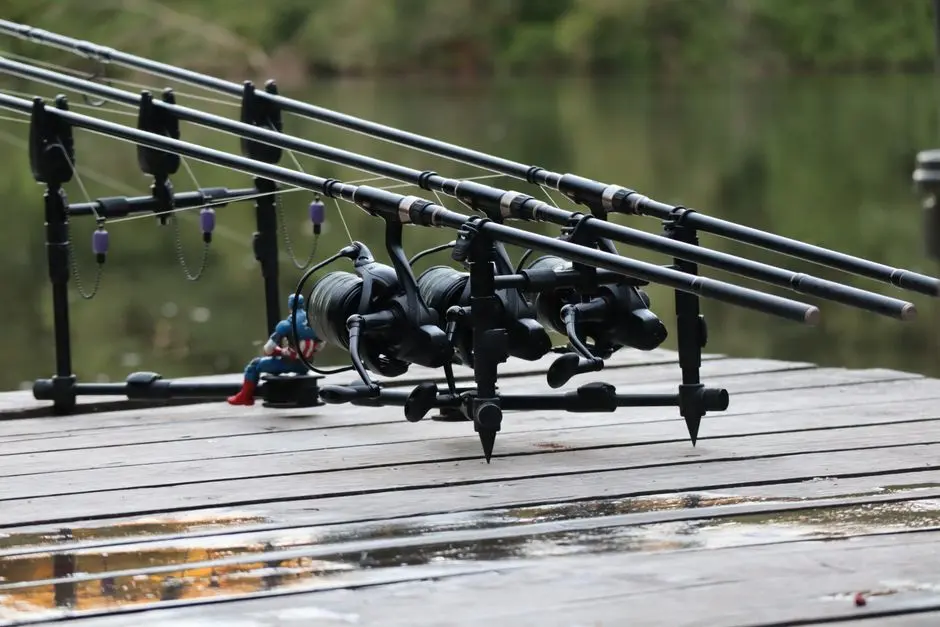
Combination pods generally consist of 3–4 support points arranged in a row, primarily made of aluminum alloy. The structure may be detachable or foldable, offering light weight, portability, a refined appearance, and rugged durability.
15. What are the thread specifications for connecting the rod pod to the alarm?
Thread specification: Imperial 3/8" (3/8 inch), UNC 16 threads per inch.
Common designation: M3/8 nut/screw (standard terminology in the fishing tackle industry).
Application: The male thread on the pod → the female thread on the bottom of the alarm, directly screwed in and secured. (This is the globally universal standard interface for European carp and reservoir fishing pods/alarms.)
16. How many types of combination rod pods are there? How are they set up on the bank?
Combination pods primarily come in two configurations: those with three telescopic support legs and those with four. The front and rear crossbars carry 2–4 mounting bases, with 1–2 longitudinal telescopic adjustment rods connecting the support legs to the crossbars.
With three support legs spread at 120 degrees to maintain balance and stability. The dual longitudinal telescopic rods allow substantial changes in support angle, making them suitable for fishing venues where rods require an upward tilt angle.
With four support legs, the structure generally only permits horizontal placement. The telescopic range of the legs is used to adapt to uneven terrain.
The crossbar can adjust the rod to a tip-low, butt-high state, reducing the length of line above the water and increasing resistance to strong winds.
Combination pods should be set up on relatively flat, open swims, approximately 4 meters from the water's edge (with a 3.6m rod).
This serves two purposes: first, ensuring the safety of both angler and tackle assembly; second, making bait changes and rig adjustments more convenient.
Note: The placement direction of the combination pod must be aligned with the reference landmark.
17. The dual-speed dual-drag reel is specifically designed for European-style reservoir fishing.
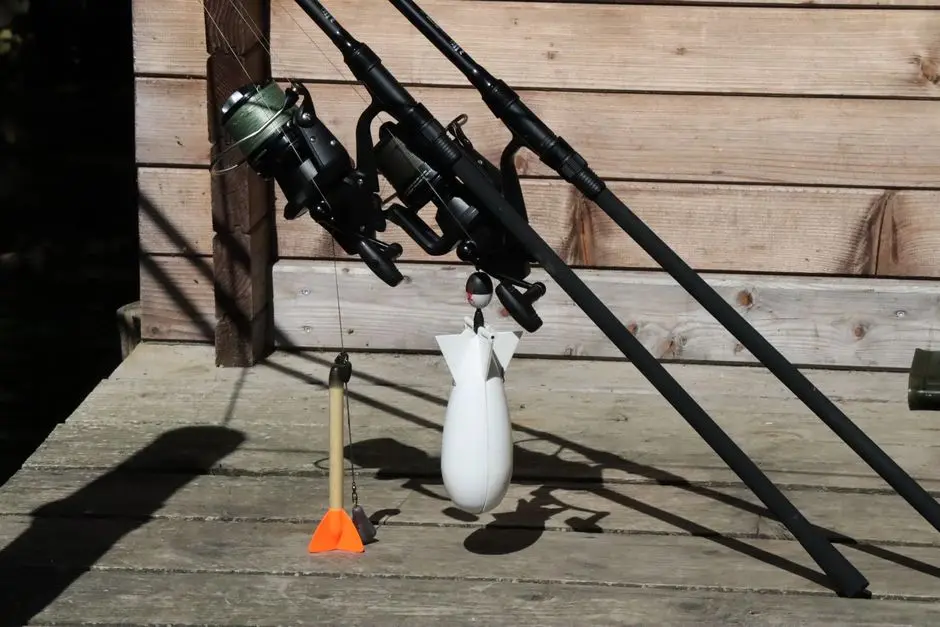
The dual-speed feature allows switching between two gear ratios , 1:6.3 and 1:4.5 , according to different needs.
The 1:6.3 high-speed ratio quickly lifts the lead weight off the bottom and retrieves it at high speed, avoiding bottom contact while improving efficiency and saving time.
The 1:4.5 low-speed ratio is suitable for use after hooking a large fish, especially when deploying lines via bait boat over distances exceeding 150 meters , the low-speed torque is amplified, making the cranking force required relatively light, and playing fish at long range becomes much less tiring.
It also aids precise fish control.
The dual-drag mechanism easily accommodates switching between heavy and light drag settings. Heavy drag delivers powerful line pay-out and retrieval braking force when playing a fish, landing it in a relatively short time.
Light drag serves the purpose of instantly releasing line to dissipate sudden explosive force when a hooked fish bolts outward , thus protecting the tackle assembly from damage while preventing line breakage and lost fish.
Additionally, light drag provides a stable braking force for the swinger when mounted.
A switching lever is located on the upper rear section of the reel.
Based on the directional intuition of Chinese anglers, pushing the lever forward is the standard position , also the commonly referenced heavy-drag position , where the knob above the adjuster can set the braking force; ideally set once for long-term use.
Pulling the lever backward switches to the light-drag function; the knob at the tail of the reel adjusts the braking force, with clockwise rotation increasing it and counter-clockwise rotation decreasing it.
Switching between heavy and light drag can be done manually or automatically. Manual switching allows moving the lever at any time for immediate effect.
Automatic switching occurs when cranking the reel handle , the internal mechanism pushes the switching lever forward to the standard position, achieving a transition from light to heavy drag.
The dual-speed dual-drag reel is the most fully-featured option in European-style reservoir fishing, eliminating many of the shortcomings of single-drag reels.
It offers the convenience of setting once and maintaining performance over extended use; excellent product quality ensures smooth operation, with a rational internal structure guaranteeing coordinated, consistent power delivery , enabling the angler to face large fish without fear and fight bravely.
An affordable price point enhances the desire to purchase, making it a formidable tool in one's hands.
18. What should be noted when switching the dual-speed ratio mechanism?
The speed-change function is achieved through the engagement and disengagement of dual-tooth gears and guide rods.
When the reel and crank handle are in rotation, the speed-change function must never be used , forced operation will damage the gear plate and guide rod.
Additionally, if the speed-change knob encounters resistance when turning, do not force it , simply adjust the angle of the reel crank handle and the gear change can be made smoothly.
19. What is the optimal tightness setting for the light drag?
The light drag uses the weak friction of felt brake washers to produce a low-force braking effect. The first priority is to ensure sensitivity control for instantaneous line release.
Secondly, tension must be applied to the fishing line to fix the starting point , the weight of the swinger creates constant tension, which serves to fully display the fish's take movements.
The optimal adjustment state is: when constant tension is generated and under light-drag conditions, the spool should not rotate to release line; the swinger should hang on the line and remain stable at a position approximately 10 centimeters below the rod.
20. Due to the significant functional differences between heavy and light drag, they cannot be used simultaneously. Forced operation will cause the light-drag function to fail and result in internal structural damage.
21. Why is carbon fiber material used for the heavy-drag brake washers?
Carbon fiber is a rising star among modern industrial materials.
It possesses excellent elasticity, high strength, good formability, outstanding wear resistance, and light weight , characteristics ideally suited to the requirements of brake washers inside a reel spool.
It offers extremely high flatness; when the drag function is engaged, line is released evenly and smoothly, without catching or jerking. Its excellent wear resistance provides reliable assurance during prolonged battles with large fish.
Powerful braking force enables fish-control capability that is both intuitive and effortless. Brake washers manufactured from carbon fiber material are the optimal choice.
22. How should a reel be maintained? Which key areas require attention?
Reel maintenance is critically important. Though small in size, the reel must perform a series of complex actions , high-speed rotation, spool oscillation, stepless braking, gear switching, drag adjustment, and more.
High-precision machining of all components is required for proper operation and coordinated function. Lubricant is the bond that enables their normal operation , reducing wear, maintaining smoothness, and extending service life all depend on it.
Over time, lubricant will degrade; generally, within approximately three years, the internal transmission components of the reel must be cleaned and re-lubricated.
The following areas are critical: ① The S-groove gear of the spool oscillation mechanism. ② The line roller. ③ The one-way bearing. ④ The main gear and worm shaft. ⑤ The ball bearings on both sides of the crank handle.
⑥ The brake washers for both heavy and light drag. ⑦ The speed-change gearbox.
When performing maintenance, complete disassembly is not always necessary.
Removing the side cover on one side of the body and using a dedicated reel cleaning agent , spraying and brushing simultaneously , is quite convenient, avoiding the complicated process of full disassembly and the deviations that can arise during reassembly.
Do not apply excessive lubricant, as too much will create resistance. After completing maintenance, crank the handle back and forth for a period to ensure even distribution of lubricant and verify all mechanical functions.
If reels subjected to frequent, long-term use are not maintained, they will invariably cause trouble at critical moments.
23. What is the line capacity of the TS12-60 dual-speed dual-drag reel?
The spool capacity of the size-60 model (standard line rating) is: 300 meters of No. 6 line, 190 meters of No. 8 line. For help choosing the right diameter for your reel, see our fishing line diameter chart.
24. Why is the line roller on the long-cast guide side a key maintenance area?
This area is often overlooked, yet it is in fact the most susceptible to wear and corrosion.
The fishing line constantly rubs against it, and fine contaminants in the water are carried out by the line, accumulating on the roller surface or even penetrating into the bearing interior.
Extended periods of disuse allow water and contaminants to cause corrosion and form hardened deposits upon drying , bearing rotational resistance increases, or the bearing may even seize entirely.
The resulting wear on both the roller and the fishing line should not be underestimated; by the time it is discovered, the damage is already severe.
When you think of reel maintenance during the winter off-season, be certain not to neglect giving the line roller some attention.
25. How does the electronic alarm system used in European-style reservoir fishing work?
The alarm system consists of intelligent bite alarms and a wireless receiver.
The alarm utilizes the friction of the fishing line to drive magnetic strips on the roller, allowing the sensor element to accurately register line-take or line-drop signals and transmit them synchronously to the wireless receiver's display panel, precisely indicating which rod has a bite.
With the rapid development of electronic technology, some manufacturers have successively developed long-range, long-endurance alarm systems to accommodate the distance between the fishing area and living quarters.
Some have even connected to mobile phones via software, achieving unlimited-range signal reception.
However, excessive remote range also introduces an insoluble problem , by the time you reach your swim, the optimal moment for striking and hooking the fish has long passed.
Picking the Right Line for Your Carp Setup?
LineCalc Pro matches your reel size, target species, and fishing distance to the ideal line. No more guessing.
Try LineCalc Pro →26. Why do bite alarm rollers have varying numbers of magnetic points?
The distribution of magnetic points on the alarm roller is related to sensitivity. The angular arrangement of 2, 4, or 8 magnetic points differs, and the rolling distance varies accordingly.
The alarm's sensitivity adjustment function serves to regulate the number of sensed rotations.
Generally speaking, lower-grade products have fewer magnetic points; those with only 2 magnetic points may not even possess a sensitivity adjustment function at all.
27. The alarm has two indicator lights on top , what are their functions?
On the alarm's display panel, the left indicator is the delay-operation light, and the right indicator is the unit color light.
The delay-operation light has two functions: first, it indicates that power is connected and the unit has entered operational status; second, it has a 20-second delay function , meaning it remains illuminated for a full 20 seconds to inform you that the alarm is awaiting your return.
The unit color light also has two functions.
The first is to use brief, synchronized audio-visual signals to announce "I am the bite alarm , do not miss the optimal striking moment." The second is to display real-time status during a take: a loud, deep synchronized audio-visual signal tells you that the fish is pulling line and bolting into the distance.
A sharp, short audio-visual signal indicates line-drop display, meaning the fish is swimming toward the bank.
Regardless of which real-time signal is displayed, immediately switch to heavy drag, lift the rod, and enter the fighting state.
28. What is the function of the V button on the alarm?
The V button is the volume adjustment button, with 8 levels. Levels 1–7 display the adjusted volume in real time; level 8 is mute. The levels cycle for use until you are satisfied.
29. What is the function of the T button on the alarm?
The T button is the tone adjustment function, imitating the musical notes 1-2-3-4-5-6-7-i, with the tone progressing from low to high pitch in a cycle, adjustable as desired.
30. What is the function of the S button on the alarm?
The S button is used to adjust the alarm's sensitivity function. Five levels are provided for selection , level 1 is most sensitive, level 5 is least sensitive.
Sensitivity is determined primarily based on terrain and fish species. In obstructed terrain, set to level 1, because the most sensitive setting delivers maximum signal refraction power.
However, if the baited area is being disturbed by small fish, set to level 5 to avoid the annoyance of frequent false alarms prompting unnecessary rod lifts.
31. What is the L button used for?
The L button is the night light switch. The night light is designed beside the roller, displaying the position of the tackle assembly in darkness. It should be turned off during daytime to conserve unnecessary power consumption.
32. Is the toggle switch on the bottom of the alarm the power switch?
Yes, it is the main power switch for the entire unit. When finished using it, be absolutely sure to turn it off , once the batteries are drained, electrolyte leakage will corrode the battery terminals.
33. What is the socket on the bottom of the alarm used for?
The socket is a jack for the swinger's synchronized flashing light and can accept a plug with a 2.5mm diameter.
34. What is the function of the rubber ring on the alarm's fixing screw?
The rubber ring provides a tightening function within the threaded gap. After the alarm is mounted on the rod pod and tightened, it may not be in the correct orientation.
If an elastic rubber ring is placed between them, it serves the dual purpose of both securing and fine-tuning the position, ensuring the rod and the alarm groove form a 90° angle and guaranteeing smooth line-take and line-drop action.
35. At what wind force should windbreak poles be installed?
Windbreak poles should be installed at wind forces of level 5 and above.
At the same time, the rod on the pod should be adjusted to a tip-low, butt-high state to reduce the distance between the rod tip and the water surface, which also helps prevent the rod from being blown off.
36. The receiver panel has only five colored lights , how does it achieve a one-transmitter-to-eighteen-receiver effect?
The Oupai Li 698 receiver employs an 18-channel single-point reception mode, ensuring that each alarm has an independent signal reception channel , no code duplication, no code confusion.
The five colored lights on the panel can form multi-color light combinations to display the position of each alarm.
The 18 alarms are divided into three groups: five single-color units, ten dual-color units, and three triple-color units. Single-light display: white, green, blue, red, yellow.
Dual-light display: white-green, white-blue, white-red, white-yellow, green-blue, green-red, green-yellow, blue-red, blue-yellow, red-yellow. Triple-light display: white-green-blue, white-green-red, white-green-yellow. The tail color light of each light group is the unit color light of that alarm.
37. What are the functions of the four buttons on the receiver panel?
V button: Levels 1–7 adjust volume; level 7 is mute.
T button: Levels 1–7 synchronize tone adjustment using musical notes.
L button: Switches color light function when the pairing program is activated.
Vibration button: Vibration function on/off.
38. How is the receiver paired?
The receiver pairing procedure is as follows:
① Confirm that both the alarms and the receiver are powered on, and turn on the alarm night lights.
② Press and hold the receiver's "V" and "L" buttons simultaneously for five seconds. Release upon hearing a "beep" , the white light will illuminate, indicating entry into pairing mode.
Press the "L" button (pairing-switch button) to adjust to the alarm's unit color light.
Trigger the alarm roller , the receiver's unit color light will flash while the buzzer sounds, indicating that pairing for that alarm is complete. Repeat this process for pairing the remaining alarms with the receiver.
After all pairings are complete, test each one from start to finish to confirm.
③ The receiver has an automatic memory-clearing function. The pairing wait time is 3 seconds; if there is no response after this period, restart the pairing procedure.
39. Why do transmission distances between alarm and receiver vary?
Signal radio waves travel in straight lines, and the actual distance can be considerably greater than the standard 200 meters.
However, when obstacles, weather conditions, or astronomical phenomena are present, the radio waves are blocked from straight-line travel and become curved reflected waves , the distance will certainly be shorter.
Hills have a blocking effect; forests cause chaotic radio wave reflection; metal roofs have a shielding effect; high-voltage power lines create magnetic field interference; even dense fog in the air and water vapor rising from the water surface can affect signal transmission.
Therefore, as long as you use the system within your line of sight, the results will be much better.
40. When the alarm and receiver batteries are replaced at the same time, why does the alarm last longer while the receiver runs out sooner?
The alarm's standby current is 4 milliamps, with a working current of 5 milliamps. The receiver's standby current is 2.6 milliamps, with a working current of 21 milliamps.
From the surface data, the alarm has higher power consumption and should have shorter battery life, while the receiver has lower power consumption and should last longer. However, actual use reveals the opposite.
The reason is actually quite simple: the alarm enters standby mode after the 20-second delay, consuming 6 milliamps. The receiver, on the other hand, is constantly awaiting signal reception in working mode, consuming 21 milliamps.
The 3.5-fold difference in power consumption results in the alarm having longer usage time and the receiver having shorter usage time.
41. Which is better: the receiver's vibration function or the sound function?
Receivers generally have both functions, and they can be toggled between the two modes or used simultaneously.
The vibration function operates in silent mode , you can feel fish activity through vibration even with the receiver placed on a table or in a pocket; it also avoids disturbing other anglers with sound.
However, if the receiver accidentally falls onto grass or another soft surface, then if you are sound asleep, you'll be out of luck.
The sound function overcomes the silent-mode limitation , as long as a signal is received, sufficient volume will rouse you from your slumber.
42. How waterproof is the receiver? Will it be damaged if it falls into the water?
The waterproof performance of the receiver and alarms is identical.
Most use a dual-layer construction: a sealing gasket is sandwiched between the front and rear covers of the casing, then compressed with tightening screws , external rainwater presents no problem whatsoever.
Although the circuitry is internal, all solder points, exposed chips, and discrete components are sealed with adhesive compound.
The dual-layer internal and external sealing does not create a vacuum; rather, it insulates each metal conductor from the others, preventing short circuits and ensuring normal operation even if the unit falls into the water.
An angler at Danjiangkou accidentally dropped his receiver into the water. The water was cold and it was getting dark , he assumed recovery was hopeless and went back to rest.
The next day, while checking his bait, he triggered the alarm roller and was astonished to find the receiver lights flashing.
He retrieved it, shook off the water, performed some drying treatment, and has been using it ever since without any issues.
📖 Also read: Part 2: Q51–Q100 , Safety Rigs, Feeders, Baits, Bivvies, Bait Boats & Casting Technique
43. What types of rigs are commonly used in European-style reservoir fishing?
There are many types: the English rig, the leaf rig, the Ronnie rig, the horsehead rig, the 360 rig, and others.
These rigs are each adapted to various bottom conditions, different seasons, and the differing environments of still water and flowing water.
44. How do European-style rigs differ from those used by domestic Chinese anglers?
In European-style rigs, the hook and bait are separated, with the bait positioned above the hook.
Suspended 5–30 centimeters above the bottom, the bait avoids interference from gravel and debris while allowing its highly penetrating color to stand out more prominently.
It also allows the bait , positioned close to the hook , to sway with the water current, more closely approximating natural conditions and the fish's feeding habits.
The bait has extremely good durability , it will not disintegrate, leaving a bare hook exposed even after a full day and night.
The newest type of boilie, after soaking for one hour, develops a layer of fluffy, fleece-like material on its surface, and the flavor profile transitions from strong and pungent to mild and natural.
Over time, the natural presentation and gradual scent dispersal create a secure environment, causing the fish to lower their guard and feed with confidence.
The bait-above, hook-below rig also has some action details worth understanding.
(For the line side of the equation, see our guide on fluorocarbon leader length , the same principles of invisible presentation apply.) When a fish sucks in the bait, it also draws the hook , positioned directly beneath , into its mouth.
When it senses the foreign object, it will inevitably try to eject the hook.
However, the hook point is positioned at the very front, most prominent location; additionally, the forced-deflection auto-rotation action at the hook shank ensures that the hook point has already made contact with some part of the lip.
By the time the fish shakes its head to test the bait, pulling the lead weight, it is already hooked.
Domestic Chinese anglers' rigs generally bury the hook within the bait, using bottom-waiting and frequent recasting methods. First, the cluster-hook rig has already been banned , it must not be used in violation of regulations.
Second, once the bait mass enters the water, it cannot maintain its form for an extended period.
With small fish harassing the bait mass, it quickly disintegrates, necessitating frequent recasting and replenishment , this startles the fish and disturbs their habitat, potentially driving them away from the baited area and resulting in a dead swim.
This is also a key distinction between domestic Chinese rigs and European-style rigs.
45. In what situations is the long mainline rig primarily used?
This rig is called the "braid rig" in Britain. It originated in the Glasgow region of the UK and was designed for long-distance casting.
The line length of this rig , from the swivel to the three-way knot , is 40–50 centimeters.
This is because casting requires the combined reinforcement of rod elasticity, lead weight mass, and centrifugal force to generate powerful casting momentum.
In situations where bait boats are not permitted, this rig demonstrates exceptional fundamental skill and is the foundation for victory on the competition field.
Long-line rigs also come in lead-core line and hollow line variants , lead-core line is used in flowing water, hollow line in still water.
46. Why do many people use short-leader running-rig setups?
The widespread use of bait boats led to modifications of the long-line rig. Casting is physically demanding, and its application scenarios have diminished , the centrifugal force generated by long-line casting is no longer utilized.
Consequently, the rig underwent corresponding changes: the 50-centimeter long leader became a 30-centimeter short leader; the three-way swivel knot was replaced with a lead-plate flying weight capable of carrying bait.
This improvement simplified the rig while eliminating the need for a PVA mesh bag. The hook link retains the traditional braid structure, using a center-hole weight to adjust the height of the floating bait.
It can also be adapted into a light-weight sliding-lead method.
Simply replace the equal-diameter swivel connecting the hook link with a stepped-hole swivel , this allows the leader to slide within the lead-plate frame, achieving a simple, practical adaptation with an effective sliding-lead result.
47. What is the purpose of the small center-hole lead bead on the hook link?
It is used to adjust the height of the floating bait.
Different fish species have different feeding behaviors: carp have a bottom-grubbing habit, so the bait's floating height stays relatively close to the bottom; grass carp are mid-water fish, so the bait's floating height needs to be higher.
Two rubber stoppers flank the small center-hole weight on either side to fix its position on the hook link.
The small center-hole weight has another important function: when the bait is sucked into the fish's mouth, it pulls the small weight, producing a subtle sinking motion.
The fish may perceive that the food in its mouth is about to escape, causing it to instinctively clamp its mouth shut. At that very moment, the hook often catches somewhere inside the mouth.
This is the secret behind the high hook-up rate of European-style rigs and why the majority of hook-holds are in the lower lip.
48. Why do straight-shank eyed hooks require a forced-deflection component?
When a straight-shank eyed hook lifts off the bottom, it remains essentially in a vertical alignment with the hook link, and the hook-point deflection action is minimal.
To improve the hook-up rate, a forced-deflection rubber component is added at the hook shank, introducing a degree of centripetal deviation from the vertical.
When the feeding action occurs, the hook point will automatically deflect toward the equilibrium direction, reaching a point of resistance , and at that moment, it often catches on some part of the fish's mouth.
Improved hooks have now also come to market. During manufacturing, the factory bends the hook shank 45 degrees toward the hook point, creating a fixed deflection angle.
This achieves rotational action without the need for a separate forced-deflection component , though the deflection effect is slightly less pronounced.
49. Why is the wrapping direction counter-clockwise when tying a hook?
This is related to the bending direction of the eye on an eyed hook.
If the eye gap is on the right side of the hook shank (with the hook point facing downward), the hook link must be wrapped in a counter-clockwise direction.
If the gap is on the left side, wrap in a clockwise direction.
The purpose is to ensure that, when the hook link is under tension, it avoids the eye gap and exits from the rear of the shank on the side opposite the gap , thus preventing the hook link from slipping out through the gap opening.
50. Why does the hook link need to be threaded front-to-back when tying a curved-shank eyed hook?
First, it is essential to understand the shape of a curved-shank eyed hook.
The hook eye is generally angled 45 degrees toward the hook point, forming a bend angle relative to the perpendicular line of the hook shank.
The greater the angle, the more sensitive the hook-point deflection action. Therefore, the exit point of the hook link during tying must be on the outer side of the eye to achieve the maximum angle.
The threading direction should be: enter from the front of the eye, wrap seven or eight turns, then exit from the rear of the eye and tighten.
The effect is that, when a fish takes the bait into its mouth, the pulling force causes the eye to tilt rearward, and the hook point then moves forward and downward.
This forward-and-downward motion constitutes the initial entry of the hook point into the mouth, greatly improving the hook-up rate. This threading method is primarily used when fishing with short hook links.
(To be continued) ■
📖 Also read: Part 2: Q51–Q100 , Safety Rigs, Feeders, Baits, Bivvies, Bait Boats & Casting Technique
Sources & Industry References
- International Game Fish Association (IGFA) , Official world record authority and fishing line standards reference
- Wired2Fish , Independent fishing gear reviews and line testing data
- Tackle Warehouse , Comprehensive fishing line specs, diameter charts, and user reviews
Found This Guide Helpful?
Check out LineCalc Pro , our free fishing line calculator that recommends the perfect line for your exact setup. No guessing, no wasted money.
Try LineCalc Pro →Frequently Asked Questions
Who is this guide for?
Anglers looking to make informed decisions about fishing line selection , from beginners to experienced fishermen who want to understand the technical details behind line performance.
What's the most common mistake anglers make?
Choosing line based on price alone, or using the same line for every situation. Line diameter, material, and pound test should match your target species, water conditions, and fishing technique.
How often should I replace my fishing line?
Monofilament: every season or after 8-12 trips. Fluorocarbon: every 2 seasons. Braided line: can last 2-3 seasons if properly maintained. Replace immediately if you see fraying, discoloration, or memory coils.
Braid vs Mono vs Fluorocarbon , which should I pick?
Braid for sensitivity, casting distance, and heavy cover. Mono for topwater lures, stretch forgiveness, and budget. Fluorocarbon for clear water, leader material, and abrasion resistance. Most anglers use a combination.
What pound test line should I use?
Match to your target species: 4-8lb for panfish, 8-12lb for bass, 15-30lb for catfish/striper, 30-65lb for musky/saltwater. Check your rod's line rating , it's printed on the blank for a reason.
What should beginners check before buying line?
1) Match line weight to your rod rating. 2) For spinning reels, stick to 8-12lb to avoid wind knots. 3) Don't overspend on your first spool , $8-15 mono is perfectly fine to learn on.