Table of Contents
- Why Braid Wins for Jigging
- The Fluorocarbon Leader
- The Three Core Jigging Setups
- Line Size and Leader Length
- Common Mistakes to Avoid
- FAQ
The case that makes the argument: a 40-gram metal jig worked off a rock ledge on 20-pound braid, where every scrape of the bottom comes back through the line. A slack line, a sharp pop, and the rod bends to the cork.
That is the whole argument for braid on a jigging rod. Braid puts the bite in your hands.
But braid alone is not the answer. The last two feet before the jig matter just as much. Here is the setup that covers it.
Why Braid Wins for Jigging
Braid has near-zero stretch. When a fish picks up a jig at depth, the bite travels straight down the line. With monofilament, that same bite gets stretched out before it reaches you, and you feel it a beat late.
For slow jigging, that beat is everything. You set on a loaded rod, not on a memory of a tick. On a first season of bottom jigging with 12-pound mono, the misses come down to feel. Moving to braid is the single biggest change most anglers can make to their hook-up rate.
Diameters help too. A 20-pound braid measures around 0.20mm. The same 20-pound mono measures around 0.40mm. Same breaking strain, about half the line profile, less drag in current, more depth with the same weight. If you are still weighing the two, the braid vs mono vs fluorocarbon comparison breaks down the rest.
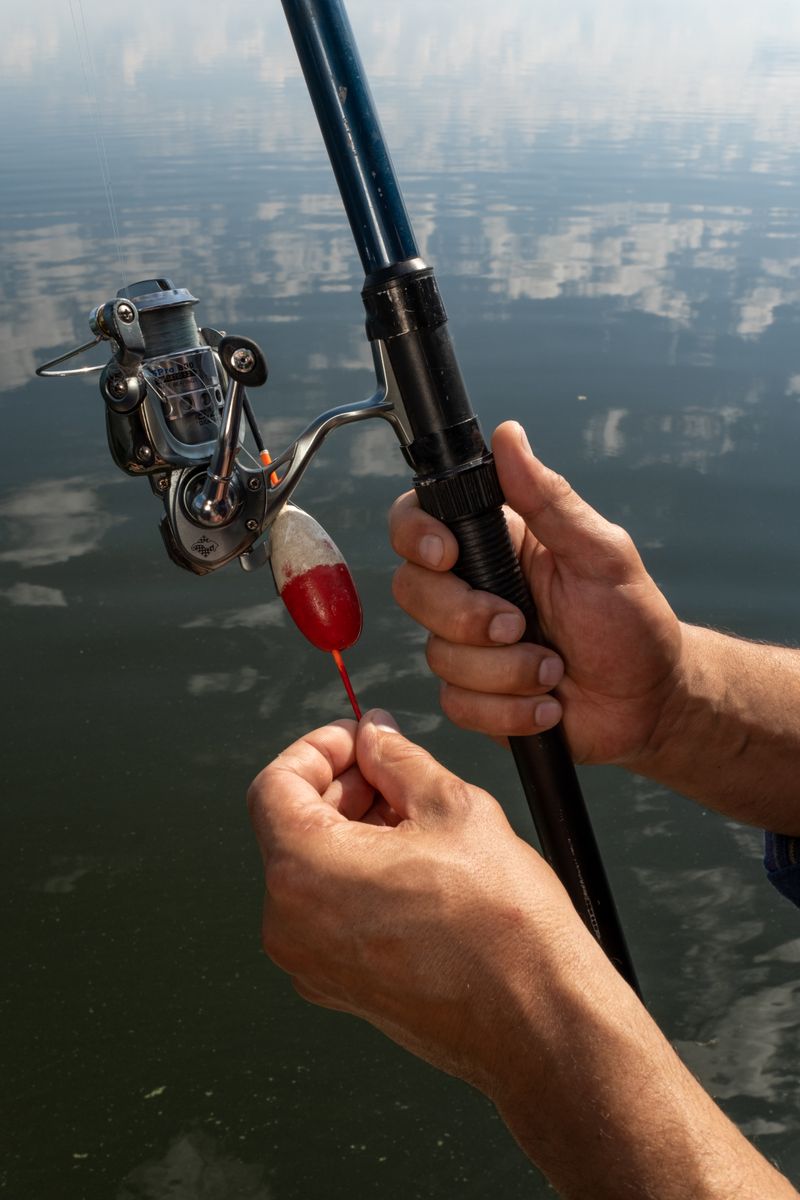
Spool up four to eight strands of braid. The cheaper 4-strand is fine for most jigging. The 8-strand is rounder, casts a touch farther, and costs more. Either works.
The Fluorocarbon Leader
Braid is visible. So is mono, a little. Fluorocarbon is the line that disappears under water and sinks.
For clear water or finicky fish, run a fluorocarbon leader. That is where braid's zero stretch can hurt you if you skip it: a fluorocarbon leader adds a little stretch at the jig, which cushions a hard hook-set on light bites and keeps pressured fish from feeling the wire.
Keep the leader shorter than you think. Two feet is enough for most jigging. Longer leaders are for fish that inspect baits from a distance, and longer leaders also mean more knots and more wind knots on a bad day. There is a fuller rundown in the fishing leader length guide.
The leader connection matters. On ultralight gear, a simple FG knot or a five-turn uni-to-uni is enough. On heavier jigging rods, go straight braid to a swivel and let the fluoro trail off that. Fewer knots, fewer surprises.
The Three Core Jigging Setups
There is not one jigging line. There are three, and they want different tackle.
Shore jigging. Six- to eight-foot medium rod, 15 to 20-pound braid, 20-pound fluorocarbon leader. You are casting and working a metal jig; you need line that loads fast and flies far.
Slow pitch vertical jigging. A shorter, stiffer rod, PE 1.0 to 1.5 braid for typical boats, leader to match the jig. Here feel matters more than cast; a light braid with a fluorocarbon leader reads the drift.
Finesse drop shot. The line goes lighter. PE 0.6 to 0.8 braid, a light fluorocarbon leader, a small jig head. This is the fiddly one. Zero stretch plus a soft rod means you set on the rod load, not on your wrist.
Line Size and Leader Length
Pick braid by the jig weight and the depth, not by the fish. A 40-gram jig in current wants 20-pound braid so the line stays straight. A 10-gram jig in four feet of water runs on 10-pound braid easily.
Leader length is the part to keep short and simple: two feet in clear water, three to four feet when the fish are spooky, none at all in heavy cover where you want the strongest possible line to the lure.
One number to remember: leader strength should match the braid, or run one size up with heavier fluorocarbon. A 20-pound braid with a 25-pound leader is a common rig.
Common Mistakes to Avoid
The usual mistake: six feet of fluorocarbon leader on a drop shot rig, and a morning lost to wind knots. Two feet would have done the job.
Keeping 12-pound mono on a jigging rod too long, convinced the stretch is helping. It is hiding bites.
Tying braid straight to a tiny jig head loses the jig on a snag, because there is no shock absorption. Always run a short leader into the lure.
Pick your braid, keep the leader short, and check the knot before every drop. The line is not the part of the tackle that fights the fish. It is the part that tells you the fish is there.
FAQ
What fishing line should I use for jigging?
Braid main line for sensitivity, with a fluorocarbon leader for the last two to four feet. Braid gives you the bite; the fluorocarbon leader hides the connection and adds a little buffer on the hook-set.
Is braid or fluorocarbon better for jigging?
Braid works better as the main line because it has no stretch. Fluorocarbon works better as the leader because it is invisible underwater and sinks. Run both: braid up top, fluorocarbon at the lure.
What pound test braid should I use for jigging?
Match it to the jig weight and the depth. Around 10 to 15-pound braid for light finesse jigging, 15 to 20-pound for shore and ordinary vertical jigging, up to 30-pound for heavy current and big jigs.
How long should the leader be for jigging?
Two feet is enough for most jigging. Go to three to four feet in clear water with spooky fish. Drop the leader entirely in heavy cover where you want maximum strength to the lure.
Can I jig with monofilament?
You can, but you will feel fewer bites. Monofilament stretches, so the take travels slower down the line. If you must use mono, keep it light and cut it long; braid is the stronger choice for reading a jig at depth.