Table of Contents
- What a Leader Actually Does
- Short Leaders (12–24 Inches): The Good and The Bad
- Medium Leaders (2–4 Feet): The Middle Ground
- Long Leaders (4+ Feet): When You Need the Extra Length
- Material Matters More Than You Might Think
- Putting It Together: Matching Length to Situation
- Practical Tips for Leader Management
- FAQ
Understanding leader length trade-offs helps you make informed decisions for your specific fishing situations
If you've ever Googled "how long should my fishing leader be," you know the pain. One guy says 12 inches is plenty. Another claims anything under 4 feet is basically fishing blind.
And then there's the fly fishing crew casually dropping 9-foot recommendations like that's totally normal for a Tuesday afternoon.
Here's the thing: nobody really agrees. And after going down this rabbit hole, reading forums, watching videos, and digging through whatever actual research exists, one thing becomes clear.
Most of the "rules" about leader length are just strong opinions wearing confidence like a cheap suit.
This isn't another article telling you the "one true length" you must use. Instead, let's look at what actually happens when you go short, medium, or long.
No marketing fluff, no unproven claims, just the real pros and cons you can verify yourself. By the end, you'll know enough to pick what works for your fishing, not someone else's.
What a Leader Actually Does
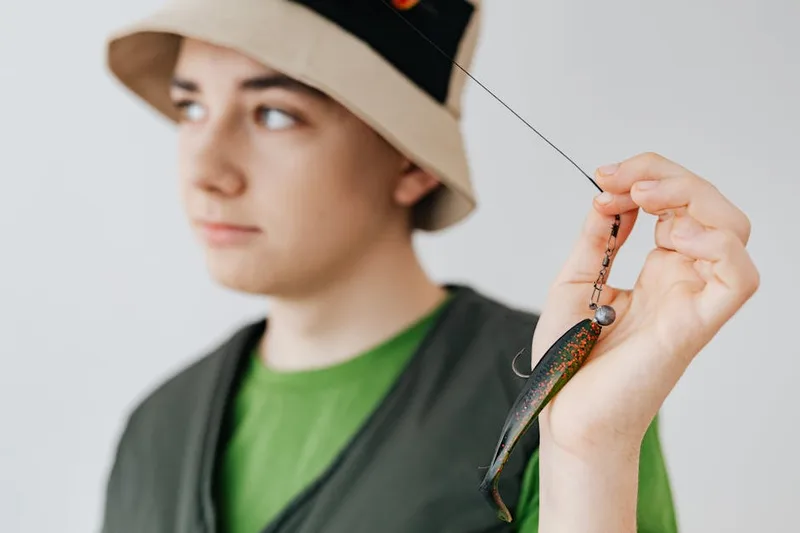
Before we talk length, let's get clear on what a leader is actually for. It's that section of line between your main braided line and your lure or hook. Simple enough, but it serves three specific purposes worth understanding.
First, abrasion resistance. Braid is strong, but it's terrible at handling rough surfaces, rocks, oyster shells, fish teeth. Leader materials like fluorocarbon and monofilament are built to take that abuse.
When your line rubs against structure or a fish's mouth, you want the leader taking the hit, not your expensive braid.
Second, visibility management. Braid is highly visible underwater, bright colors, thick diameter, light-catching texture. Leader materials are clearer and less reflective.
Whether this actually matters to fish is hotly debated (more on that later), but the physics are real: fluorocarbon has a refractive index closer to water than braid does.
Third, it's your connection point. Every time you change lures, retie after a snag, or adjust your rig, you're working with the leader.
Its length determines how much material you have to work with before you need to rebuild the whole setup.
That's it. No magic, no secret fish-attracting properties. Just protection, visibility reduction, and a practical working section. Everything else you've heard is probably someone selling something.
Short Leaders (12–24 Inches): The Good and The Bad
Let's start at the short end. A foot or two of leader keeps things simple, and there's a reason plenty of experienced anglers prefer it.
What works: Less line going through your guides means fewer opportunities for wind knots, that annoying tangle that seems to appear out of nowhere when you're casting into a breeze.
You also get more direct connection to your lure; every movement you make transfers faster with less line in between. And let's be honest, fluorocarbon isn't cheap.
Using less of it saves money, especially if you're fishing frequently and replacing leaders often.
Changing lures is quicker too. With the knot sitting closer to your rod tip, you can snip and retie without fumbling around with long sections of line flapping in the wind.
The trade-offs: The obvious one is longevity. Start with 18 inches, get a few nicks and frays from structure or fish, and suddenly you're down to 12 inches. Then 8.
Before you know it, you're tying directly to braid because you kept trimming "just one more time."
There's also the visibility question. In gin-clear water, some anglers worry that a short leader doesn't give enough distance between that bright braid and the business end of your presentation.
Whether fish actually care is debatable, but the concern is real enough that it keeps some people up at night.
Medium Leaders (2–4 Feet): The Middle Ground
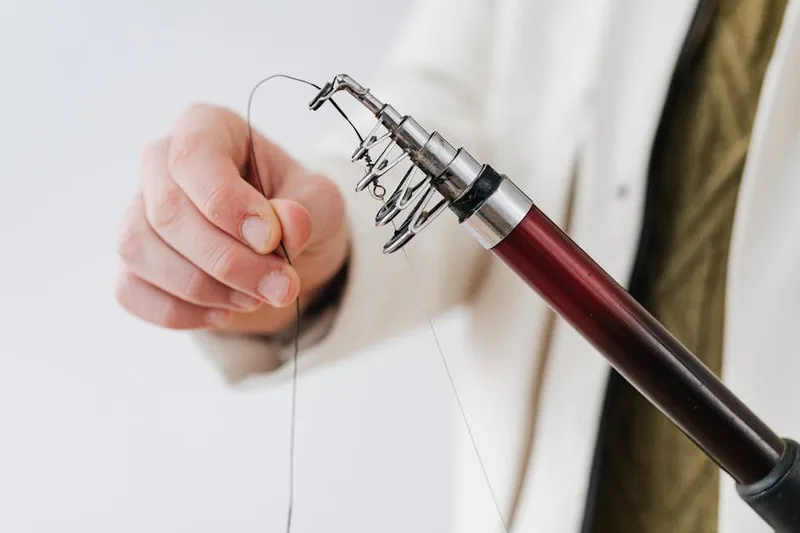
This is where most anglers end up, and it's not hard to see why. Two to four feet of leader hits a sweet spot that works for a wide range of situations.
The practical benefits: You've got enough material to retie several times before you need to rebuild your leader setup. Nick the line on a rock? Trim it and keep fishing. Switch lures multiple times?
No problem. That buffer of extra length means less time spent re-rigging and more time with your line in the water.
This range also handles most fishing scenarios without requiring constant adjustment. Freshwater bass, inshore saltwater, light offshore work, it all works. You won't be perfectly optimized for every situation, but you won't be badly wrong either.
The compromises: That extra length does mean your leader knot passes through your guides more often. For most modern rods with decent-sized guides, this isn't a big deal.
But if you're using micro-guide setups or making long casts where the knot travels deep into the rod, you might notice some resistance or noise.
Cost adds up too. Fluorocarbon at $20–$30 per spool means every extra foot matters if you're replacing leaders regularly. It's not bank-breaking, but it's worth factoring in.
Long Leaders (4+ Feet): When You Need the Extra Length
At four feet and beyond, you're getting into specialized territory. This isn't what most casual anglers need, but there are legitimate reasons to go long.
The upside: If you're fishing situations where you're constantly retying, deep structure, rough bottoms, toothy fish, you can trim and retrim without worrying about running out of leader.
Charter captain Ryan Moody, who's spent 30 years guiding in Australia, runs long leaders specifically for this reason. He'd rather have the buffer than save a few dollars on line.
Long leaders also make sense for offshore and big-game fishing where you're connecting multiple sections of line, using wind-on systems, or dealing with fish that require heavy abrasion resistance over extended distances.
And of course, fly fishing demands long leaders for proper presentation and turnover, though that's a completely different discussion from conventional tackle.
The reality check: More line means more potential problems. Wind knots become more likely with longer, stiffer fluorocarbon sections catching the breeze.
Storage gets annoying, try neatly coiling 6 feet of leader into your tackle box. And the cost becomes significant; a 4-foot leader uses twice the material of a 2-footer.
For most weekend anglers fishing local lakes or inshore waters, this is overkill. But if you're putting in serious time on the water or targeting specific species that demand it, the extra length earns its keep.
Material Matters More Than You Might Think
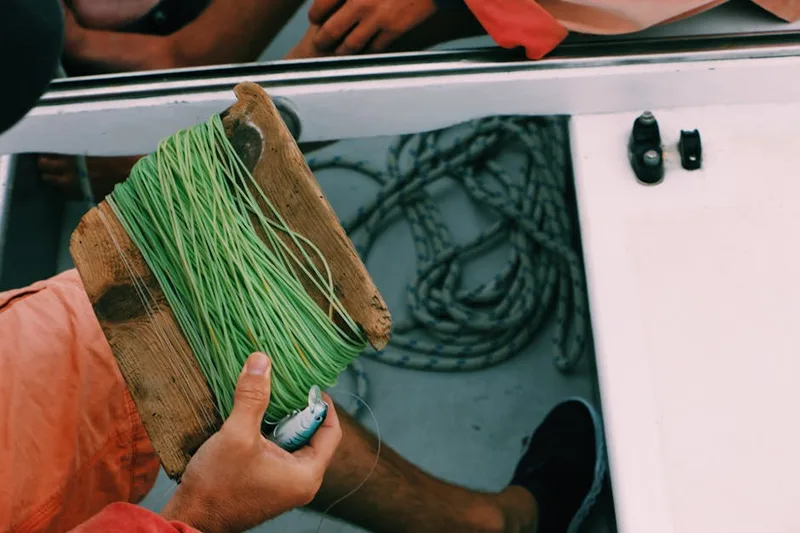
While we've been talking about length, the material you choose might actually make a bigger difference in your day-to-day fishing. And this is where marketing hype runs thickest.
Fluorocarbon sinks faster than monofilament, noticeably so in actual fishing conditions. That's a real advantage if you're fishing deep or want your lure getting down to the strike zone quickly.
It's also stiffer and harder, which theoretically helps with abrasion resistance, though independent testing (like the work Salt Strong has published) shows the difference isn't as dramatic as manufacturers claim.
The downside? It's expensive, stiff enough to cause knot-tying headaches for some anglers, and has a tendency to develop memory, those annoying coils that won't straighten out.
Monofilament is the old standby for good reason. It's cheaper, easier to handle, and has a bit of stretch that can actually help when a fish surges.
It floats or sinks neutrally depending on the specific formulation, which matters if you're fishing topwater or need to keep your presentation suspended.
The trade-off is that it breaks down faster in sunlight and absorbs water over time, weakening the line. You'll replace it more often, but since it costs half as much (or less), the math often works out in mono's favor.
For most anglers, either material works fine. The length you choose matters more than obsessing over which brand of fluorocarbon is "best."
External reference: Salt Strong Fluorocarbon vs Mono Abrasion Test
Putting It Together: Matching Length to Situation
So with all this in mind, how do you actually choose? Here's a practical breakdown based on the trade-offs we've covered, not marketing claims or internet arguments.
For general freshwater and light inshore saltwater: Start with 2–3 feet. It's the most versatile starting point, giving you enough material to work with without the hassles of going longer.
You can always adjust based on what you discover about your specific fishing.
Structure-heavy environments, rocks, docks, timber: Go shorter, around 1.5–2 feet. You're going to get nicked up, and you want the ability to retie quickly without burning through leader material.
The reduced casting distance from a shorter leader matters less when you're targeting specific pieces of cover anyway.
Ultra-clear water situations: Some anglers extend to 3–4 feet here, though the actual benefit is debatable.
If you've got fish that are genuinely leader-shy (and you've proven this through actual observation, not just assumption), the extra length might help. Otherwise, you're probably solving a problem that doesn't exist.
Offshore and big game: 4–6 feet becomes more reasonable. You're dealing with heavier line classes, more abrasion, and fish that require multiple reties during a fight. The extra buffer pays for itself in reduced re-rigging time.
Fly fishing: Ignore everything above. The 7.5–9 foot standard exists for casting mechanics reasons, not fish psychology.
Practical Tips for Leader Management
Once you've picked a length that makes sense for your fishing, a few habits will save you money and frustration.
Start longer than you think you need. If you've decided 2 feet is your sweet spot, cut 2.5 feet.
That extra buffer gives you room for a few reties before you're forced to rebuild the whole setup. Nothing kills a fishing session faster than running out of leader material on the water.
Check your knots every trip. The connection between braid and leader takes abuse every cast. A quick visual inspection takes 10 seconds and can save you from losing a fish to a failed knot.
Don't fall for the "fluorocarbon is invisible" trap. Yes, it has better optical properties than braid. No, that doesn't mean you need 6 feet of it to catch fish.
Plenty of anglers fishing straight braid catch plenty of fish every day. The leader is insurance, not magic.
Replace before you have to. When your leader gets down to 12 inches or shows visible wear, swap it out. Pushing it too far is how you lose fish at the boat.
And finally, experiment. The recommendations here are starting points, not gospel. Try different lengths on your home waters and see what actually works.
Your specific fishing, your casting style, your target species, your local conditions, matters more than any article can tell you.
FAQ
Q: Does leader length actually affect how many fish I catch?
There's no scientific research proving that a specific length increases catch rates. Professional anglers catch fish successfully using everything from 12-inch to 6-foot leaders. The key is matching your setup to your specific situation, not chasing a magic number.
Q: Is fluorocarbon really "invisible" underwater?
Fluorocarbon has a refractive index (1.42) closer to water (1.33) than monofilament (1.53), which theoretically makes it less visible. But real-world effectiveness depends on water clarity, light conditions, and depth. The "invisible" claim is marketing that oversimplifies the physics.
Q: Why do some people recommend 9-foot leaders?
That's the standard for fly fishing, where casting mechanics require long leaders for proper presentation. For conventional tackle, spinning or baitcasting gear, it's unnecessary and often counterproductive.
Q: Can a long leader restrict my lure's action?
In one comparison of 1-foot and 4-foot leaders, no measurable difference in lure action was found, which is worth weighing against the common worry that a long leader kills action.
Q: How short is too short?
Technically, 12–18 inches is enough to connect braid to your lure. But going that short means you'll replace leaders constantly. Most anglers find 18–24 inches is the practical minimum for reasonable longevity.
Q: Why is fluorocarbon so expensive?
Manufacturing complexity plus marketing premiums. It does offer real advantages, faster sink rate, higher abrasion resistance, but the price reflects perception as much as performance. You don't need to pay premium prices for premium results.
Q: When should I replace my leader?
When it drops below 12 inches, shows visible wear, develops memory coils you can't straighten, or after any significant abrasion event. Regular inspection beats hoping it holds.
Found This Guide Helpful?
Check out LineCalc Pro , our free fishing line calculator that recommends a suitable line for your exact setup. No guessing, no wasted money.
Try LineCalc Pro →Sources & Industry References
- International Game Fish Association (IGFA) , Official world record authority and fishing line standards reference
- Wired2Fish , Independent fishing gear reviews and line testing data
- Tackle Warehouse , Comprehensive fishing line specs, diameter charts, and user reviews