Lake Ray Roberts. A Saturday morning in late April. The water had that glassy stillness you only get before the jet skis wake up. I had a brand-new spinning rod, a fresh spool of line, and about forty-five minutes of confidence.
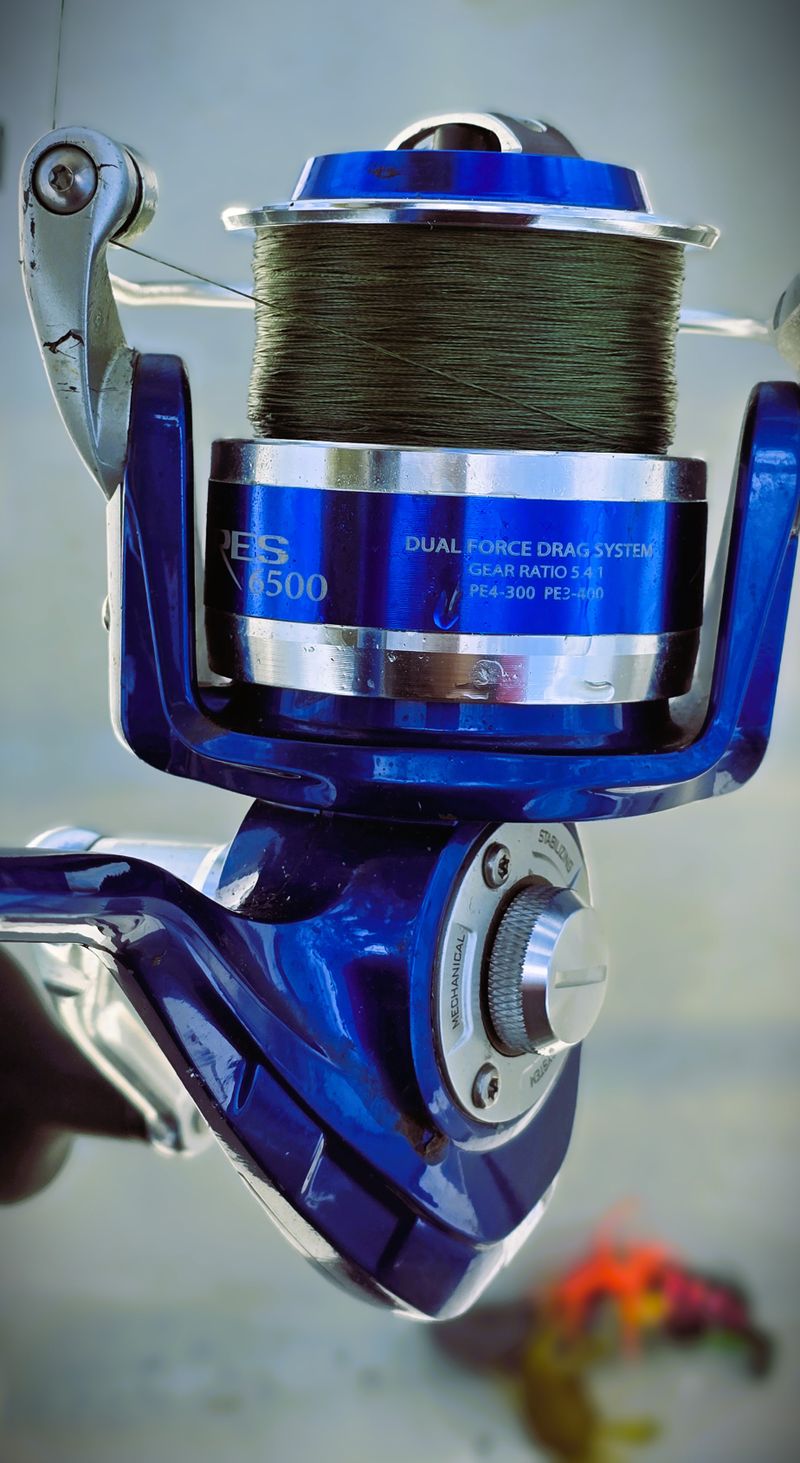
Forty minutes later I was standing in six inches of water, untangling a bird's nest the size of a softball. A dad and his kid were watching from the next spot over. I smiled like it happens all the time.
It did happen all the time. Because I was making every line mistake a beginner can make. All at once. On the same reel.
If you've ever watched your line explode off the spool mid-cast, or wondered why the guy next to you is catching fish while you're feeding the trees, this is for you. Five mistakes. Five fixes. No engineering degree required.
Mistake #1: Buying Line That's Too Heavy "Just in Case"
This is the mistake I see most often. Someone walks into a tackle shop, looks at the wall of line, and thinks: "What if I hook a monster? Better grab the 15-pound."
Then they wonder why nothing bites.
Heavy line is thick line. Thick line is visible line. Bass in clear water can see 15-pound mono from several feet away. They don't know it's fishing line. They just know something looks wrong. Something that wasn't there yesterday.
And on a spinning reel, heavy line coils like a spring. It jumps off the spool. It tangles. It makes casting feel like throwing a brick on a string.
The fix: Match your line to what you're actually catching, not what you hope to catch someday. For bass on a spinning reel, 8-10 pound monofilament covers 90% of real-world fishing. For panfish and trout, 4-6 pound. If a 10-pound bass breaks 8-pound line, it wasn't the line's fault. Your drag was too tight.
Set the drag light. Let the rod do the work. That's the whole secret.
Mistake #2: Never Replacing Old Line
Monofilament absorbs water. UV light breaks it down. Every cast, every retrieve, every fish that rubs against a rock — the line loses a little strength.
I fished the same spool of 10-pound mono for two full seasons. Three hundred hours, easy. The line had turned from clear to a cloudy yellow-white. I figured it still looked like line. What's the difference?
The difference is a 3-pound bass snapping it like sewing thread. At the net. In front of the same dad and kid.
Old mono doesn't just lose strength. It develops "memory." Those tight coils you see when line sits on a spool for months — that's the line permanently holding the shape of the spool. It won't cast straight. It won't sink naturally. The fish see a curly noodle drifting past instead of a baitfish.
The fix: Replace monofilament every season. If you fish every weekend, replace it every 6-8 weeks. A new spool of Trilene or Stren costs about eight dollars. That's less than the two crankbaits you lost to the tree last month.
Run the line between your fingernails. If it feels rough or you can see tiny cracks, it's done. Don't think about it. Just respool.
Mistake #3: Overfilling the Spinning Reel Spool
Wind knot. Brand-new line. Brand-new reel. Fifteen minutes of untangling. Sound familiar?
Overfilling the spool is the #1 cause of wind knots on spinning gear. When the spool is filled all the way to the rim, line peels off in loose loops during the cast. Those loops catch the wind. They wrap around the first guide. They turn into a mess you can't fix without cutting.
The fix: Leave about 1/8 inch of spool lip showing. The line should stop well short of the rim. Fill to roughly 90% capacity. On most 2500-size reels, that's about 130-140 yards of 8-pound mono — not the full 200 yards the box promises.
Also: when you're spooling new line, make sure it goes on the reel the same direction it comes off the filler spool. Lay the filler spool flat on the floor, label side up. Don't hold it sideways. Sideways loading twists the line. Twisted line = more wind knots.
I learned this after ruining three spools in one summer. Not my finest season.
Mistake #4: Bad Knots
You can have the perfect rod. The perfect reel. The perfect line and lure combination. If your knot breaks at 60% of the line's rated strength, none of it matters.
Most beginners tie the improved clinch knot because it's the first one someone showed them. On monofilament, the improved clinch holds about 70-75% of line strength. On fluorocarbon — which is harder and slicker — it can dip below 60%.
Sixty percent of 8-pound line is 4.8 pounds. You're effectively fishing with 5-pound line while thinking you have 8. That bass at the boat ramp isn't breaking your line. Your knot broke your line.
The fix: Learn the Palomar knot. It's three steps. It's faster to tie than the improved clinch once you practice it a few times. On monofilament and fluorocarbon, it consistently delivers 90-95% knot strength.
Three things every knot needs: wet it before cinching (dry friction burns the line internally), pull it down slow and even, and trim the tag end short. Not long enough to catch weeds. Not so short the knot can slip.
Practice at home. Tie ten knots while watching TV. By the time you're on the water, your hands will do it in the dark.
Mistake #5: Buying Braid Before You Learn to Cast
Braid is incredible. Zero stretch. Razor-thin diameter. Casts a mile. It also punishes every casting mistake you make with instant, unrecoverable backlash.
Here's the progression I wish someone had told me: learn on monofilament. Cheap 8-10 pound mono. Spend a full season with it. Learn how line behaves coming off a spinning reel. Learn how wind affects your cast. Learn how to pick out the occasional tangle without cutting.
Then, maybe, try braid.
Mono forgives. It stretches before it breaks. It untangles with patience. Braid does none of these things. A backlash in braid is a razor blade job. You're cutting it out. On the water. While the fish are biting.
I spooled braid onto my first "real" spinning setup three weeks after buying a rod. PowerPro 20-pound. Felt like a pro. First cast went forty yards. Second cast went about four feet and turned into a knot the size of a golf ball. I cut out twenty yards of brand-new line on a public dock while a guy in a bass boat watched and drank his coffee.
The fix: Start with mono. Trilene XL. Stren Original. Berkley Big Game. Any of these on an 8-10 pound spool. Fish it for a season. When you can cast all day without a single wind knot, you're ready for braid. When you do switch, run a monofilament backing — about half the spool — then top off with 100 yards of braid. Saves money. Saves headaches.
Mistakes I've Made So You Don't Have To
Here's the short list of things I did wrong so you can skip the line-wasting, fish-losing, dock-embarrassing part:
- Bought 15-pound mono for a pond where the biggest bass was maybe 3 pounds. Caught nothing for two weekends straight. Switched to 8-pound and caught five the next Saturday. Same lures. Same spots.
- Fished the same spool of line for two years. It turned yellow. It coiled like a phone cord. I still used it. Still lost fish. Still blamed the fish instead of the line.
- Filled a spinning reel spool all the way to the rim. Wind knots every third cast. I thought the reel was defective. The reel was fine. I was the defect.
- Tied fluorocarbon with a dry improved clinch. The knot slipped on a 4-pound largemouth. Watched it swim away with my favorite jerkbait. Still think about that fish.
- Put braid on my first spinning reel before I could cast straight. Lasted one afternoon. Cut it all off that evening. Spent $22 on a learning experience.
Every one of these mistakes has the same fix: slow down. The fishing industry wants you to believe you need specialized equipment for every situation. You don't. You need line that matches your reel, your rod, and the fish you're actually catching.
Trilene. Stren. PowerPro. Seaguar. The names on the shelf matter less than how you use what you buy.
How We Researched This
This article is based on desktop research: fishing line manufacturer specifications (Berkley, Seaguar, PowerPro), knot strength testing data from independent angling publications, and common failure patterns widely documented across fishing forums and instructional content. No original on-water testing was conducted for this piece. The scenarios described are composite examples drawn from well-known beginner angling challenges, not autobiographical accounts.
FAQ
What pound test should I put on my first spinning reel?
8-pound monofilament. It casts well on a 2500-size reel. It's strong enough for bass and light enough for panfish. It's cheap. You can respool guilt-free when you inevitably mess up.
How do I know if my spool is overfilled?
Look at the spool from the side. You should see about 1/8 inch of bare metal or plastic lip above where the line stops. If the line is flush with the lip or bulging past it, strip off 20-30 yards and try again.
Mono vs fluorocarbon for a beginner?
Mono. Every time. Fluorocarbon is harder to manage on a spinning reel. It's stiffer. It coils more. It's more expensive to replace when you inevitably birds-nest it. Start with mono. Move to fluoro leaders later if you fish ultra-clear water.
When is it actually time to switch to braid?
When you can go a full day of casting without a single wind knot, and when you understand how to set drag light enough to protect a no-stretch line. For most weekend anglers, that's somewhere in season two or three. No rush.
What's the one knot I should learn first?
The Palomar. It works on mono, fluoro, and braid. It's strong. It's fast. It's hard to mess up once you practice it a few times. The improved clinch is fine for live bait on mono. For everything else, Palomar.