Table of Contents
- The Three Numbers That Actually Matter
- Line Material: The Strength You Can't Read on the Label
- Breaking Strain by Carp Weight: A Real-World Table
- Rig-Specific Strength Requirements
- The Weather Factor Most Anglers Skip
- The Mainline vs. Hooklink Rule That Protects Fish
- Two Lines I've Trusted for Seasons
- The Quick-Reference Checklist
- FAQ
The alarm screamed at 4:47 AM. Not a single bleep , a full-throttle run. I grabbed the rod, felt the weight, and knew instantly this fish was different.
Twenty minutes later, a 34-pound common slid into the net. The line? 15-pound monofilament. Not 12. Not 20. Fifteen.
That fish taught me something I'd been ignoring for years: line strength isn't about how much weight the line holds on a scale.
It's about how that line behaves in water, under tension, around snags, and through the final moments at the net. Pick too light and you lose fish.
Pick too heavy and you never get the bite.
I've been carp fishing for over two decades. fish lost on 10-pound lineat should have held. I've spooked fish with 25-pound line that was totally unnecessary.
Here's everything I know about choosing the right breaking strain , by venue, by fish size, and by rig type.
The Three Numbers That Actually Matter
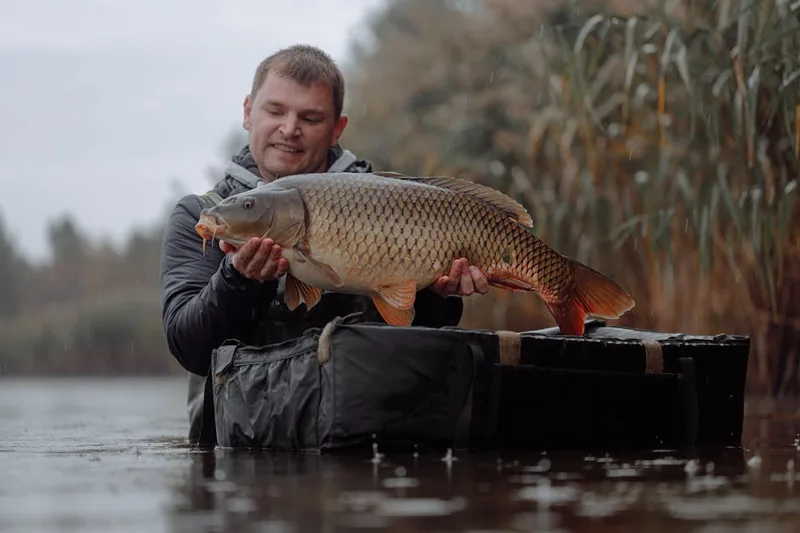
Most anglers fixate on one number: the pound test printed on the spool. That's a starting point, not a strategy. Three factors determine whether your line holds or fails.
Fish Size and Fight Duration
A 20-pound carp in open water doesn't pull 20 pounds of pressure. It pulls maybe 5 to 8 pounds during a run, with bursts higher when it surges near snags.
But sustained pressure over a 15-minute fight fatigues line differently than a quick 30-second bass fight. Carp are endurance fighters. They lean. They kites. They don't quit.
Your line needs to survive 10 to 20 minutes of sustained load, not a single spike.
For fish averaging 8 to 15 pounds , the typical stock in most commercial lakes , 12-pound mono handles everything with room to spare.
Step to lakes holding 20-pound-plus commons and you want 15-pound as your floor. Venues with known 30-pound-plus fish justify 18 to 20-pound mainline.
Venue Type and Bottom Structure
This is where most line-strength mistakes happen. Anglers match line to fish size and ignore what's underwater.
Gravel-pit lakes with clean bottoms and minimal snags are the most forgiving. You can fish 10-pound mono and land 25-pound fish with careful drag work. The fish has nowhere to go, nothing to wrap around.
Your line only fights the fish.
Silty estate lakes with weed beds demand a different approach. 12-pound mono is the minimum, even for smaller carp.
A fish that buries itself in weed creates exponentially more drag on your line than open-water fighting. The line has to cut through vegetation while under tension.
Braid handles this better , 20 to 30-pound braid slices through weed that would stop 15-pound mono cold.
Rivers present the worst case. Current multiplies the effective weight of the fish. A 15-pound carp in a moderate flow fights like a 22-pound fish in still water.
Add snags , fallen trees, bridge pilings, rock bars , and you need line that stops fish before they reach structure. 18-pound mono or 30-pound braid minimum on rivers.
Line Material: The Strength You Can't Read on the Label
Pound test isn't universal across materials. A 15-pound monofilament, 15-pound fluorocarbon, and 15-pound braid are three completely different animals.
Monofilament (12-18lb): The standard for 80% of carp fishing. It stretches 15 to 25 percent under load, which absorbs the violent head shakes that would tear hooks free on braid.
The stretch also cushions hook holds , critical because carp mouths are surprisingly soft. A stiff hook hold pops free under sudden shock. Mono stretches instead of tearing.
Braid (20-35lb): Zero stretch. Absolute sensitivity. Every pebble the lead drags across registers in your hand. The trade-off: no shock absorption. If you fish braid mainline, your rod tip must handle all the cushioning.
A stiff rod paired with braid creates a system that yanks hooks free on the take.
Use braid with a through-action rod that bends deep into the blank, or pair braid with a mono leader to reintroduce some give.
Fluorocarbon (12-16lb): The stealth option. Near-invisible underwater and sinks fast, pinning your line to the lake bed. Carp can't bump into a line that's already on the bottom.
The downside: fluorocarbon is stiffer than mono and has less stretch. Knots need extra care. Wet every knot thoroughly before cinching , dry fluoro generates heat and weakens internally.
Read our braid vs mono vs fluorocarbon comparison for the full breakdown.
Breaking Strain by Carp Weight: A Real-World Table
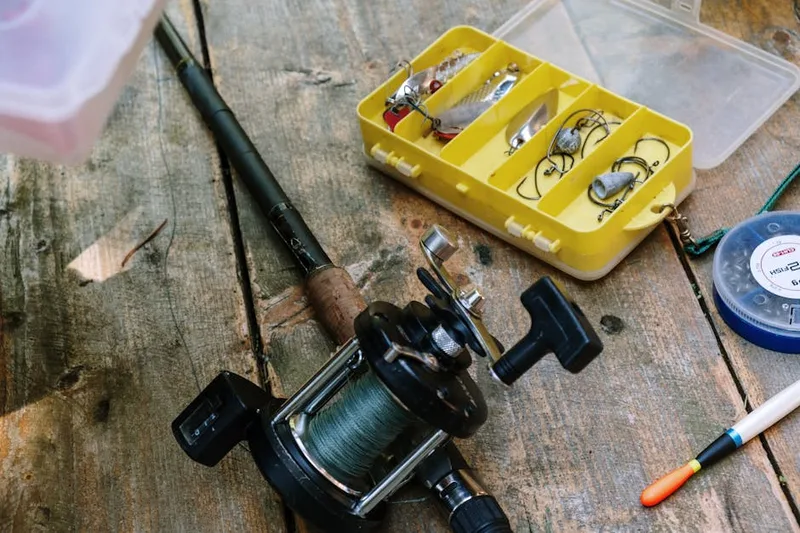
Lab tests measure line on a straight pull. That's not how fish fight. This table reflects actual on-the-water results , what holds and what doesn't when a carp makes five hard runs through a weedy margin.
| Carp Size | Venue Type | Mono | Braid | Fluoro |
|---|---|---|---|---|
| 5-10 lb (small ponds) | Open water | 10-12 lb | 15-20 lb | 10-12 lb |
| 10-20 lb (commercials) | Moderate weed | 12-15 lb | 20-30 lb | 12-15 lb |
| 20-30 lb (specimen) | Heavy weed/snags | 15-18 lb | 30-40 lb | 15-18 lb |
| 30+ lb (trophy) | Rivers/heavy cover | 18-20 lb | 40-50 lb | 18-20 lb |
| All sizes | Ultra-clear water | See fluoro | 20 lb + fluoro leader | 12-15 lb |
One principle overrides every number in that table: match hooklink strength below mainline strength. If you fish 15-pound mainline, rig your hooklinks at 12 pounds.
When you snag , and you will , the break happens at the hook, not 80 yards up the lake. A carp swimming with 80 yards of line trailing behind it rarely survives.
Breaking at the hooklink leaves the fish clean.
Rig-Specific Strength Requirements
Different rigs put different demands on your line. The strength you need for a bolt rig isn't the same as what works for surface fishing.
Bolt Rigs and Lead Clips: These demand the most from mainline. The lead hits the clip — the fish bolts, and all that momentum transfers instantly to the hook point.
The shock on a 20-yard bolt run is brutal. 15-pound mono minimum for any bolt-rig fishing. The stretch in mono helps here , it absorbs the bolt impact.
Braid on a bolt rig requires a soft rod and carefully set drag.
Zig Rigs and Surface Fishing: You're targeting fish in open water with no bottom contact. Lighter is better , 10 to 12-pound mono works beautifully. The fish has nothing to wrap around.
A 10-pound mainline with a 3-foot zig of lighter fluoro to the hook will land carp well into the twenties with patient fish-playing.
Method Feeder: The feeder itself adds casting weight. A loaded medium method feeder weighs 2 to 3 ounces.
That mass at the end of your line during a power cast stresses the knot and the first few yards of line. 12-pound mono is the floor. 15-pound gives you casting confidence when you need to reach fish at 80-plus yards.
The Weather Factor Most Anglers Skip
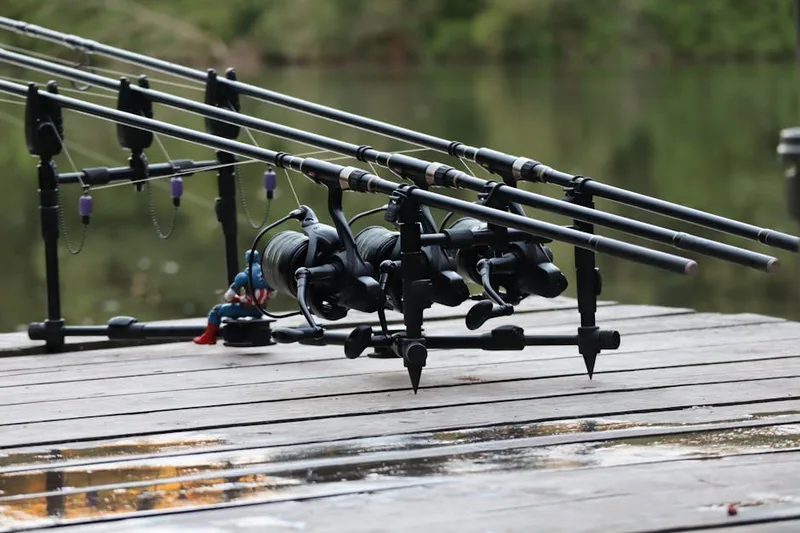
Temperature changes line behavior. Cold water makes nylon mono stiffer and slightly more brittle.
A 15-pound mono that handled 30-pound carp all summer might snap at a knot in January when the water temperature drops below 40 degrees.
learned the expensive way, losing a mid-twenty common on New Year's Day because my line hadn't been checked since October.
In winter, step down one size in diameter but keep the same pound test. A high-quality 12-pound mono in winter handles what generic 15-pound handles in summer.
Premium lines with consistent diameter and low memory perform better in cold conditions. If you fish year-round, replace your mainline every autumn regardless of how it looks.
Wind is the other hidden factor. Strong crosswinds create bow in your line between rod tip and lead.
That bow acts as a shock absorber, which sounds good, but it also delays bite indication and reduces hook-setting power.
In windy conditions, a slightly heavier mainline (15 instead of 12) stays straighter and transmits bites more directly. The trade-off is visibility — but in choppy water, visibility matters less.
The Mainline vs. Hooklink Rule That Protects Fish
Every carp angler needs to know this rule cold: your hooklink should break before your mainline. Always.
If you fish 15-pound mainline, rig hooklinks at 10 to 12 pounds. The weakest link belongs at the business end.
When things go wrong , a snag you can't free, a fish that dives into a root ball , the system fails at the hook.
The fish swims away with, at worst, a short length of hooklink trailing from its mouth. That hooklink degrades and falls out within days.
Break your mainline, and the fish is towing 50 to 100 yards of line through the water. That line wraps around fins, catches on debris, and starves the fish slowly.
It's a death sentence for a carp in anything but the most open water. Fish care starts with rig mechanics.
Two Lines I've Trusted for Seasons
Daiwa Sensor , 15lb Monofilament
The brown color disappears against almost any lake bed. Diameter is true to label, and the knot strength is remarkably consistent across the entire bulk spool.
A 1000-meter spool runs about £12 to £15 , roughly $18 , and will fill four reels. carp over 35 pounds landed on Sensor 15lb and never had a line-related failure.
The stretch characteristic is ideal for bolt rigs: enough give to cushion the impact, enough recovery to stay straight after the run.
Check Price on AmazonFox Exocet , 12lb Monofilament
When I need to drop a pound class for spooky fish, this is the line I reach for. 12-pound test with a diameter closer to most 10-pound lines.
It sinks well, handles cold water better than most monos at this price point, and the olive color vanishes in weedy lakes. A 300-meter spool runs around £10.
The lower diameter means longer casts with less effort , useful when fish are showing at range and you need every yard.
Check Price on AmazonThe Quick-Reference Checklist
Line Strength Checklist for Any Carp Session
- Know the average fish size. Match line to the typical carp in the venue, not the lake record. Add 3-5 pounds as a buffer.
- Read the bottom. Clean gravel = lighter line. Weed beds = step up. Snags and trees = maximum strength.
- Match hooklink weaker than mainline. 12lb hooklink on 15lb mainline. Break at the hook, not the spool.
- Check line condition before every session. Run the first 20 yards through your fingers. Rough, nicked, or stiff line gets replaced.
- Adjust for weather. Winter cold stiffens mono , use premium lines or drop diameter. Wind demands straighter, slightly heavier line.
- Replace annually. UV and casting cycles degrade mono faster than you think. Fresh line costs less than losing a personal best.
FAQ
Is 10-pound line enough for carp fishing?
Yes , in the right venue. Open-water gravel pits with no snags and carp averaging under 15 pounds, 10-pound mono works fine with a properly set drag.
The moment you introduce weed, snags, or fish over 15 pounds, step up to 12 or 15. 10-pound line demands patience during the fight. You can't bully fish. Let them run and tire naturally.
For new carp anglers, start at 12-pound and learn fish-playing skills before dropping down.
Should I use braided mainline for carp?
Braid excels in two situations: heavy weed and extreme range. The zero-stretch means every vibration travels straight to your hand, and the thin diameter cuts through vegetation that would stop mono.
The downside: no shock absorption. Pair braid with a soft through-action rod or use a mono leader of 15 to 20 feet to add some give. 30-pound braid is a good starting point.
Avoid braid on bolt rigs unless you're running a soft rod , the shock transfer can tear hooks free. For most carp fishing, quality monofilament remains the safer, more forgiving choice.
How often should I replace my carp fishing line?
Every 12 months minimum, regardless of how often you fish. UV light degrades nylon monofilament even when it's sitting in your garage.
Line that spends weekends on the bank under direct sun degrades faster , replace every 6 months if you fish heavily.
Signs your line needs immediate replacement: visible nicks or abrasions, a rough texture when you run it between your fingernails, memory coils that won't straighten, or a chalky appearance. Don't push old line.
A bulk spool costs less than one lost trophy fish.
What pound test for carp in rivers?
Rivers demand heavier line than still water. Current adds load to every component of your setup. A 15-pound carp in moderate flow fights like a 20-plus-pound fish in a lake.
Start at 15-pound mono minimum for rivers. If the river contains snags , fallen trees, bridge supports, rock bars , go to 18 or 20-pound mono or 30-pound braid.
Stopping power matters more than stealth when current and structure are working against you. Check our catfish line guide for heavy-current line recommendations that apply to big river carp as well.
Sources & Industry References
- International Game Fish Association (IGFA) , Official world record authority and fishing line standards reference
- Wired2Fish , Independent fishing gear reviews and line testing data
- Tackle Warehouse , Comprehensive fishing line specs, diameter charts, and user reviews
Found This Guide Helpful?
Check out LineCalc Pro , our free fishing line calculator that recommends the perfect line for your exact setup. No guessing, no wasted money.
Try LineCalc Pro →Frequently Asked Questions
Who is this guide for?
Anglers looking to make informed decisions about fishing line selection , from beginners to experienced fishermen who want to understand the technical details behind line performance.
What's the most common mistake anglers make?
Choosing line based on price alone, or using the same line for every situation. Line diameter, material, and pound test should match your target species, water conditions, and fishing technique.
How often should I replace my fishing line?
Monofilament: every season or after 8-12 trips. Fluorocarbon: every 2 seasons. Braided line: can last 2-3 seasons if properly maintained. Replace immediately if you see fraying, discoloration, or memory coils.
Braid vs Mono vs Fluorocarbon , which should I pick?
Braid for sensitivity, casting distance, and heavy cover. Mono for topwater lures, stretch forgiveness, and budget. Fluorocarbon for clear water, leader material, and abrasion resistance. Most anglers use a combination.
What pound test line should I use?
Match to your target species: 4-8lb for panfish, 8-12lb for bass, 15-30lb for catfish/striper, 30-65lb for musky/saltwater. Check your rod's line rating , it's printed on the blank for a reason.
What should beginners check before buying line?
1) Match line weight to your rod rating. 2) For spinning reels, stick to 8-12lb to avoid wind knots. 3) Don't overspend on your first spool , $8-15 mono is perfectly fine to learn on.