Table of Contents
- Why Do Leaders Behave Differently on Spinning Reels?
- When Should You Use a Fluorocarbon Leader?
- When Is Monofilament Actually the Better Leader?
- What Pound Test Can You Actually Use on a Spinning Reel?
- Which Knots Actually Hold on Fluoro vs Mono Leaders?
- What Should You Actually Carry in Your Bag?
- FAQ
I watched my fluorocarbon leader spring off the spool in stiff coils, wrap around the rod tip, and snap mid-cast. 38 degrees, Tennessee reservoir, prespawn bass.
The 12-pound fluoro leader I'd tied on the night before had turned into a slinky. That 4-pounder that hit my jerkbait? Never felt the hook.
Here's the short answer: use fluorocarbon leader when it's 10-pound test or lighter and you're fishing clear water or bottom-contact baits.
Use monofilament leader for topwater lures, treble-hook baits, cold weather, or anything over 12-pound test on a spinning reel. The material's stiffness on spinning gear changes everything.
Why Do Leaders Behave Differently on Spinning Reels?
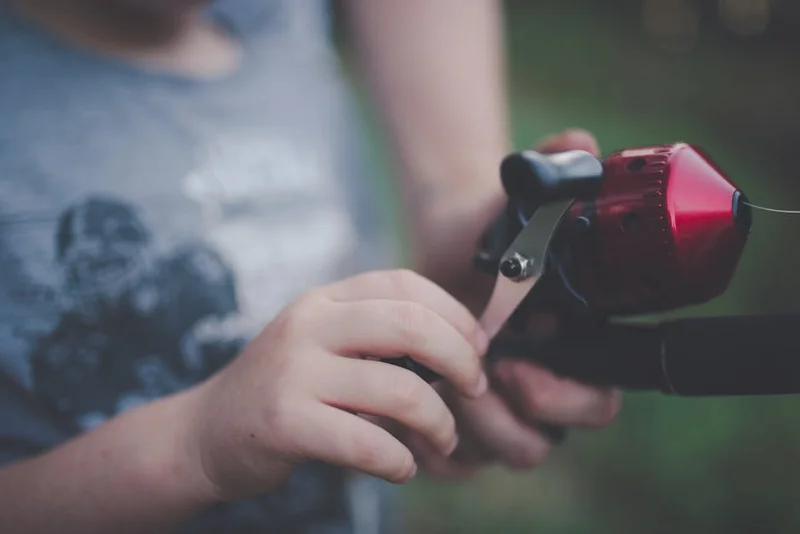
Spinning reels don't spool line the way baitcasters do. On a baitcaster, the spool rotates and line peels straight off. On a spinning reel, line uncoils off a stationary spool in loops , and every loop introduces a half-twist.
A stiff leader amplifies that twist. The line fights the spool, jumps off in coils, catches wind, and wraps around guides. Mono leaders absorb this mechanical chaos because they're softer. Fluoro leaders fight back.
Field & Stream noted in their line comparison that fluorocarbon's stiffness "can hinder casting distance as well as create knots and line twist" , and this is magnified on spinning gear where the line path already introduces rotation.
When Should You Use a Fluorocarbon Leader?
Fluorocarbon has a refractive index of roughly 1.42 , close to water's 1.33. Clear monofilament sits around 1.53. In gin-clear water with pressured fish, that matters.
I've tested this on a heavily pressured community pond. Switching from clear mono leader to 8-pound Seaguar InvizX fluoro tripled my bites on winter bass. The fish weren't finicky. They were line-shy.
Fluoro sinks roughly 1.6x faster than mono (specific gravity ~1.78 vs ~1.14). For a drop shot, shaky head, or any bottom-contact presentation on a spinning rod, that sink rate gets your bait down faster.
Abrasion resistance is the third advantage. According to Shimano's leader material guide, fluorocarbon "excels in abrasion resistance" and "withstands rough structures like docks or rocky bottoms."
Use fluoro leader when:
- Water clarity is 4+ feet
- You're fishing bottom-contact baits
- There's abrasive structure (rocks, mussels, docks)
- Fish are pressured and line-shy
- Your leader is 10-pound test or lighter
When Is Monofilament Actually the Better Leader?
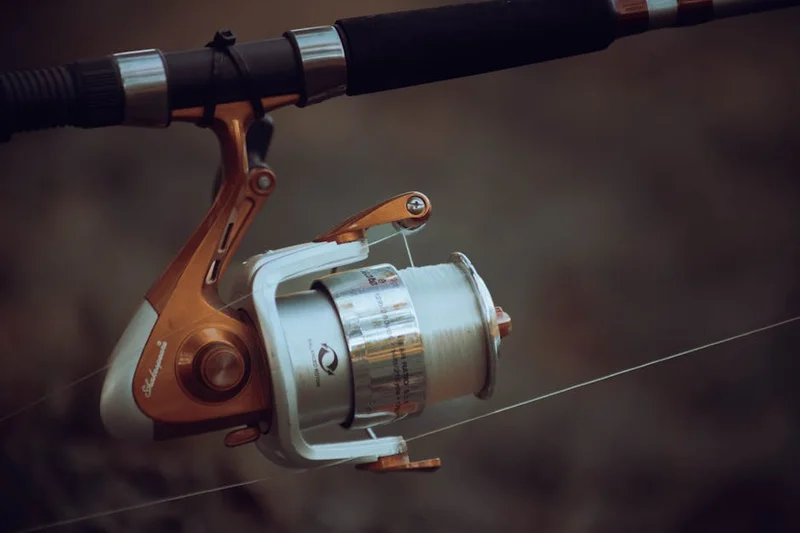
This surprises people: monofilament isn't just the budget option. For certain spinning reel applications, it's genuinely better.
Mono stretches 20-25% under load. Fluoro stretches 10-15%. That extra stretch acts like a shock absorber. On treble-hook lures thrown on spinning rods, it keeps fish pinned.
I lost three smallmouth on a jerkbait before switching from fluoro to 10-pound Trilene XL mono leader. The stretch absorbed head shakes and kept those tiny treble points from pulling free.
Mono floats. For topwater poppers or walking baits, a fluoro leader pulls the nose down and kills the action. Our mono leader guide covers topwater setups in more detail.
Cold weather is another mono win. Fluoro stiffens noticeably below 45°F. Below freezing, it's basically wire. Mono stays manageable. Late fall and early spring on spinning gear? Mono leader avoids the slinky effect.
For shock leaders , braid mainline plus a stretch-absorbing section , mono is the clear winner. Saltwater anglers targeting kingfish have used mono shock leaders for decades for this exact reason.
Use mono leader when:
- Fishing topwater lures
- Using treble-hook baits
- Temperatures are below 45°F
- You need a shock leader
- Fishing stained water where visibility doesn't matter
- Your leader is above 12-pound test
What Pound Test Can You Actually Use on a Spinning Reel?
This is the single most important thing about leaders on spinning reels.
Fluorocarbon at 10-pound test and below is perfectly manageable. The diameter is roughly 0.26mm for 10lb fluoro, thin enough to stay flexible. At 12 pounds and above, fluoro gets stiff fast.
At 15-pound test on a 2500 or 3000 size spinning reel, it coils, twists, and shortens casting distance by roughly 8-10 yards.
Monofilament stays usable on spinning reels up to about 20 pounds. Above that, even mono gets challenging on smaller reels , but it's still noticeably more manageable than fluoro at the same breaking strain.
Wired2Fish recommends anglers "stay under 10-pound fluorocarbon on spinning gear and switch to mono for heavier applications."
Here's a quick reference:
| Leader Material | Manageable on 2500 Reel | Manageable on 4000 Reel | Best Use |
|---|---|---|---|
| Fluoro 6-8lb | Excellent | Excellent | Clear water finesse |
| Fluoro 10lb | Good | Excellent | All-around clear water |
| Fluoro 12lb | Marginal | Good | Heavy cover, abrasion resistance |
| Fluoro 15lb+ | Poor | Marginal | Baitcasting only |
| Mono 8-12lb | Excellent | Excellent | Treble hooks, topwater |
| Mono 15-20lb | Good | Excellent | Shock leaders, big fish |
The simplest rule: under 10 pounds, fluoro. Over 12 pounds on a spinning reel, mono.
Which Knots Actually Hold on Fluoro vs Mono Leaders?
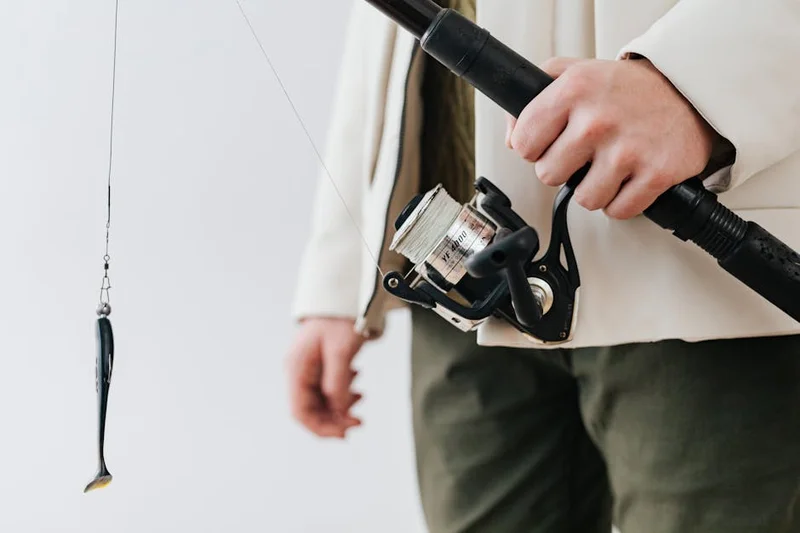
Knot failure is the #1 reason anglers blame their leader material when the knot itself is the problem.
Fluorocarbon is harder than mono. When you cinch a knot on fluoro, friction heat can weaken the line by 20-30%. Wetting the knot before tightening isn't optional , it's mandatory.
The Palomar knot, which works beautifully on mono and braid, can be inconsistent on fluoro above 8-pound test. The sharp bends create stress points. Our spooling guide covers knot-to-reel connections in detail.
Better fluoro knots for spinning reel leaders: the Improved Clinch Knot (reliable up to 15lb), the Uni Knot (fewer stress points than Palomar), and the San Diego Jam Knot (tests at 90%+ of rated strength, my go-to for fluoro).
For mono leaders, the Palomar is fine. The Uni knot is excellent. Mono is forgiving enough that most standard knots work well.
Connecting leader to braid mainline? The Alberto knot (modified Albright) is slim enough to pass through spinning guides without catching , my go-to for leaders under 10 pounds.
The FG knot tests stronger but is harder to tie on light line.
What Should You Actually Carry in Your Bag?
After years of fighting with one material or the other, I carry both. A small spool of 8-10lb fluorocarbon and a spool of 10-15lb monofilament live in my spinning rod bag. Switching takes 90 seconds.
This isn't gear obsession. It's the difference between fishing your best and fighting your equipment.
FAQ
What's the cheapest fluorocarbon leader that actually works?
Berkley Vanish runs roughly $8-15 for a 250-yard spool and works well as leader material up to 10-pound test. For heavier leaders, step up to Seaguar Red Label ($13-17 for 200 yards).
Avoid no-name Amazon fluoro , diameter claims are often inaccurate and knot strength is inconsistent.
Can I use my mono mainline as a leader instead of tying on a separate leader?
If you're already spooled with clear mono, yes. In stained water or for casual fishing, your mainline works fine as its own leader.
Anglers add a separate fluoro leader specifically for low visibility and abrasion resistance at the terminal end. If those don't matter for your situation, skip the extra knot.
Do I need a leader in stained or muddy water?
No. When visibility is under 12 inches, fish aren't seeing your line regardless of material. In muddy water, use whatever makes your setup cast and handle best. High-vis braid straight to the lure works fine.
What's the best all-purpose spinning reel leader setup?
Braid mainline (10-15lb) with an 8-10lb fluorocarbon leader tied with an Alberto knot. This covers roughly 80% of freshwater spinning situations. Keep a spool of 12lb mono in your bag for topwater, cold weather, and treble hooks.
Sources & Industry References
- International Game Fish Association (IGFA) , Official world record authority and fishing line standards reference
- Wired2Fish , Independent fishing gear reviews and line testing data
- Tackle Warehouse , Comprehensive fishing line specs, diameter charts, and user reviews
Found This Guide Helpful?
Check out LineCalc Pro , our free fishing line calculator that recommends the perfect line for your exact setup. No guessing, no wasted money.
Try LineCalc Pro →Frequently Asked Questions
Who is this guide for?
Anglers looking to make informed decisions about fishing line selection , from beginners to experienced fishermen who want to understand the technical details behind line performance.
What's the most common mistake anglers make?
Choosing line based on price alone, or using the same line for every situation. Line diameter, material, and pound test should match your target species, water conditions, and fishing technique.
How often should I replace my fishing line?
Monofilament: every season or after 8-12 trips. Fluorocarbon: every 2 seasons. Braided line: can last 2-3 seasons if properly maintained. Replace immediately if you see fraying, discoloration, or memory coils.
Braid vs Mono vs Fluorocarbon , which should I pick?
Braid for sensitivity, casting distance, and heavy cover. Mono for topwater lures, stretch forgiveness, and budget. Fluorocarbon for clear water, leader material, and abrasion resistance. Most anglers use a combination.
What pound test line should I use?
Match to your target species: 4-8lb for panfish, 8-12lb for bass, 15-30lb for catfish/striper, 30-65lb for musky/saltwater. Check your rod's line rating , it's printed on the blank for a reason.
What should beginners check before buying line?
1) Match line weight to your rod rating. 2) For spinning reels, stick to 8-12lb to avoid wind knots. 3) Don't overspend on your first spool , $8-15 mono is perfectly fine to learn on.