Table of Contents
- The 65 lb Braid That Changed Everything
- Why "12-20 lb" Is Useless Advice for Salmon
- Salmon Line by Species: What Actually Works
- The Real Numbers That Matter: Diameter
- Braid vs Mono for Salmon , Stop Overthinking This
- River Fishing vs Lake Trolling: Different Line, Different World
- Two Lines I Keep Coming Back To
- Mistakes That Cost Me Salmon
- FAQ
The first Chinook I ever hooked broke me off in under four seconds. I was running 15 lb monofilament straight to a size 4 spinner on the Kenai River.
The fish hit — the rod doubled over, the line went tight, and then , nothing. I reeled in a frayed end that looked like it had been chewed by a bandsaw.
The guy fishing fifty yards downstream landed a 32-pounder on 65 lb braid ten minutes later. I've never made that mistake again.
Salmon don't fight like bass. They don't fight like trout. A 20-pound Chinook in heavy current generates forces that make a 6 lb largemouth feel like a bluegill.
The line you choose isn't about finesse , it's about surviving the first run, which is where 80% of salmon break-offs happen.
This guide covers exactly what pound test to use for every salmon species, every technique, and every water type. No generic ranges. No "it depends" without telling you what it depends on.
Why "12-20 lb" Is Useless Advice for Salmon
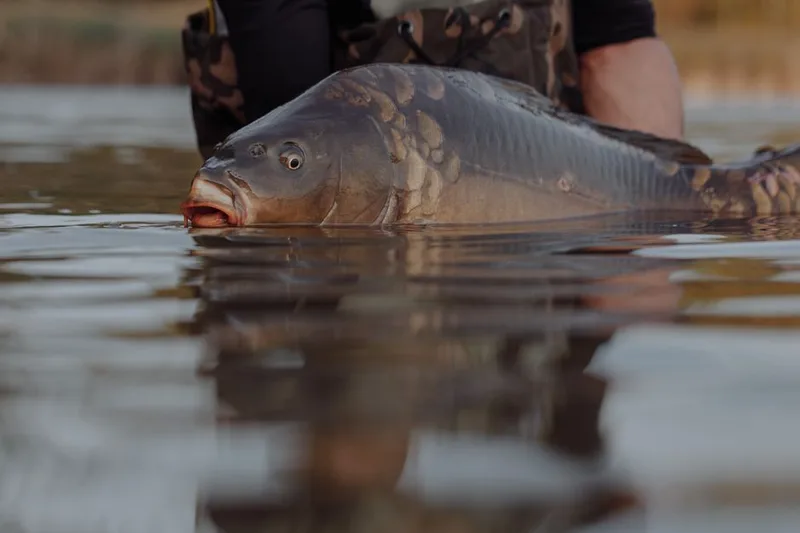
Type "what pound test for salmon" into Google and you'll get the same answer on twelve different websites: "12 to 20 pounds." This is the fishing equivalent of telling someone to buy a "medium" shirt. It fits nobody well.
Here's why that range is meaningless: a 12 lb leader for Pink salmon in a small coastal stream is perfect.
A 12 lb leader for a 40 lb Chinook in the Skeena River in October is a joke. The fish will spool you. The river will help it.
And you'll spend the next three hours retying leaders.
Salmon fishing spans a ridiculous range. You've got 4 lb Pinks in Alaska creeks and 50+ lb Kings in Pacific Northwest rivers running at 8 knots.
You've got clear-water Coho that spook at anything thicker than 15 lb fluorocarbon and mud-stained fall Chinook that would chase a lure tied to a dock line. One number cannot cover all of this.
The three things that actually determine your pound test: the species you're targeting — the size of the river, and whether you're running braid or mono as a mainline.
Everything else , lure weight, rod power, water temperature , is secondary. Get these three right and you'll land fish. Get them wrong and you'll tell stories about the one that got away.
Salmon Line by Species: What Actually Works
broken down by species because a Chinook setup has almost nothing in common with a Pink salmon setup. If you fish for multiple salmon species , and most anglers do , you need to know the difference.
| Species | Typical Weight | Mainline | Leader | Notes |
|---|---|---|---|---|
| Chinook (King) | 15-50+ lb | 50-65 lb braid | 20-30 lb fluoro | Heaviest line of any salmon. In fast, big rivers, 65 lb braid is standard. Drop leader to 17-20 lb only in ultra-clear low water. |
| Coho (Silver) | 8-15 lb | 30-40 lb braid | 12-17 lb fluoro | More line-shy than Chinook. 15 lb leader is the sweet spot for most river conditions. Bump to 20 lb near timber. |
| Sockeye | 5-10 lb | 20-30 lb braid | 10-15 lb fluoro | Less stamina than other salmon. Lighter gear improves bite detection in clear water. 12 lb leader is the all-around choice. |
| Pink Salmon | 3-6 lb | 15-20 lb braid | 8-12 lb fluoro | Lightest setup. 10 lb leader handles 90% of Pinks. A medium-light spinning rod with 15 lb braid is a joy to fish all day. |
| Atlantic Salmon | 8-20 lb | 25-40 lb braid | 12-20 lb fluoro | Similar to Coho in fight. 15 lb leader works for most Atlantic river fishing. Go to 20 lb in heavy current. |
These numbers come from the Pacific Northwest standard , braided mainline with a fluorocarbon leader.
If you're fishing the Great Lakes for stocked salmon, the same leader ranges apply, though you can usually drop one size on the mainline since the fish run smaller and there's less current to fight.
One thing I want to call out: the Chinook numbers might look heavy if you're used to bass or walleye fishing. They're not.
A 25 lb Chinook in a river running at 6 mph puts over 40 lb of sustained pressure on your line.
Add the abrasion from rocks and gravel , because Chinook love running straight into structure , and anything under 20 lb leader is a calculated risk.
exactly three Chinook have been lost inast five seasons after switching to 25 lb fluorocarbon leaders and 65 lb braid. Before that, with 20 lb leaders, I was losing one in three.
The Real Numbers That Matter: Diameter
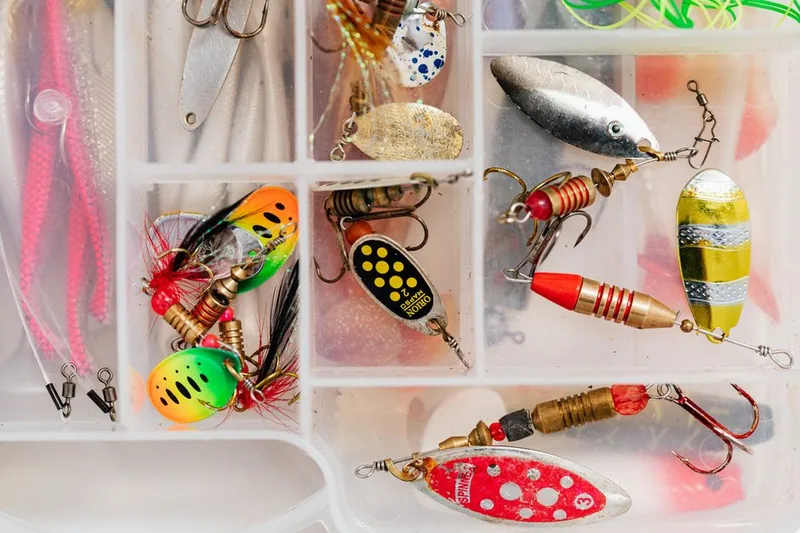
Pound test is a label. Diameter is reality. A 30 lb braided line has the same diameter as roughly 8 lb monofilament.
That's why salmon anglers run 50-65 lb braid , not because they need 65 pounds of breaking strength, but because 65 lb braid has a diameter around 0.41mm, which floats better on the surface and mends more cleanly in current.
Here's what the numbers actually look like:
| Line | Pound Test | Diameter | What It Feels Like |
|---|---|---|---|
| Braid (PowerPro) | 50 lb | 0.36mm | ~12 lb mono equivalent |
| Braid (PowerPro) | 65 lb | 0.41mm | ~16 lb mono equivalent |
| Fluorocarbon leader | 20 lb | 0.41mm | Same diameter as 65 lb braid , this matters for knot tying |
| Fluorocarbon leader | 25 lb | 0.44mm | Heavy leader, still manageable for Chinook |
| Monofilament | 20 lb | 0.46mm | Thick. Noticeable water resistance when trolling |
Why does diameter matter for salmon? Two reasons. First, thinner braid cuts through current better when you're drift fishing , less bow in the line means better bite detection.
Second, when you're matching leader diameter to your mainline, you want them close enough that your connection knot (an FG or Albright) doesn't create a hinge point that catches on guides during the cast.
The FG knot between 65 lb braid and 25 lb fluorocarbon is the standard salmon connection for a reason. The diameters are close enough that the knot feeds smoothly through size 6 and larger guides.
anglers routinely fight a knot throughh the guides on every cast because they paired 30 lb braid with 25 lb fluoro , the braid is half the diameter and the knot is a chunky speed bump.
Match your diameters and your casting distance will thank you.
Braid vs Mono for Salmon: Stop Overthinking This
Here's the short version: use braided mainline with a fluorocarbon leader. That's what 90% of experienced salmon anglers run, and for good reason.
Braid gives you zero stretch , every head shake, every gravel-grinding run, every subtle take transmits straight to your rod tip. With salmon, bite detection isn't the challenge.
The challenge is setting the hook hard enough to punch through a bony mouth at the end of 80 feet of line. Mono absorbs 15-25% of your hookset force through stretch. Braid transmits nearly 100%.
That difference alone has put more salmon in my net than any piece of gear I own.
The one place mono still wins is trolling with downriggers.
The stretch in mono acts as a shock absorber when a salmon slams a trolled bait at 2.5 mph, and mono holds better in downrigger release clips than slippery braid.
For Great Lakes trollers running lead core or copper, mono or copolymer is the standard , braid doesn't sink on its own.
But for river fishing , drift fishing, float fishing, casting lures, plunking , braid mainline is the answer. Every time.
If you're just getting into salmon and don't want to overthink it: buy a spool of 50 lb PowerPro braid in a high-vis color, tie on 15 feet of 20 lb Seaguar fluorocarbon leader with an FG knot, and go fishing.
That setup will handle Coho, Sockeye, and average Chinook in most rivers. For more on leader selection, check our fishing leader length guide.
River Fishing vs Lake Trolling: Different Line, Different World
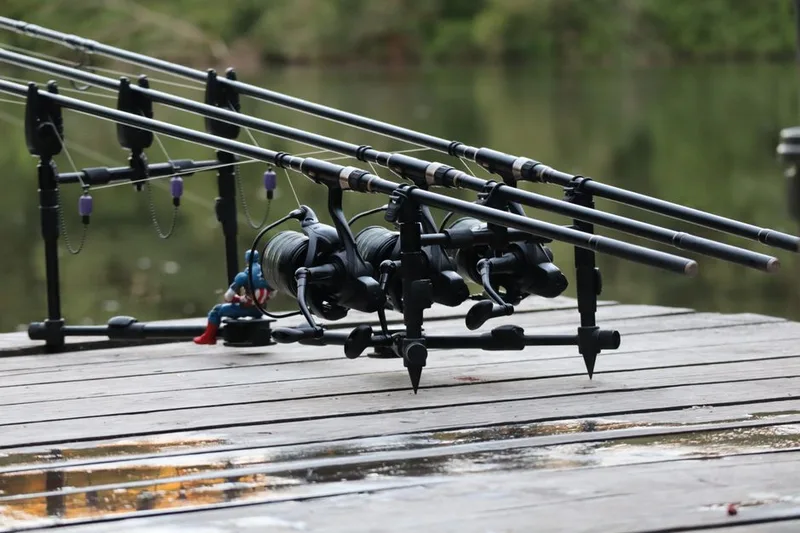
The biggest mistake I see anglers make is using their river setup on a lake, or vice versa. These are fundamentally different fishing situations and the line needs to match.
River Salmon Setup
- Mainline: 40-65 lb braid. Heavier floats better, mends cleaner in current.
- Leader: 20-30 lb fluorocarbon, 3-6 feet long. Match to species (see table above).
- Connection knot: FG knot or Albright. Strong and slim through guides.
- Why it works: Braid floats, letting you mend line and control the drift. Leader provides invisibility and abrasion resistance against rocks.
Lake Trolling Setup
- Mainline: 20-30 lb monofilament or copolymer. Mono holds in downrigger clips better than braid.
- Leader: 25-40 lb fluorocarbon, 4-8 feet for flasher-fly rigs. 20-25 lb for spoons and plugs.
- Alternative: Lead core or copper line for depth control without downriggers. 27-45 lb test.
- Why it works: Mono's stretch cushions violent strikes at trolling speed. Thicker diameter is irrelevant , you're not casting, and the fish can't see the mainline behind 8 feet of leader and a flasher.
The single best investment for a lake troller is a quality line counter reel spooled with 25 lb copolymer.
It takes the guesswork out of depth , you know exactly how much line is out, and the copolymer has roughly 15% less stretch than standard mono while still holding in the clips.
Brands like Maxima Ultragreen and P-Line CXX are the standard for a reason. Berkley Big Game 25 lb ran for two seasonsns on Lake Michigan and landed 40+ salmon without a single line-related break-off.
Two Lines I Keep Coming Back To
I've cycled through a lot of line testing salmon setups over the years. These two have stayed in my rotation.
PowerPro Spectra Fiber Braid , 65 lb, Hi-Vis Yellow
This is the workhorse braid for Pacific Northwest salmon rivers. The 65 lb diameter (0.41mm) floats well, mends cleanly, and the hi-vis yellow is easy to track in choppy water.
I've run the same spool on my float rod for two full seasons , September Chinook through November Coho , and it shows zero signs of fraying.
The 300-yard spool runs about $30 and fills a size 4000 spinning reel with room for backing.
For braid color selection, yellow is best for drift fishing where you need to see the line on the water.
Check Price on AmazonSeaguar Blue Label Fluorocarbon , 25 lb Leader
This is my go-to leader material for Chinook. The 25-yard spool costs about $15 and ties one season's worth of leaders.
The abrasion resistance is the standout feature , this leader survives repeatedd grinding against barnacle-covered rocks in tidewater that would have shredded cheaper fluorocarbon in one run.
Knot strength with a Palomar is consistently 90%+ of rated breaking strength. For Coho, I drop to the 15 lb version. For more on fluorocarbon, see our fluorocarbon fishing line guide.
Check Price on AmazonMistakes That Cost Me Salmon
Don't use a wire leader for salmon. I know someone will argue with this, but wire leaders kill your presentation. Fluorocarbon is invisible and abrasion-resistant enough for 90% of salmon situations.
The only time I'd consider wire is if I'm specifically targeting Pike on the same rig.
Don't run your mainline too light because you're worried about line capacity. A size 4000 spinning reel holds 200 yards of 50 lb braid. That's plenty for any salmon river on the continent.
If a salmon runs 200 yards, your line weight isn't the problem , your drag setting is.
Don't neglect your leader connection. The FG knot between braid and fluorocarbon is the single most important knot in salmon fishing. Learn it.
A poorly tied FG knot on 65 lb braid to 25 lb fluoro can fail at 15 lb of pressure. A properly tied one will hold past 40 lb.
The difference is five minutes of practice at the kitchen table before your trip.
Replace your leader after every fish over 15 pounds. Salmon teeth and the abrasion from their runs create micro-cuts you can't always see. I retie my leader after every landed Chinook. It takes two minutes.
Losing a $8 flasher and a $6 hoochie because I was too lazy to retie a leader has cost me far more than the 25 cents of fluorocarbon I saved.
If you want to learn more about line care, read our fishing line care guide.
FAQ
What pound test should I use for Chinook salmon in rivers?
For Chinook salmon in medium to large rivers, run 50-65 lb braided mainline with a 20-25 lb fluorocarbon leader. Heavier braid floats better and mends more easily in current.
The 25 lb leader is the standard choice for most conditions , it handles the abrasion from rocks and gravel while staying invisible enough that Chinook won't spook.
Drop to 20 lb leader only in ultra-clear, low-water conditions where salmon are line-shy.
In small, clear rivers where you can chase a fish downstream, 15-20 lb leader can work, but you're trading insurance for stealth.
Can I use 12 lb line for salmon fishing?
Yes, for Coho and Pink salmon in small to medium rivers, 12 lb monofilament or fluorocarbon is a solid choice. For Sockeye, 12-15 lb works well.
But for Chinook salmon, 12 lb is too light , you'll want at least 20 lb as a minimum, and most experienced anglers in the Pacific Northwest run 25 lb or heavier leaders.
Match the line to the species and the river size.
If you're not sure which species you'll encounter, err on the heavier side , a slightly thicker leader might cost you one or two bites from line-shy fish, but a leader that's too light costs you every big fish that hits.
Is braided line or monofilament better for salmon?
Braided line is the standard mainline for most salmon fishing , it provides zero stretch for better hooksets, thinner diameter for less water resistance, and floats better for line control when drift fishing.
However, braid is highly visible, so it's almost always paired with a 3-6 foot fluorocarbon leader.
Monofilament still works well for trolling with downriggers and is more forgiving for beginners learning to fight salmon because the stretch absorbs sudden runs.
The best all-around setup for a salmon angler covering multiple techniques is braided mainline with a fluorocarbon leader , it handles drift fishing, float fishing, and casting equally well.
How long should my leader be for salmon?
For river fishing, a 3-6 foot fluorocarbon leader is standard. Shorter leaders (3 feet) give you better casting control when throwing lures. Longer leaders (5-6 feet) provide more invisibility for drift fishing clear water.
For trolling with flashers, run 4-8 feet of leader between the flasher and the lure , shorter for Coho (26-36 inches), longer for Chinook (36-48 inches) to give the bait more action.
Always match the leader length to water clarity: clearer water = longer leader. In glacial or stained rivers, a 3-foot leader is plenty because the fish can't see the mainline anyway.
Sources & Industry References
- Alaska Department of Fish and Game , Official salmon species data, line recommendations by species and technique
- Northwest Fishing Gear , Pacific Northwest salmon rigging guides and braid/leader test data
- International Game Fish Association (IGFA) , Fishing line standards and world record salmon data
Found This Salmon Line Guide Helpful?
Check out LineCalc Pro , our free fishing line calculator that recommends the perfect pound test and line type for your exact salmon setup. Species, river size, technique , we factor in everything.
Try LineCalc Pro →Frequently Asked Questions
Who is this guide for?
Anglers looking to make informed decisions about fishing line selection , from beginners to experienced fishermen who want to understand the technical details behind line performance.
What's the most common mistake anglers make?
Choosing line based on price alone, or using the same line for every situation. Line diameter, material, and pound test should match your target species, water conditions, and fishing technique.
How often should I replace my fishing line?
Monofilament: every season or after 8-12 trips. Fluorocarbon: every 2 seasons. Braided line: can last 2-3 seasons if properly maintained. Replace immediately if you see fraying, discoloration, or memory coils.
Braid vs Mono vs Fluorocarbon , which should I pick?
Braid for sensitivity, casting distance, and heavy cover. Mono for topwater lures, stretch forgiveness, and budget. Fluorocarbon for clear water, leader material, and abrasion resistance. Most anglers use a combination.
What pound test line should I use?
Match to your target species: 4-8lb for panfish, 8-12lb for bass, 15-30lb for catfish/striper, 30-65lb for musky/saltwater. Check your rod's line rating , it's printed on the blank for a reason.
What should beginners check before buying line?
1) Match line weight to your rod rating. 2) For spinning reels, stick to 8-12lb to avoid wind knots. 3) Don't overspend on your first spool , $8-15 mono is perfectly fine to learn on.