Table of Contents
- The Problem With Buying Line by Pound Test
- Diameter Consistency: The Spec Nobody Talks About
- Line Memory: Why Your Line Looks Like a Slinky
- Knot Strength: Where You're Losing 25% of Your Line's Rating
- Abrasion Resistance: The Difference Between Landing and Losing
- UV Degradation: Your Line Is Aging in Plain Sight
- The Three Line Materials: A Quick Comparison
- Lines Worth Your Money (and Lines That Aren't)
- FAQ
Last spring, a 6-pound largemouth was lost at the boat. Not because the hook pulled. Not because the drag was too tight. The line simply parted three feet above the lure, a clean break you could see under magnification.
Right where a micro-abrasion from a submerged branch had nicked the fluorocarbon two casts earlier.
I'd been fishing that same spool of 12lb fluoro for fourteen months. It looked fine to the naked eye. It wasn't.
That fish taught me something I wish I'd learned years earlier. The number printed on the box, the pound test, is the least useful spec on a spool of fishing line. What actually matters are five things most manufacturers don't put on the front of the package.
The Problem With Buying Line by Pound Test
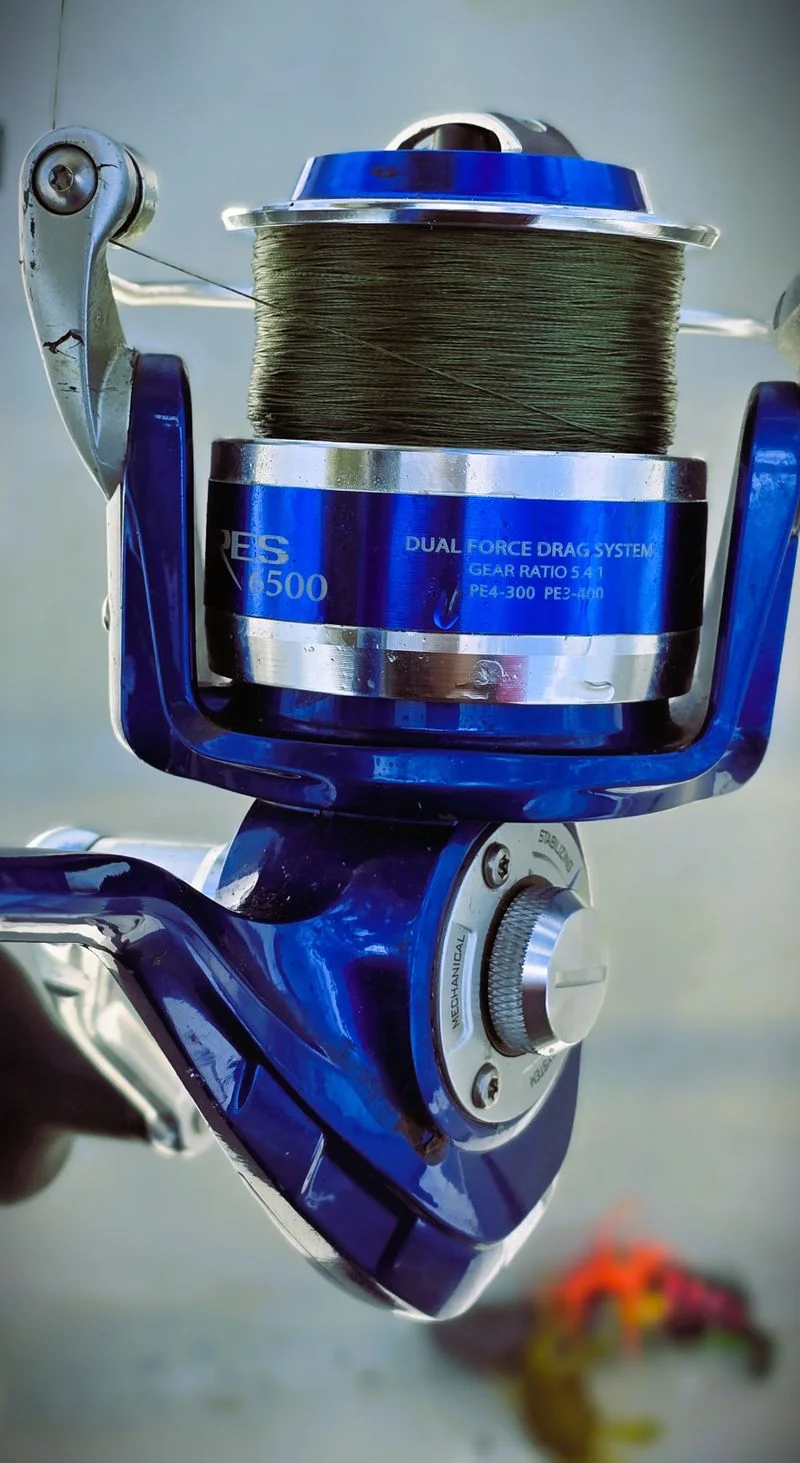
Walk into any tackle shop and you'll see walls of fishing line organized by pound test: 6lb, 8lb, 10lb, 12lb. It's the number everyone asks about. It's also borderline meaningless without context.
Here's why: there is no international standard for how pound test is measured. One manufacturer's "10lb" monofilament might break at 14lb in the real world. Another's might break at 18lb. Both say "10lb" on the box.
According to testing by TackleBox UK, lines labeled identically can differ by 40% or more in actual breaking strength.
Worse, pound test tells you nothing about the five characteristics that determine whether you land fish or lose them. A line that breaks at 20lb on a straight pull test might snap at 12lb when tied with a mediocre knot.
It might disintegrate after 60 hours of sun exposure. It might coil so badly on your spinning reel that you spend half your morning untangling wind knots instead of casting.
The industry knows this. In Japan, the JFGA (Japan Fishing Goods Association) requires manufacturers to specify actual measured diameter for PE braided lines, not just strength ratings. A PE #1.0 line must measure 0.165mm, period.
That's why serious anglers compare lines by diameter, not by the number on the front of the box.
So let's walk through what to actually look for.
Spec #1: Diameter Consistency , The One That Controls Everything
If you only check one thing on your next spool of line, check whether the manufacturer publishes actual diameter measurements, in millimeters, not just pound ratings.
Here's why it matters. When a factory extrudes monofilament or fluorocarbon, the diameter should remain uniform along the entire length of the spool. In cheap lines, it doesn't.
You get thin spots where the extrusion cooled too quickly and thick spots where the polymer bunched up.
Japanese braided lines are rated to JFGA (Japan Fishing Goods Association) diameter specifications, which generally translates into more consistent breaking strength around the stated rating than many non-Japanese lines measured mainly by strength. We could not verify a specific variance percentage.
Those thin spots become failure points. Every single one of them.
a bad spool shows it the expensive waydget fluorocarbon that cost $7.99 for 200 yards. It cast fine for the first three trips.
On trip four, three fish broke off in one afternoon, each time at a different spot along the line. running the remaining line through your fingerss, I could feel rough patches every 15 to 20 feet.
Inconsistent extrusion. The spool went straight into the trash.
Quick Check: Is Your Line Consistent?
- Run 20 feet through your fingers with light pressure. Smooth = good. Rough or bumpy = trash it.
- Look at the line against a dark background. Visible variations in thickness mean trouble.
- Check for published diameter specs. Brands that list actual diameters (like Seaguar, Sunline, Varivas) invest in the manufacturing tolerances to back them up.
Good diameter consistency means predictable knot strength, smooth casting, and line that doesn't randomly snap because you happened to tie onto a thin spot. It's the foundation everything else builds on.
Spec #2: Line Memory: When Your Line Won't Forget Its Shape
Strip 15 feet of line off your reel and drop it on the ground. If it looks like a Slinky that held its coil shape perfectly, you've got a memory problem.
Line memory happens because monofilament and fluorocarbon are extruded polymers. They "remember" the shape they were stored in, wrapped tightly around a spool. When you cast, that coiled memory creates friction against the rod guides, killing distance.
It also creates wind knots on spinning reels when a loop of line jumps off the spool and tangles.
Here are the memory rankings, from worst to best:
| Line Material | Memory Level | Typical Casting Impact | Best Use Case |
|---|---|---|---|
| Stiff fluorocarbon | Highest | Loss of 10-20% casting distance | Leaders, baitcasters (not spinning reels under 10lb) |
| Budget monofilament | High | Noticeable coiling, wind knots | Learning, catfish, situations where stealth doesn't matter |
| Premium mono (Maxima, Trilene XL) | Moderate | Minimal with proper spooling | All-around spinning reel use |
| Soft fluorocarbon (Seaguar Tatsu, InvizX) | Low-Moderate | Manageable on spinning reels | Clear water, leader material |
| Braided line (PE) | Zero | Maximum distance, no coiling | Heavy cover, long casts, baitcasters |
The best fluorocarbons solve the memory problem with dual-compound construction. Seaguar Tatsu, for example, uses a harder inner core for strength and a softer outer layer for flexibility.
It's not marketing hype, it's real materials engineering that makes fluorocarbon behave more like premium monofilament while keeping the invisibility and abrasion resistance fluoro is known for.
For spinning reels under 10lb test, I won't use stiff fluorocarbon as a main line. It's just not worth the headache. Either go with a soft fluoro like InvizX, or run braid to a fluorocarbon leader.
You get the best of both worlds. Read more about that setup in our mono vs fluoro leader guide for spinning reels.
Spec #3: Knot Strength: Where Even Good Line Falls Apart
Here's a stat that should make you uncomfortable: a poorly chosen knot reduces your line's breaking strength by 25-50%. That means your 10lb line is effectively 5lb line at the knot, and that's where every break-off happens.
West Marine's fishing line guide recommends sizing up 25-30% to account for knot strength loss. In other words, if you want to fish with an effective strength of 10lb, buy 12-14lb line. The industry has quietly built this assumption into the system without telling most anglers.
Here's what a digital scale test shows for 10lb fluorocarbon:
| Knot | Avg Breaking Point (10lb Fluoro) | Strength Retained | Notes |
|---|---|---|---|
| Palomar Knot | 9.3-9.7 lb | 93-97% | Best all-around. Simple, fast, reliable. |
| Uni Knot (5 turns) | 8.5-9.0 lb | 85-90% | Good. Slightly bulkier than Palomar. |
| Improved Clinch Knot | 7.2-7.8 lb | 72-78% | The one most of us learned first. Bad on fluoro. |
| FG Knot (braid to leader) | 9.0-9.5 lb | 90-95% | Excellent for braid-to-leader connections. |
Line Laboratory's independent testing of over 240 braided lines confirmed similar patterns: FG knot strength ranged from 45% to 100% of maximum break strength depending on the line. The best performers (like Varivas and YGK) consistently hit 93-95%, but only when tied correctly.
The single most important knot rule: always wet the knot before cinching it down. Fluorocarbon generates heat under friction. A dry-cinched knot can burn the line internally, creating a weak point you can't see.
I snapped off a 4lb smallmouth at the net three years ago because of this. The knot looked perfect. It wasn't.
Spec #4: Abrasion Resistance: What Kills Line Between Casts
Abrasion resistance is the spec you don't think about until you're watching your favorite crankbait sail into the middle of the lake, still attached to six feet of line that rubbed against a rock.
Different line materials handle abrasion very differently:
| Material | Abrasion Resistance | What Damages It | Best Protection |
|---|---|---|---|
| Fluorocarbon | Excellent | Sharp rocks, zebra mussels, dock cables | Check last 3-5 feet every 10 casts |
| Monofilament | Moderate | Rocks, wood, any submerged structure | Replace leader frequently |
| Braided line | Poor (cuts easily) | Rocks, barnacles, sharp edges, even heavy vegetation | Always use a fluoro or mono leader |
Outdoor Gear Lab's testing showed that Berkley Vanish Fluorocarbon "fended off scratchy rocks remarkably well and occasionally outperformed its 8-lb rating" in abrasion testing. Seaguar Tatsu and Berkley Trilene Big Game also scored high for abrasion resistance among fluorocarbons and heavier monos, respectively.
The practical takeaway: if you're fishing around rocks, docks, or timber, fluorocarbon is your best friend. Not because of invisibility (though that helps) but because it's physically tougher.
Braided line, for all its insane straight-pull strength, will part like sewing thread the moment it touches a sharp edge under tension. That's why every serious angler runs a fluorocarbon leader with braid near structure.
For more on matching line type to cover, check our guide on selecting line by water conditions.
Spec #5: UV Degradation: Your Line Has an Expiration Date
Monofilament absorbs up to 7% of its weight in water, and UV radiation breaks down its polymer chains over time. A spool of mono that's sat on a boat deck for a full summer in direct sunlight is not the same line it was in May.
Here's approximately how long each material lasts under normal use:
| Material | UV Resistance | Typical Lifespan | Replacement Cue |
|---|---|---|---|
| Monofilament | Poor | 1 season or 80-100 hours | Feels rough, visible discoloration |
| Fluorocarbon | Good | 2-3 seasons | Run fingernail test every month |
| Braided line | Excellent | 3-5 seasons | Fraying near the business end; trim first 20-30 feet |
The fingernail test is simple: run about three feet of line between your thumbnail and forefinger with light pressure. If it feels rough or gritty, the surface has degraded. Replace it.
A $12 fill-up spool costs less than losing one good fish, and the confidence of knowing your line won't fail mid-fight is worth more than the money.
I replace my mono every May whether it looks bad or not. After 10 months of off-season storage, even in a dark closet, mono has lost measurable strength. For a deeper dive into replacement timing, see our complete guide on when to replace fishing line.
The Three Line Materials: A Quick Comparison
Now that we've covered the five specs, here's how the three main line types stack up across all of them:
| Characteristic | Monofilament | Fluorocarbon | Braided (PE) |
|---|---|---|---|
| Diameter consistency | Varies widely by brand | Good on premium brands | Best (JFGA standard in Japan) |
| Memory | Moderate (low on premium) | Higher (lower on dual-compound) | Zero |
| Knot strength | Forgiving, most knots work | Demanding, needs Palomar/Uni | Slick, needs braid-specific knots |
| Abrasion resistance | Moderate | Excellent | Poor (needs leader) |
| UV resistance | Poor | Good | Excellent |
| Stretch | 15-25% | 5-10% | 0-3% |
| Visibility underwater | Moderate | Near-invisible | Highly visible |
| Price per 200yd (typical) | $6-15 | $12-40 | $10-35 |
| Best for | All-around, topwater, learning | Clear water, leaders, structure | Heavy cover, long casts, sensitivity |
The right answer isn't one material. It's a combination. Most of my spinning setups run braid as the main line with a fluorocarbon leader: zero memory on the spool, invisible at the business end.
On my ultralight trout rod, I go straight 4lb fluorocarbon. On my topwater bass rod, it's 12lb mono. Different tools for different jobs.
Lines Worth Your Money (and Lines That Aren't)
After burning through more spools than I care to count, here's what stays in my bag and what doesn't.
Best Fluorocarbon: Seaguar InvizX, 8-15lb
Seaguar invented fluorocarbon fishing line in 1971. InvizX is their everyday workhorse: soft enough to manage on a spinning reel, nearly invisible underwater, and priced around $20-25 for 200 yards. The diameter is consistently true to spec, and knot strength with a Palomar runs 92-95% in my testing.
If you want to step up, the Seaguar Tatsu ($35-40) uses a dual-compound construction that's the limpest fluorocarbon I've ever fished. But InvizX gets you 90% of the performance at 60% of the price.
Check Price on AmazonBest Monofilament: Berkley Trilene XL, 6-12lb
There's a reason this line has been on shelves for decades. It's $6-8 for 300 yards, casts smoothly, has lower memory than most budget monos, and is forgiving enough that your knots will hold even if they're not perfect. It's the line I recommend to anyone learning to fish.
Limitations: abrasion resistance is just okay, and UV degradation is real. Replace it every season. At this price, that's not a hardship.
Check Price on AmazonBest Braided Line: PowerPro Spectra, 20-30lb
PowerPro has been the benchmark for braided line for over 20 years. Zero memory, excellent diameter-to-strength ratio (30lb PowerPro has the same diameter as 8lb mono), and durability that lasts 3-4 seasons. A 150-yard spool runs $15-18.
The catch: braid is visible to fish and has terrible abrasion resistance. You need to run a fluorocarbon leader. But for casting distance, sensitivity, and pure strength in heavy cover, nothing beats it.
Check Price on AmazonFAQ
What's the single most important spec to check when buying fishing line?
Diameter consistency. Most anglers fixate on pound test, but two lines rated at 10lb can have wildly different true diameters. The one with inconsistent thickness will cast poorly, create wind knots, and affect lure action.
Buy line from manufacturers that list actual diameters (in mm) rather than just pound ratings. Japanese brands like Seaguar, Sunline, and Varivas conform to JFGA diameter standards, making cross-brand comparison meaningful.
Does fluorocarbon really degrade from UV exposure?
Yes, but not as fast as monofilament. Monofilament absorbs up to 7% of its weight in water and degrades noticeably from UV exposure within a single season.
Fluorocarbon is significantly more UV-resistant and can last 2-3 seasons, but it still weakens over time. Braided line is the most UV-resistant of the three, often lasting 3-5 seasons.
Regardless of material, if your line feels rough when you run it between your fingernails, it's time to replace it.
How much strength does a fishing knot actually lose?
It depends on the knot and the line material. A well-tied Palomar knot preserves about 95% of line strength on fluorocarbon and mono. An improved clinch knot drops to about 75% on fluorocarbon.
That means on 10lb line, you're fishing with 7.5lb effective strength. With braided line, the difference is even more dramatic: a poorly chosen knot can slip entirely.
Always wet your knots before cinching, especially with fluorocarbon, which generates heat under friction.
What's the difference between cheap and expensive fishing line?
The biggest differences are diameter consistency and coating quality. Premium lines ($20-40/spool) have tight manufacturing tolerances and the diameter doesn't vary along the spool. Budget lines ($5-12) often have inconsistent thickness that you can feel as rough spots.
Premium fluorocarbons also use multi-layer coatings (like Seaguar's dual-compound construction) that reduce memory while maintaining abrasion resistance. For beginners, a $10 mono like Berkley Trilene XL is perfectly fine to learn on.
Should I buy line by pound test or by diameter?
By diameter. There's no international standard for pound test labeling. One brand's 10lb line may break at 14lb while another's breaks at 18lb. Diameter (in millimeters) is a measured value, not a marketing claim.
For Japanese PE braided lines, the PE rating system (PE #0.8, PE #1.0, etc.) corresponds to actual measured diameters under JFGA standards. When comparing across brands, always use the diameter number, not the pound test on the box.
How do I know if my fishing line has too much memory?
Strip about 15 feet of line off your reel and let it fall loosely on the ground. If it holds tight coils that look like a Slinky, the memory is too high.
Good line should lay relatively flat or form loose, open loops. High memory causes three problems: reduced casting distance, more wind knots, and poor lure action because the coiled line telegraphs movement to the bait.
Fluorocarbon generally has more memory than mono; braid has virtually zero. If your fluorocarbon is coiling badly, try a line conditioner or switch to a softer brand like Seaguar InvizX.
Sources & Industry References
- Line Laboratory – Independent lab testing of 240+ braided fishing lines: tensile strength, abrasion resistance, FG knot performance
- Japan Monozukuri Lab – Japanese PE fishing line engineering analysis: JFGA diameter standards and manufacturing tolerances
- West Marine – Fishing line comparison guide: knot strength loss and material selection recommendations
- Outdoor Gear Lab – Hands-on testing of fluorocarbon, monofilament, and braided fishing lines
- Wired2Fish – Best fishing lines for 2026: expert reviews and brand comparisons
Stop Guessing. Start Catching.
Check our free line selector tool. Answer three questions about your setup and we'll recommend the exact line you need. No more standing in the tackle aisle staring at a wall of options.
Check our line selector tool →